Thailand is one of the most popular travel destinations in Asia, attracting millions of visitors every year with its stunning beaches, vibrant nightlife, rich culture, and affordable travel experiences. However, like any major tourist destination, it also has its share of scams that can catch first-time visitors off guard. Before diving into the most common tourist scams and how to avoid them, it’s worth reading our Thailand Travel Guide, which covers everything from visas and transportation to budgeting, safety tips, and the best places to visit.
Table of Contents
ToggleWhy Tourist Scams Are Common in Thailand
Thailand is one of the easiest countries to fall in love with—and ironically, that’s exactly why tourist scams in Thailand still exist. After multiple trips across Bangkok, Phuket, and Chiang Mai, one pattern becomes clear: scams don’t target everyone—they target unprepared behavior.
Let’s go deeper than typical blogs and understand why scams actually work—so you can avoid them instinctively.
1. A Tourism-Driven Economy = Predictable Tourist Behavior
Thailand welcomed 30–40 million international tourists annually (pre-2020 levels, now rebounding). That volume creates patterns—and scammers rely on patterns.
They already know:
- Where you’ll go (Grand Palace, Patong Beach)
- When you’ll arrive (airport rush hours)
- What you’ll need (transport, tours, shopping)
 That’s why scams are often positioned at decision points—right when you’re tired, confused, or in a hurry.
Real scenario:
At Bangkok’s Grand Palace entrance, you might hear:
“Closed today, Buddha holiday. I show you another temple.”
This line has been used for years, yet it still works daily.
Always verify closures using Google Maps live hours or your hotel concierge.
If someone approaches you first, assume it’s a sales pitch—not help.
2. First-Time Travelers Make Predictable Mistakes
Most blogs say “be careful,” but here’s what actually happens:
First-time travelers in Thailand tend to:
- Over-trust friendly locals
- Skip price comparisons
- Avoid saying “no” (to stay polite)
Scammers exploit this psychology—not your intelligence.
Example from experience:
A traveler I met in Phuket rented a jet ski without taking photos first. When returning it, the operator pointed to a scratch (already there) and demanded ₹30,000.
He paid—not because he believed it, but because he didn’t know what to do.
Before renting anything (jet ski, bike, car):
- Take clear video proof (360° walkaround)
- Include timestamp if possible
- Avoid vendors without visible pricing boards
3. Language + Cultural Gaps Create “Soft Pressure”
Thailand’s culture is polite, indirect, and non-confrontational. This creates a unique dynamic where scams don’t feel aggressive—they feel friendly.
That’s why many Thailand travel scams start with:
- Casual conversation
- Compliments
- “Helpful” suggestions
Instead of forcing you, they guide you.
“Why are scams in Thailand hard to detect?”
Because they feel like normal conversations, not threats.
Example:
A stranger might say:
“You from India? I love Bollywood! Today special sale, government promotion.”
Now you’re emotionally engaged—and more likely to trust them.
Use this rule: In Thailand, genuine help usually comes when you ask first.
4. Lack of Price Transparency in Tourist Areas
Unlike countries with strict pricing systems, Thailand still has:
- Negotiable fares (tuk tuks)
- Non-meter taxis
- Dual pricing (locals vs tourists)
This opens the door for Thailand tourist traps.
Quick comparison:
| Service | Local Price | Tourist Price |
|---|---|---|
| Tuk Tuk Ride | ₹100–₹200 | ₹300–₹800 |
| Taxi (short distance) | ₹150 | ₹400+ |
- Use Grab for fixed pricing
- Screenshot fare estimates before booking
- Walk away if price negotiation feels rushed
5. Scams Thrive on “Micro-Loss Psychology”
Here’s a unique insight most blogs miss:
Many scams in Thailand are designed as small losses (₹200–₹1000)—because:
- Tourists won’t argue
- It’s “not worth the hassle”
- It doesn’t ruin the trip
But over time, these small losses add up significantly.
This is why even smart travelers fall for common scams in Thailand.
Set a mental rule:
“If something feels off—even slightly—I walk away.”
This one habit alone prevents 80% of scams.
Most Common Tourist Scams in Thailand
Understanding the most common Thailand scams is only one part of planning a safe trip. If you’re organizing your itinerary, our common Thailand scams guide explores city-specific scam patterns, real-life examples, warning signs, and practical prevention tips to help you travel with greater confidence across Thailand.
Below are the scams you’re most likely to encounter in Bangkok, Phuket, and other tourist hubs—explained with real scenarios, exact scripts, and what to do in the moment.
Tuk Tuk & Taxi Scam

How it plays out:
“Grand Palace? Closed today—Buddha holiday. I take you somewhere better.”
You’re offered a cheap tuk tuk ride (₹50–₹100), but instead of your destination, you’re taken to commission-based shops (gems, suits, souvenirs). With taxis, drivers often say:
“Meter broken. Fixed price 300 baht.”
Reality: Metered fare is usually 100–150 baht.
Why it works: urgency + “helpful local” vibe.
What to do (exact moves):
- Verify closures on Google Maps; don’t trust street claims.
- Say: “No stops. Direct to [destination]. Meter on.”
- If they refuse, walk away immediately.
- Use Grab for fixed fares. Using regulated ride-hailing platforms significantly reduces the risk of fare manipulation, route diversions, and non-meter taxi disputes. Travelers can compare estimated fares in advance and maintain a digital record of every journey.
What is the tuk tuk scam in Thailand?
A driver offers a cheap ride, claims attractions are closed, and diverts tourists to commission-based shops instead of their destination.
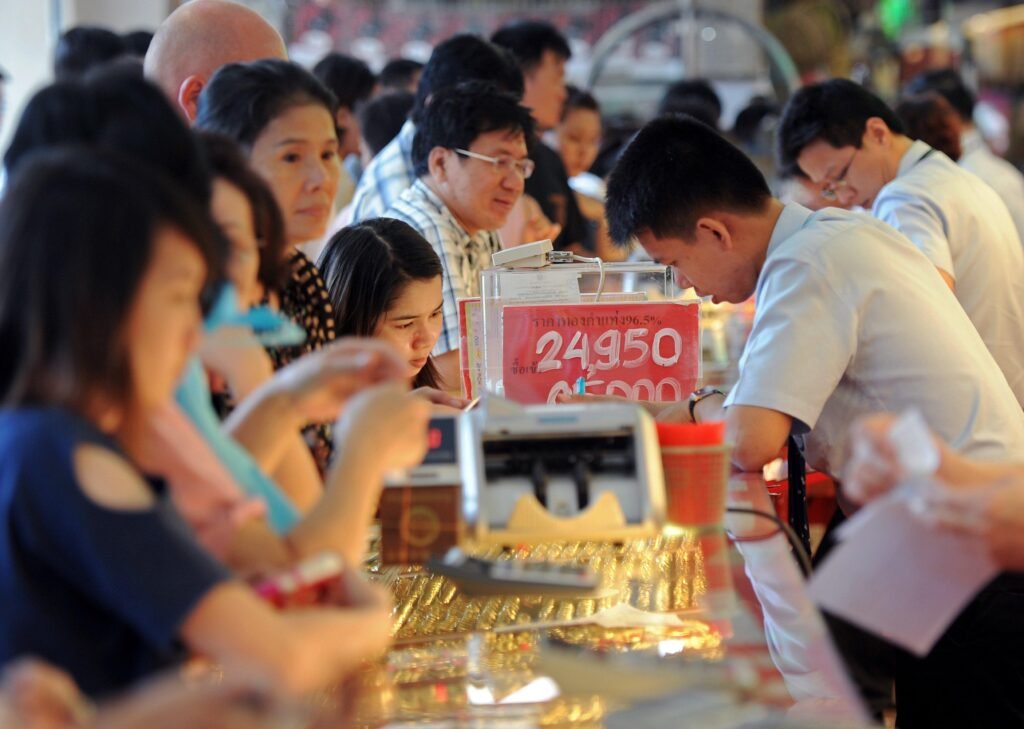
Gem Scam
How it starts:
“Lucky day! Government gem sale—only today. You can resell for profit.”
You’re taken to a polished showroom with certificates and trained sales staff.
Pressure tactics:
- “Last day of promotion” (urgency)
- “Buy for ₹30k, sell for ₹80k” (investment hook)
- “Many tourists buying” (social proof)
How tourists get trapped:
- Street approach → 2) Free/cheap ride → 3) Convincing store →
- High-pressure pitch → 5) Quick purchase → 6) Low real value
What to do (non-negotiable rules):
- Never buy gemstones as a tourist investment.
- If you didn’t choose the shop yourself → don’t enter.
- Exit line: “I don’t make investment purchases while traveling.”
Quick reality check: ₹30,000+ purchases often resell for ₹2,000–₹5,000.
Jet Ski Scam
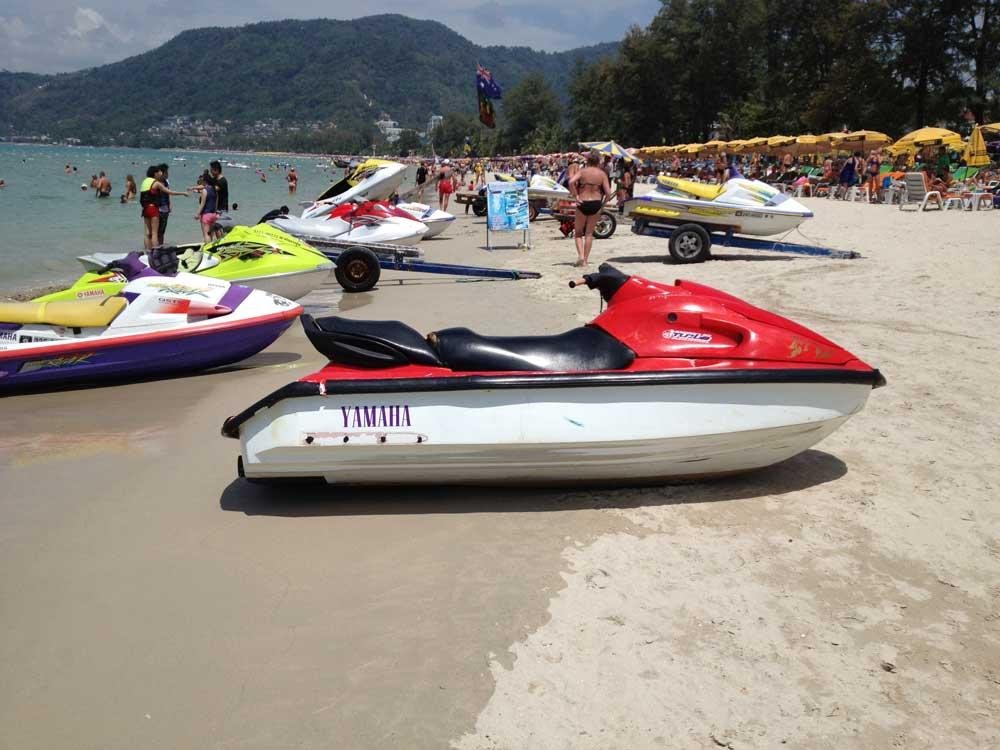
Setup: Rent for ₹1,500–₹3,000. No formal inspection.
After return:
“You damage this. Pay now.”
Escalation: “We call police.” (authority pressure)
Typical demand: ₹20,000–₹1,00,000+
What to do (this saves you):
- Record a 360° video before riding (scratches, engine, hull).
- Ensure staff sees you recording.
- Never hand over your passport.
- If accused: show video + say “This was pre-existing.”
- Call tourist police (1155) or your hotel.
Pro insight: Visible recording alone deters most attempts.
Bar & Nightlife Scam
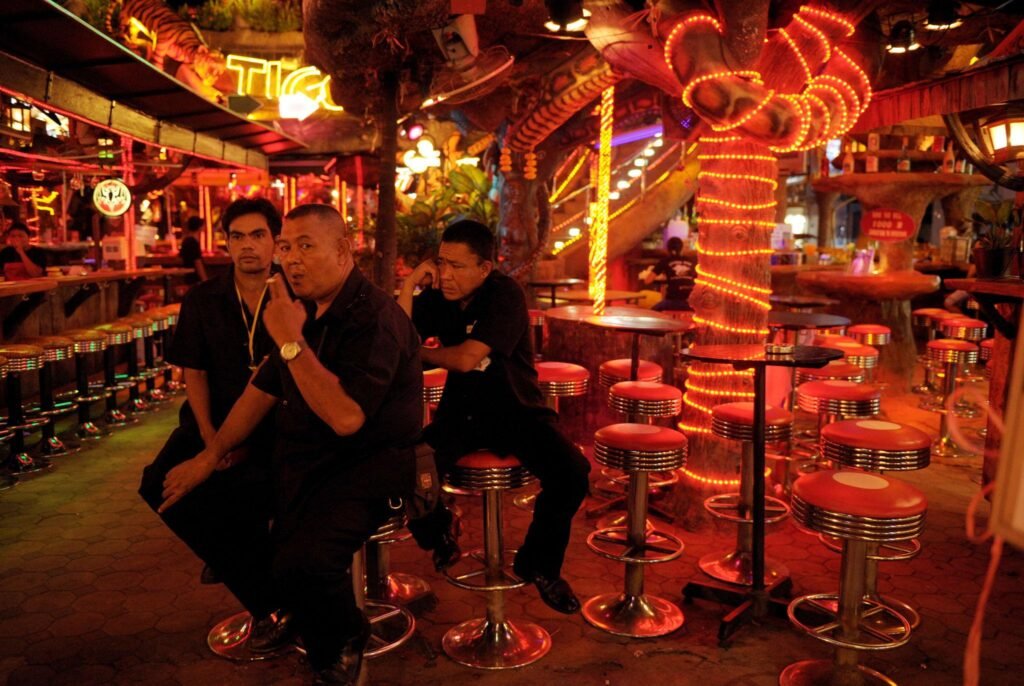
How it happens:
A “friendly local” invites you to a bar. Drinks seem normal—until the bill arrives:
- Inflated prices
- Hidden charges (seat fee, “lady drinks”, entertainment)
- Refusal to let you leave until paid
What to do (on the spot):
- Ask for a menu with prices before ordering.
- Pay per drink instead of running a tab.
- Avoid places without visible pricing.
- If pressured, stay calm and request a breakdown of charges.
Safe habit: Stick to well-reviewed venues near main areas.
Fake Tour Guide Scam
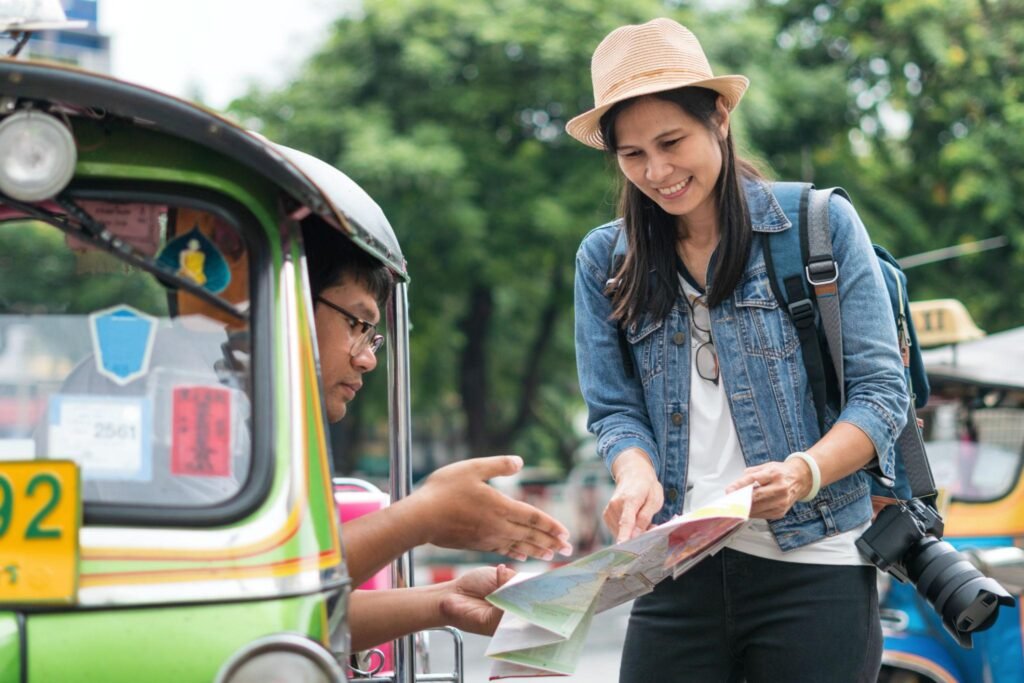
The bait:
“Official guide. Special discount tour today.”
Often near temples or busy streets, posing as “authorized.”
Red flags:
- No ID badge or verifiable license
- “Today only” deals
- Cash-only, no receipt
What to do:
- Book via hotel desk or verified platforms (clear reviews, invoices).
- Ask for license ID and cross-check.
- Avoid paying full upfront for unknown operators.
Pro tip: If it’s cheaper than everyone else—it’s usually missing something (or everything).
Pickpocketing & Distraction Scams
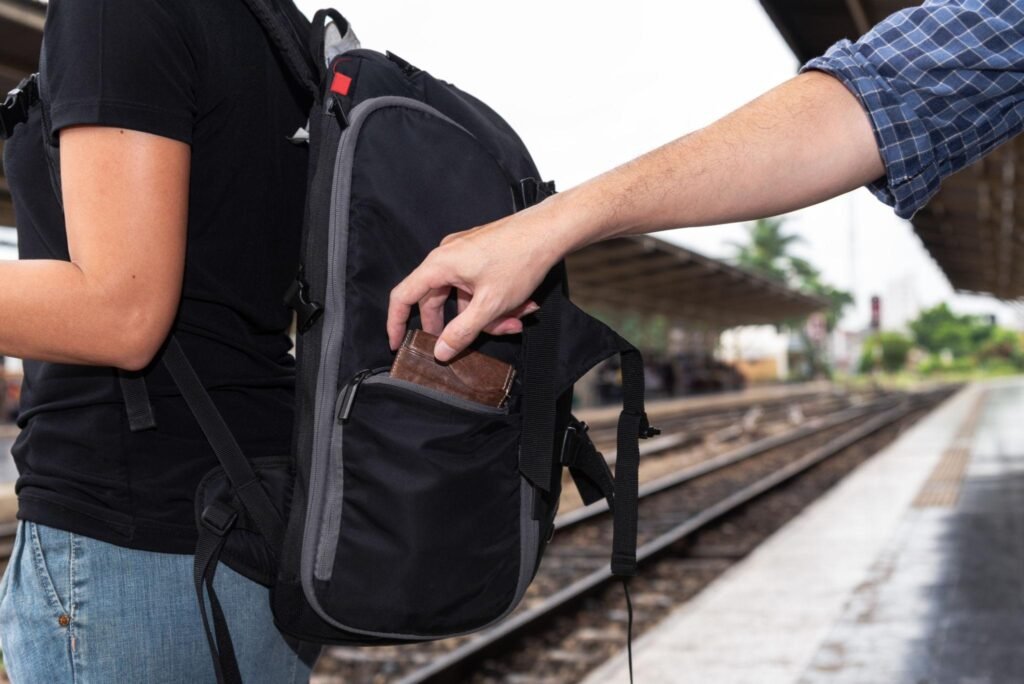
Where it happens:
- Night markets, festivals, crowded streets, public transport
Common setups:
- Someone spills something on you (cleaning distraction)
- A group blocks your path
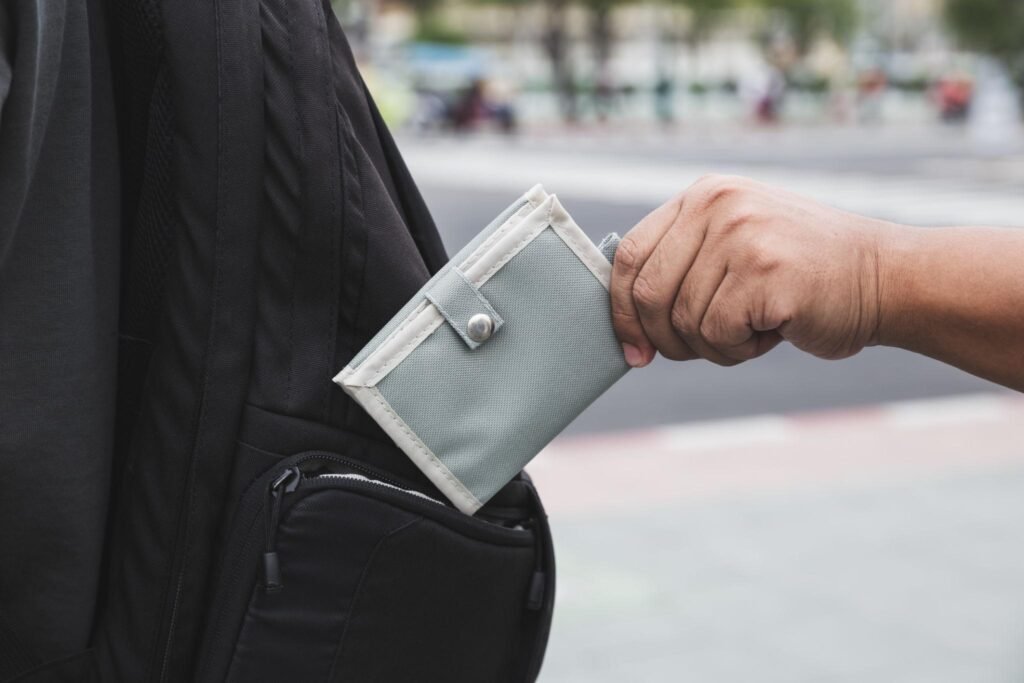
- Someone asks for help with a map while an accomplice lifts your wallet
What to do (practical setup):
- Use a front pocket or anti-theft bag
- Keep one card + small cash accessible; rest hidden
- Don’t take out your wallet in crowds
- If distracted, check belongings immediately
🎯 Quick Recap
While learning how to avoid scams is essential, overall travel safety involves much more than spotting dishonest vendors. Our Thailand safety tips guide explains how to stay safe while using public transport, enjoying nightlife, traveling solo, and exploring Thailand’s most popular destinations with confidence.
- Tuk tuk/taxi scams: fake closures, no-meter rides, shop detours
- Gem scam: “government sale” + resale promise = overpriced stones
- Jet ski scam: fake damage + police pressure, high payouts
- Nightlife scam: inflated bills, hidden fees, friendly-locals trap
- Fake guides: unauthorized sellers with “today only” deals
- Pickpocketing: distraction tactics in crowded areas
City-Wise Scam Breakdown
Different cities in Thailand have different scam patterns. If you know what’s common where you’re going, you can avoid 90% of problems before they start. Here’s a practical, location-based breakdown with real scenarios and exact actions.
Scams in Bangkok
Bangkok is the busiest entry point—so it’s also where most first-time travelers in Thailand encounter scams.

🏯 Temple Scams (Grand Palace Area)
Scenario:
“Grand Palace closed today—special ceremony.”
You’re redirected to another temple or a tuk tuk.
What to do:
- Check Google Maps hours or official site
- Many scammers falsely claim that major attractions are closed. Travelers should always verify opening hours through official attraction websites before changing plans or accepting alternative tour suggestions.
- Enter through the main gate only
- Ignore anyone approaching you outside
🛺 Tuk Tuk Traps
Cheap rides → forced shopping stops (gems, suits).
What to say:
“No stops. Direct only.”
If they hesitate—walk away.
👮 Fake Tourist Police
Some scammers wear badges or uniforms and ask:
“Routine check. Show passport.”
What to do:
- Real checks rarely happen randomly
- Never hand over your passport
- Say: “I’ll go to the police station with you.” (they’ll back off)
Quick Tip (Bangkok):
Stay extra alert around Grand Palace, Wat Pho, Khao San Road—these are high-scam zones.
Scams in Phuket
Phuket scams are more money-focused and aggressive, especially in beach areas.
🚤 Jet Ski Scam (Top Risk)
Fake damage → demand ₹20,000–₹1,00,000.
Non-negotiable rule:
👉 Record a full video before renting
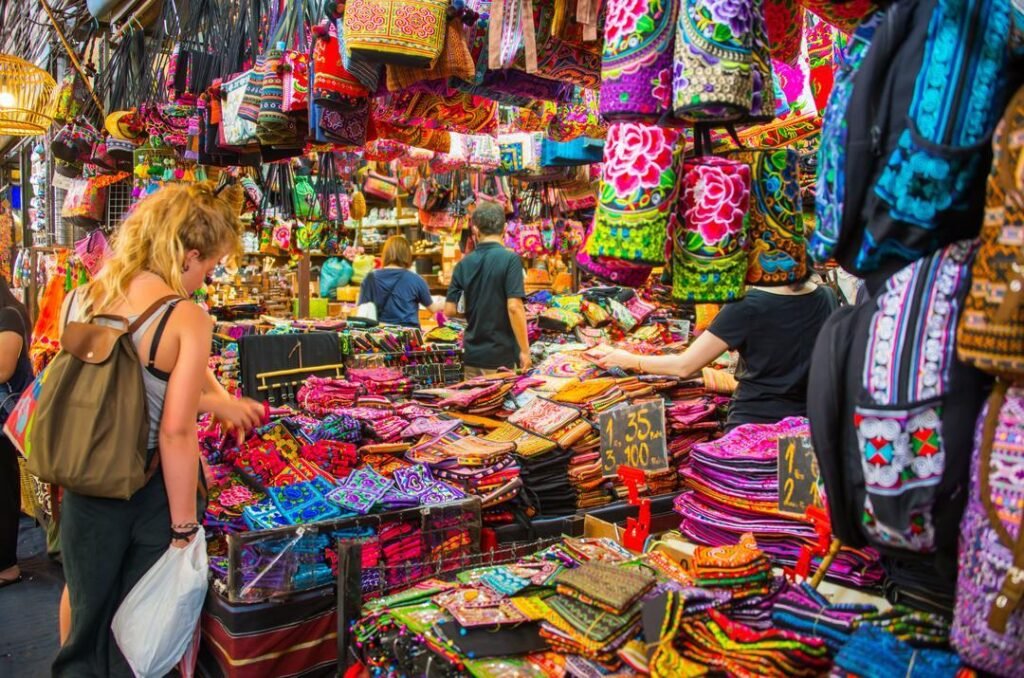
🏖️ Beach Vendor Overpricing
- Sunglasses, drinks, souvenirs sold at 2–3x price
- No fixed pricing
What to do:
- Ask price first
- Compare with nearby shops
- Be ready to walk away
🚕 Taxi Mafia (No Meter System)
In many Phuket areas, taxis:
- Refuse meters
- Quote high fixed prices
Example:
Airport to Patong:
- Normal: ~₹800–₹1,200
- Tourist quote: ₹2,000+
Best solution:
Use Grab or pre-book transfers.
Quick Tip (Phuket):
Avoid making decisions on the spot—most scams rely on urgency.
Scams in Pattaya
Pattaya is known for nightlife—so scams here are mostly entertainment-related.
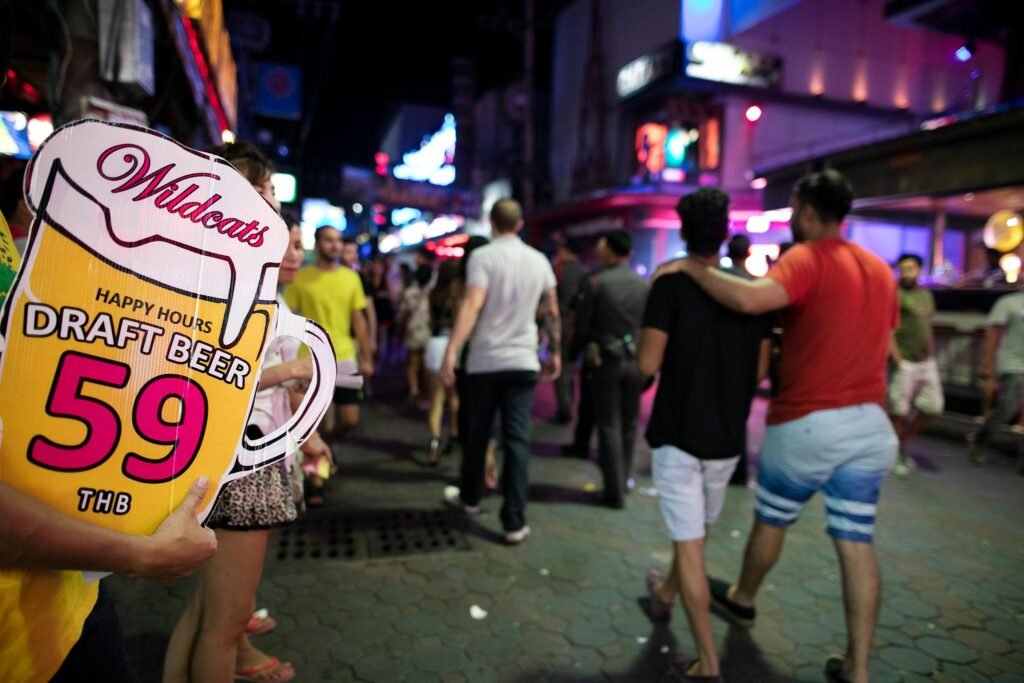
🍺 Nightlife Scams
A “friendly local” invites you for drinks.
Later:
- Drinks priced 3–5x higher
- Extra charges added (service, entertainment)
💸 Overcharging Bars
Some bars:
- Don’t display menus clearly
- Add hidden fees
- Pressure you to pay quickly
What to do:
- Always check menu with prices first
- Avoid opening a tab—pay per drink
- Stick to busy, well-reviewed venues
Real Example:
A traveler ordered 2 drinks expecting ₹500 total—ended up paying ₹3,000+ due to hidden charges.
Warning Signs of a Scam
If you remember just one section from this guide, make it this one. Most tourist scams in Thailand follow predictable patterns—you don’t need to know every scam, just the warning signs.
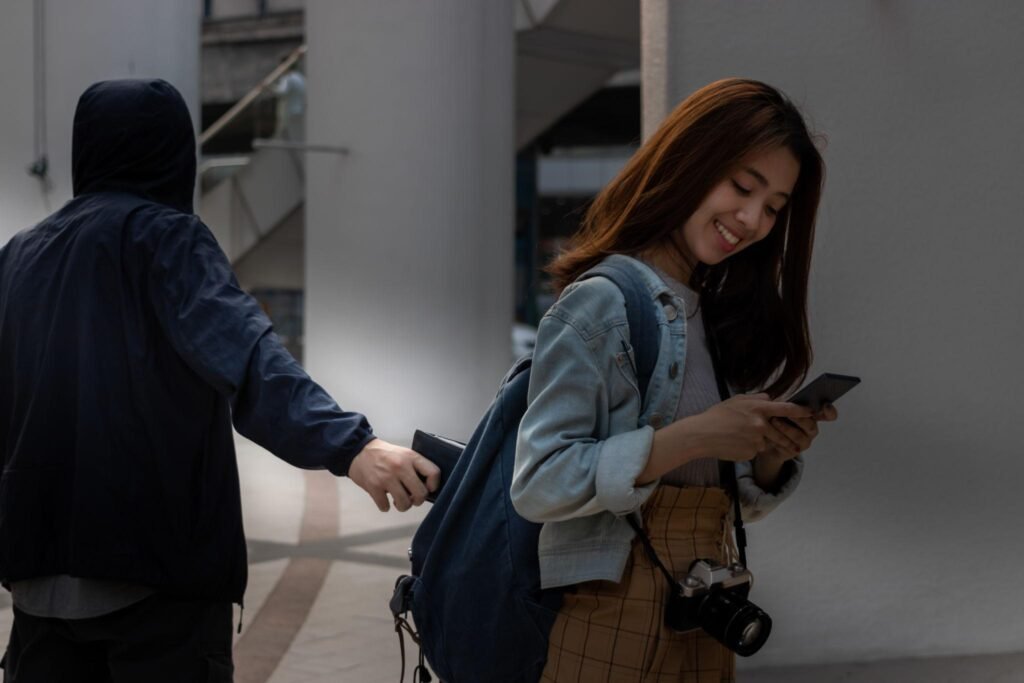
How can you identify a scam in Thailand?
Common warning signs include deals that seem too good to be true, urgency like “today only,” free offers from strangers, and being redirected away from your original plan.
🚩 1. Deals That Feel Too Good to Be True
Scenario:
“Only 20 baht tuk tuk ride!”
“Luxury tour for half price!”
👉 If the price feels unreal, there’s usually a hidden catch—like forced shopping stops or upselling later.
What to do:
- Compare prices quickly on Google or apps
- Ask yourself: Why is this cheaper than everyone else?
- If unclear → don’t proceed
⏳ 2. “Today Only” Urgency
Scenario:
“Special government sale—last day!”
“Offer ends in 10 minutes!”
👉 Urgency is used to stop you from thinking.
What to do:
- Pause and step away
- Legit businesses don’t rush tourists
Say:
“I’ll come back later after checking.”
🎁 3. Free Ride / Free Offer from Strangers
Scenario:
“Free tuk tuk ride today!”
“I take you—no charge!”
👉 In Thailand, nothing is truly free in tourist areas.
Free = you’ll be taken somewhere that earns them commission.
What to do:
- Politely decline
- Use trusted transport like Grab
- Stick to your original plan
🔀 4. Being Redirected Unexpectedly
Scenario:
You’re heading to a temple → suddenly told it’s closed → redirected to shops or another location.
👉 This is one of the most common scams in Thailand.
What to do:
- Stay focused on your destination
- Verify closures online
- Never change plans based on random street advice
🧠 Pro-Level Insight
Scams rarely feel like scams at the start. They feel like:
- Friendly conversations
- Helpful advice
- Lucky opportunities
👉 The moment your plan changes because of someone else, pause—that’s your biggest red flag.
✅ Quick Mental Rule
“If I didn’t plan it, I question it.”
This one habit can prevent most Thailand travel scams.
What to Do If You Get Scammed
Even with the best planning, situations can happen. The difference between a small inconvenience and a major loss is how quickly—and calmly—you respond.
Here’s a real-world action plan you can follow immediately if you face a scam in Thailand.
What should I do if I get scammed in Thailand?
Stay calm, contact tourist police (1155), inform your hotel, block your cards immediately, and file an official complaint with evidence.

🚨 Step 1: Stay Calm & Assess the Situation
Your first instinct might be panic—but that’s exactly what scammers rely on.
👉 Take 10 seconds and ask:
- What exactly happened?
- How much is at risk?
- Is the situation still ongoing?
Why this matters:
Clear thinking helps you avoid making the situation worse (like paying unnecessary charges or handing over documents).
📞 Step 2: Contact Tourist Police (1155)
Thailand has a dedicated Tourist Police Helpline: 1155 (English-speaking support available).
👉 When you call:
- Explain your situation clearly
- Share your location
- Mention if money, passport, or cards are involved
Pro Tip:
Save 1155 in your phone before your trip—you don’t want to search for it in a crisis.
🏨 Step 3: Inform Your Hotel Immediately
Your hotel is one of your strongest support systems.
They can:
- Call local authorities
- Translate if needed
- Guide you on next steps
👉 In many cases, hotels have handled similar situations before and know exactly what to do.
💳 Step 4: Block Your Cards Immediately
If your card details were shared or misused:
👉 Act within minutes:
- Call your bank
- Block or freeze the card
- Check for unauthorized transactions
Quick Tip:
Use your banking app for instant blocking—it’s faster than calling.
📝 Step 5: File an Official Complaint
This step is often skipped—but it matters.
You can file a complaint with:
- Tourist Police
- Local police station
👉 Include:
- Photos/videos
- Receipts or bills
- Location details
- Names or descriptions
Why file a complaint?
- Increases chance of recovery
- Helps prevent future scams
- Strengthens your case if needed later
🧠 Real-World Insight (What Actually Works)
From traveler experiences:
👉 People who recover losses usually:
- Act quickly
- Have proof (photos/videos)
- Stay calm and firm
👉 People who don’t:
- Panic and pay immediately
- Don’t report
- Leave without documenting
⚠️ What NOT to Do
- ❌ Don’t hand over your passport as security
- ❌ Don’t pay immediately under pressure
- ❌ Don’t argue aggressively (stay calm but firm)
- ❌ Don’t ignore the situation—take action fast
💡 Damage Control Strategy
If you’re pressured on the spot (e.g., jet ski scam):
👉 Say:
“I will contact tourist police before making any payment.”
This alone often de-escalates the situation.
📊 Recovery Reality Check
| Situation | Recovery Chance |
|---|---|
| Reported immediately + proof | Medium to High |
| Delayed reporting | Low |
| No evidence | Very Low |
👉 Speed + proof = your strongest advantage.
How Much Money Tourists Lose
Most travel blogs talk about scams—but very few show the real financial impact. And that’s where things get serious.
The truth is, tourist scams in Thailand aren’t just annoying—they can quietly destroy your travel budget if you’re not paying attention.
Let’s break it down with realistic numbers.

💸 Real Cost Breakdown
| Scam Type | Avg Loss |
|---|---|
| Tuk Tuk Scam | ₹500–₹3,000 |
| Jet Ski Scam | ₹20,000+ |
| Gem Scam | ₹50,000+ |
🛺 Tuk Tuk Scam (Small Loss, High Frequency)
At first glance, ₹500–₹3,000 may not seem like a big deal.
But here’s the catch:
- It happens multiple times
- Often combined with shopping pressure
- Adds up across your trip
👉 Example:
- Overpaying rides daily → ₹2,000 extra in a week
- Plus impulse shopping → ₹5,000+ wasted
Total hidden loss: ₹5,000–₹10,000
🚤 Jet Ski Scam (High-Risk, High Loss)
This is where things escalate quickly.
A simple 30-minute ride (₹1,500–₹3,000) can turn into:
- ₹20,000 for “minor damage”
- ₹50,000+ if pressure increases
👉 Many tourists pay because:
- They feel trapped
- Police are mentioned
- They want to avoid conflict
Key insight:
This is one of the fastest ways to lose money in Thailand.
💎 Gem Scam (The Biggest Financial Hit)
The gem scam isn’t about small losses—it’s about convincing you to spend big.
👉 Typical scenario:
- You invest ₹30,000–₹1,00,000
- Promised resale profit
- Actual value = almost nothing
Real outcome:
- 80–95% value loss
- No resale market
👉 This makes it the most expensive tourist scam in Thailand.
🧠 Hidden Budget Killer (What Most Travelers Miss)
Here’s something most blogs don’t talk about:
👉 Micro-losses + one big scam = total budget damage
Example:
- Taxi overcharges: ₹2,000
- Food/market overpricing: ₹3,000
- One jet ski scam: ₹30,000
👉 Total loss: ₹35,000+
That’s enough to fund:
- 4–5 extra days in Thailand
- Luxury hotel upgrades
- Island tours
How much money do tourists lose to scams in Thailand?
Tourists typically lose ₹500–₹3,000 in small scams like tuk tuk overcharges, while major scams like jet ski or gem scams can cost ₹20,000 to ₹50,000 or more.
📊 Budget Protection Strategy
To protect your money:
- Set a daily “scam buffer” mindset (stay alert in decisions)
- Avoid any deal involving pressure or urgency
- Use fixed-price services like Grab
- Record proof before rentals (jet skis, bikes)
💡 Pro Insight
From real travel experience:
👉 Smart travelers don’t avoid all scams—they minimize losses to near zero by:
- Saying no quickly
- Verifying before paying
- Avoiding emotional decisions
Pro Tips
These are the small, repeatable habits that separate stress-free trips from expensive mistakes. I’ve used these on every Thailand visit—they’re simple, practical, and they work.

🚕 Use Grab Instead of Random Taxis
The fastest way to eliminate most Thailand taxi scams is to avoid street negotiations altogether.
Use Grab for:
- Fixed pricing (no surprises)
- Driver tracking (safety + accountability)
- Cashless payments (no “no change” tricks)
Actionable move:
Open the app, check the fare range first. If a street taxi quotes more than that—walk away.
When it matters most: airport transfers, late nights, unfamiliar areas.
📸 Always Take Photos/Video Before Renting Anything
This one habit can save you ₹20,000–₹1,00,000+.
Before renting a:
- Jet ski
- Scooter/bike
- Car
👉 Do a 30–60 second 360° video:
- Close-ups of scratches/dents
- Dashboard/engine area
- Include the vendor and timestamp if possible
Say this out loud while recording:
“Recording condition before rental.”
It signals awareness and deters fake damage claims.
🙅 Avoid Overly Friendly Strangers
Thailand is friendly—but scams often start with friendliness.
Red flags:
- Someone approaches you first with a suggestion
- “Special deal today” conversations
- Unasked directions or recommendations
Simple rule:
If you didn’t ask, don’t act.
Polite exit line:
“No thanks, I already have plans.”
Keep walking. No debate needed.
🧠 Trust Your Instincts
That slight “this feels off” feeling? Don’t ignore it.
Most tourist scams in Thailand rely on:
- Urgency (“today only”)
- Emotional pressure (“help me help you”)
- Confusion (changing your plan mid-way)
Turn instinct into action:
- Pause for 5 seconds
- Ask: Did I plan this?
- If not → decline and move on
⚡ 10-Second Safety System
- Fixed price > negotiated price
- Video proof > verbal assurance
- You approach > they approach
- Planned decision > spontaneous decision
Follow this, and you’ll avoid almost every common scam in Thailand.
What are expert tips to avoid scams in Thailand?
Use trusted apps like Grab, document rentals with photos or videos, avoid unsolicited offers from strangers, and trust your instincts when something feels off.
Common Mistakes Tourists Make
Most tourist scams in Thailand don’t happen because people are careless—they happen because of a few predictable mistakes. Fix these, and you’ll avoid the majority of problems without overthinking every situation.
🤝 Trusting Strangers Too Quickly
Thailand is known for its hospitality, which makes it easy to drop your guard. Scammers rely on this.
What it looks like:
- A friendly local offering directions you didn’t ask for
- Someone recommending a “special deal”
- Casual conversations that suddenly turn into offers
👉 The mistake isn’t trusting people—it’s trusting too fast without verification.
What to do instead:
- Be friendly, but don’t act immediately
- Cross-check anything important (location, price, availability)
Follow this rule:
“Trust slowly, verify quickly.”
⭐ Not Checking Reviews (Biggest Digital Mistake)
In today’s world, this is one of the easiest mistakes to avoid—but many still skip it.
Common scenario:
- Booking a tour or rental on the spot
- Entering a shop without checking ratings
👉 Result: overpriced services or low-quality experiences.
What to do instead:
- Search the place on Google Maps before committing
- Look for:
- Rating (aim for 4.2+ ⭐)
- Recent reviews
- Photos from real customers
👉 If a place has no online presence, treat it as a risk.
💸 Carrying Too Much Cash
Carrying large amounts of cash makes you an easy target for:
- Pickpocketing
- Overcharging scams
- Pressure situations
Real issue:
When you have more cash, you’re more likely to:
- Pay quickly to avoid conflict
- Lose more if something goes wrong
What to do instead:
- Carry small daily cash (₹500–₹2000 equivalent)
- Keep backup money/cards in a separate place
- Use digital payments or apps like Grab where possible
🚩 Ignoring Red Flags
This is the most common and most costly mistake.
Red flags include:
- Prices that seem unusually low
- “Today only” offers
- Being redirected from your original plan
- Feeling rushed or pressured
👉 Most travelers notice these—but ignore them.
Why?
- They don’t want to seem rude
- They think they might miss a “good deal”
- They trust the situation will be fine
🧠 The Fix: Turn Awareness Into Action
Instead of just noticing red flags, act on them.
Simple decision rule:
If something feels even slightly off → pause or walk away
No debate. No second guessing.
Best Time to Travel to Avoid Scams
Most people choose travel dates based on weather—but here’s a smarter angle most blogs ignore:
👉 Your travel timing directly affects your risk of encountering scams in Thailand.
Scams don’t happen randomly—they increase when tourist volume increases. Understanding this gives you a serious advantage.

🌴 Peak Season = More Scams (High Demand = High Risk)
Peak season in Thailand:
- November to February (cool & dry weather)
- Major holidays (Christmas, New Year)
During this time:
- Tourist areas are extremely crowded
- Demand for taxis, tours, and activities spikes
- Prices naturally increase—and so do opportunistic scams
🎭 What Changes During Peak Season?
- More tuk tuk and taxi scams (drivers know you’re in a rush)
- Higher chances of overpricing (you won’t compare in crowds)
- Increased pressure selling (gems, tours, nightlife)
Real scenario:
You land in Bangkok during New Year → long taxi queues → driver offers “quick ride, fixed price.” You accept without thinking.
✅ How to Stay Safe in Peak Season
- Pre-book airport transfers
- Use Grab instead of street taxis
- Avoid making rushed decisions in crowded areas
👉 Peak season isn’t unsafe—you just need more awareness + patience.
🌧️ Off-Season = Fewer Scams (But Stay Alert)
Off-season (low season):
- May to October (rainy season)
During this time:
- Fewer tourists = less scam targeting
- Vendors compete more → better deals
- Less pressure in decision-making
🧠 Hidden Advantage of Off-Season Travel
Because things are slower:
- You have time to compare prices
- Less urgency = fewer mistakes
- Scammers have fewer targets
👉 This naturally reduces your exposure to common scams in Thailand
⚠️ But Don’t Get Too Comfortable
Scams don’t disappear—they just become less frequent.
You still need to:
- Verify prices
- Avoid “too good to be true” deals
- Follow the same safety habits
🎯 Smart Travel Strategy
If you want the best mix of safety + experience:
👉 Travel during shoulder season:
- Late October
- March–April
Why this works:
- Moderate crowds
- Better prices
- Lower scam pressure
When is the best time to travel to avoid scams in Thailand?
Scams are more common during peak tourist season (November–February) due to high crowds and demand. Traveling in the off-season (May–October) or shoulder months reduces scam risk.
🧠 Expert Insight
From real travel experience:
👉 Scams increase when:
- You’re rushed
- You’re surrounded by crowds
- You don’t have time to think
👉 They decrease when:
- You move at your own pace
- You can compare options
- You stay in control of decisions
Safe Alternatives & Smart Travel Choices
Avoiding tourist scams in Thailand isn’t just about saying “no”—it’s about choosing better, safer alternatives that remove risk altogether. When you replace uncertain choices with reliable ones, scams simply don’t get a chance.
Here’s what smart travelers do differently.
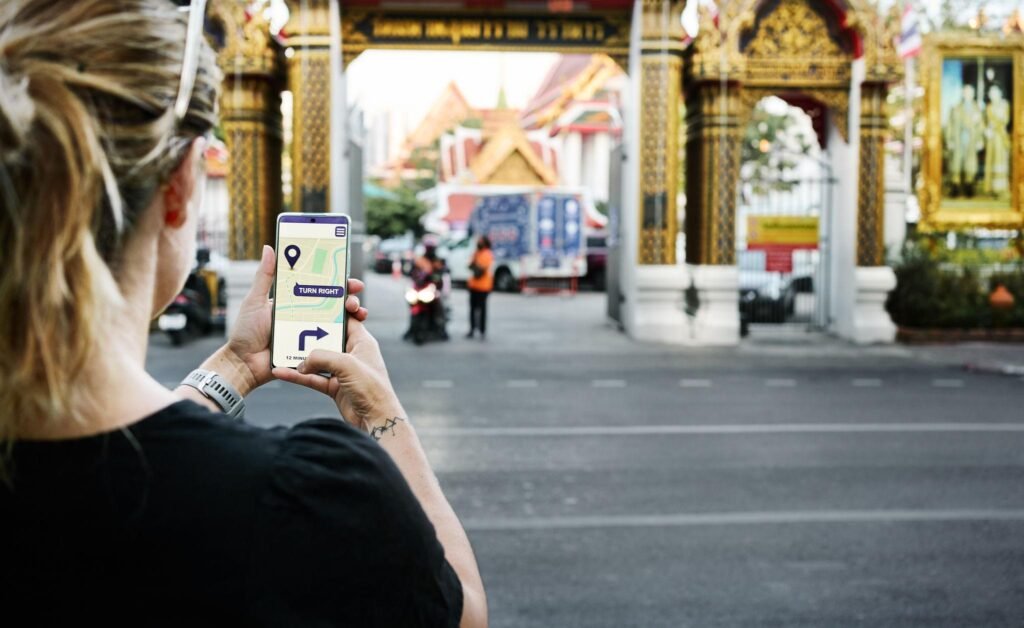
📱 Use Verified Apps (Your First Line of Defense)
If you rely on random street offers, you’re guessing. If you use apps, you’re in control.
Use trusted tools like:
- Grab → taxis with fixed pricing
- Google Maps → check reviews, opening hours, directions
- Booking platforms → verified hotels & tours
👉 These apps reduce:
- Overpricing
- Miscommunication
- “Too good to be true” deals
Actionable tip:
Before accepting any service offline, check the same option online. If there’s a big price gap → walk away.
🏨 Book Tours via Hotel (Underrated but Powerful)
Your hotel is more than just a place to sleep—it’s your local safety network.
Hotels usually:
- Partner with verified tour operators
- Avoid risky vendors
- Help resolve issues if something goes wrong
Real example:
A street tour might cost slightly less—but if anything goes wrong, you’re on your own.
A hotel-booked tour gives you accountability + support.
👉 Think of it as paying a small premium for peace of mind.
👥 Travel in Groups (Even Small Ones)
Scammers typically target:
- Solo travelers
- Confused or hesitant tourists
👉 Groups are naturally harder to target.
Why it works:
- Shared decision-making
- Less pressure from scammers
- More confidence in saying no
Even if you’re traveling solo:
- Join group tours
- Explore busy areas with others
- Avoid isolated decision-making
🧠 Smart Travel Rule
The more structured your choices, the lower your risk.
- App booking = structured
- Hotel recommendation = structured
- Random street deal = unstructured (high risk)
What are safe alternatives to avoid scams in Thailand?
Use verified apps like Grab, book tours through hotels or trusted platforms, and travel in groups to reduce risk and avoid common scams.
💡 Pro Insight
From real travel experience:
👉 Travelers who rely on systems (apps, hotels, reviews) rarely face scams.
👉 Travelers who rely on chance (street deals, random offers) face the most issues.
❓ FAQ – Tourist Scams in Thailand
Is Thailand safe for tourists?
Yes—Thailand remains one of the safest countries in Southeast Asia for travelers. Violent crime is rare in tourist areas, and infrastructure is well-developed. Most issues travelers face are low-level scams or overcharging, not physical danger.
👉 Stay aware, use trusted services, and follow basic precautions—you’ll likely have a smooth trip.
What is the most common scam in Thailand?
The tuk tuk and taxi scam is the most common, especially in Bangkok. Drivers may:
- Claim attractions are closed
- Refuse to use the meter
- Take you to commission-based shops
👉 These are frequent because they target first-time tourists and quick decisions.
How can I avoid taxi scams in Thailand?
The safest way is to:
- Always insist: “Meter on”
- Or use trusted apps like Grab
👉 If a driver refuses the meter, simply exit and find another ride. Never negotiate under pressure.
Are scams common in Phuket?
Yes, but they’re usually high-value scams, not frequent small ones. The most common include:
- Jet ski damage scams
- Taxi overcharging
- Beach vendor price inflation
👉 Phuket is safe overall, but requires extra caution with rentals and transport.
Can tourists get money back after a scam?
Recovery is possible—but not guaranteed.
👉 Your chances improve if you:
- Report immediately to tourist police (1155)
- Provide evidence (photos, videos, receipts)
- Involve your hotel for support
👉 Delayed action or lack of proof = low recovery chances.
Is it safe to use tuk tuks in Thailand?
Yes, tuk tuks are safe—but pricing is not regulated.
👉 To use them safely:
- Agree on price before starting
- Avoid unusually cheap offers
- Say clearly: “No stops, direct only”
What number should I call if I get scammed in Thailand?
Dial 1155 — Thailand’s Tourist Police Hotline.
👉 They offer:
- English-speaking assistance
- Help with scams, disputes, and emergencies
Pro tip: Save this number in your phone before traveling.
Is Thailand safe and how to avoid scams?
Thailand is generally safe for tourists, but common scams like taxi overcharging and jet ski fraud exist. Use trusted apps like Grab, verify prices, and contact tourist police (1155) if needed.