This guide isn’t another recycled “top 20” list. It’s built around one question we kept asking ourselves while planning: if you only have limited days, what’s actually worth your money and your time — and what can you skip without regret?
Below you’ll find the best things to do in Singapore broken down by real cost, honest pros and cons, and a verdict section built around how many days you actually have. If you’re still sorting out entry requirements before you get here, our guides on how to get a Singapore tourist visa and whether the SG Arrival Card is still required are worth reading first.
Table of Contents
ToggleTop 5 Picks by Traveler Type
| If you’re a… | Start here | Cost | Time needed |
|---|---|---|---|
| First-time visitor | Gardens by the Bay + Marina Bay Sands SkyPark | ~S$70/person | Half day |
| Traveling with kids | Singapore Zoo + River Wonders | ~S$48+ per person, per park | Full day |
| On a tight budget | Chinatown, Little India, Merlion Park, hawker centres | Free–S$15 (food only) | Full day |
| On a layover (under 12 hrs) | Jewel Changi + Gardens by the Bay outdoor gardens | Free–S$30 | 4–6 hours |
| Thrill-seeker / theme park fan | Universal Studios Singapore | S$83–88 | Full day |
Best Time to Visit Singapore for Sightseeing
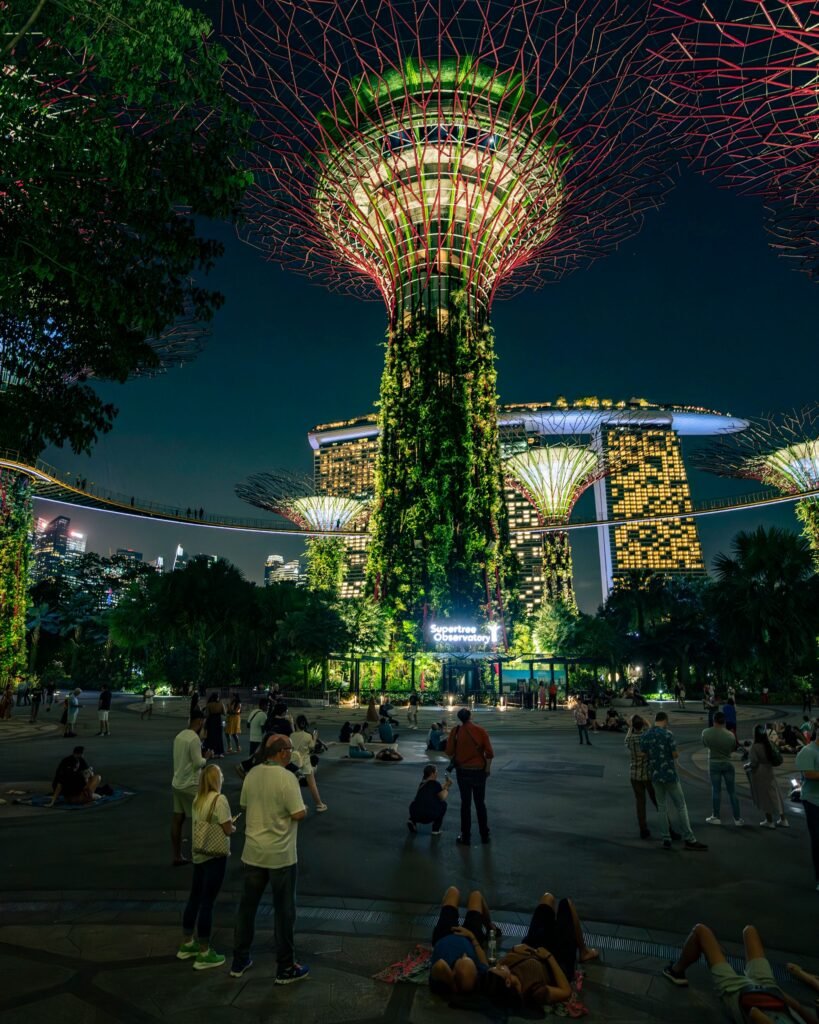
Singapore sits about 137 km north of the equator, so “seasons” here mean rainfall patterns, not temperature swings — expect 26–32°C (79–90°F) and high humidity every single month of the year. That changes how you should think about timing an itinerary that’s heavy on outdoor attractions like Gardens by the Bay’s Supertree Grove or Sentosa’s beaches.
The Northeast Monsoon (roughly December to early March) brings the heaviest, most frequent short bursts of rain, while June to September can bring regional haze from agricultural burning in neighboring Indonesia, which occasionally affects outdoor visibility and air quality. Neither makes Singapore un-visitable — this isn’t a destination with a true off-season — but if your itinerary depends on clear skies for photos (the SkyPark, the Supertree Observatory), check Singapore’s National Environment Agency forecast a few days out rather than relying on a generic “avoid monsoon season” rule of thumb.
| Period | What to expect | Good for |
|---|---|---|
| Dec–early Mar | Heaviest, most frequent rain | Indoor attractions, shopping, museums |
| Mar–May | Warmest, drier stretch | Outdoor sightseeing, Sentosa beaches |
| Jun–Sep | Possible regional haze | Check air quality index before outdoor days |
| Oct–Nov | Transitional, scattered showers | Mixed indoor/outdoor plans |
What Sightseeing in Singapore Actually Costs

Singapore has a reputation as an expensive city, and for hotels and dining it deserves it — but sightseeing itself is more flexible than people expect, because several of the most photographed attractions are free. Here’s what’s genuinely free versus what you’ll pay for, based on official 2026 pricing:
| Attraction | Adult Price (2026) | Notes |
|---|---|---|
| Merlion Park | Free | No ticket needed |
| Gardens by the Bay – outdoor gardens & Supertree Grove | Free | Only the domes and Skyway are paid |
| Gardens by the Bay – Cloud Forest + Flower Dome | From ~S$46 | Combo ticket for both domes |
| Gardens by the Bay – OCBC Skyway | From ~S$14 | Separate add-on ticket |
| Marina Bay Sands SkyPark (daytime) | From ~S$23–24 | Sunset/evening slots cost more |
| Marina Bay Sands SkyPark (sunset slot) | From ~S$32–33 | Books out fastest — reserve ahead |
| Singapore Zoo | From ~S$48 | Non-resident rate; tram included |
| Night Safari | From ~S$58 | See our full Night Safari guide for details |
| Universal Studios Singapore | S$83–88 (off-peak/peak) | Child: S$62–69 |
| Singapore Cable Car (Sky Pass, both lines) | From ~S$33–35 | Mount Faber Line alone ~S$29–33 |
| Chinatown, Little India, Kampong Glam | Free to explore | Some heritage centres charge small fees |
| Hawker centre meal | S$4–8 | Chicken rice, laksa, char kway teow |
Source note: Attraction pricing is drawn from official operator sites (Mandai Wildlife Group, Gardens by the Bay, Marina Bay Sands, Universal Studios Singapore, Mount Faber Leisure) as of August 2026. All are listed as “from” prices because peak/off-peak tiers, combo bundles, and promotions shift regularly — always check the live price before booking.
Top Things to Do in Singapore

1–3. Iconic & Must-See Landmarks
Gardens by the Bay is the single most photographed spot in the city, and rightly so — the Supertree Grove (18 vertical gardens up to 50m tall) and the free nightly Garden Rhapsody light show cost nothing to see. Inside, the Cloud Forest houses one of the world’s largest indoor waterfalls, and the Flower Dome swaps its display seasonally — check what’s showing before you go, since exhibits like the Disney Garden of Wonder run on limited windows through parts of 2026 and 2027.

Marina Bay Sands SkyPark Observation Deck sits 200 metres up, spanning all three hotel towers with 360-degree views over the Supertrees, the Esplanade, and the Strait of Malacca shipping lanes. Tickets are time-slotted — daytime entry (from around S$23–24) is noticeably cheaper than the sunset slot (from around S$32–33), which also catches the Spectra light show visible from the deck after 8pm.

Merlion Park is free, takes 15–20 minutes, and is genuinely worth the stop for the skyline backdrop alone — don’t let anyone talk you out of the “obligatory tourist photo” here. It’s a five-minute walk from Marina Bay Sands, so pair the two.

4–5. Sentosa Island & Family Attractions

Sentosa is Singapore’s resort island, connected to the mainland by the Sentosa Express monorail, the Singapore Cable Car, a boardwalk, or a short taxi ride. Universal Studios Singapore is the headline draw — Southeast Asia’s only Universal park, with Battlestar Galactica’s dueling coasters, the Transformers ride, and the newer Minion Land expansion. Adult tickets run S$83 (off-peak) to S$88 (peak), with child tickets from S$62. Budget a full 8–10 hours to cover all zones properly; rushing it in 4–5 hours means missing the WaterWorld stunt show.
For getting to Sentosa itself, the Singapore Cable Car is the scenic option — a round-trip Sky Pass covering both the Mount Faber and Sentosa lines runs roughly S$33–35 for adults, versus the flat-rate Sentosa Express monorail if you’d rather skip straight to the island.
6. Wildlife & Nature: Singapore Zoo, Night Safari, Bird Paradise

The Mandai Wildlife Reserve — home to Singapore Zoo, Night Safari, Bird Paradise, and River Wonders — deserves its own separate day, and honestly its own separate article, which is why we cover the Night Safari in full depth here. In short: Singapore Zoo (from ~S$48, tram included) works best in the morning before the heat peaks, while Night Safari is an evening-only experience (opens 6:15pm, first tram around 7:15pm). Pick two parks maximum per day — trying to cram three into one visit means rushing through all of them.
7. Culture & Heritage: Chinatown, Little India, Kampong Glam

These three neighborhoods are where Singapore’s multicultural identity is most visible, and all three cost nothing to walk through — you’re only paying for food, shopping, or the occasional heritage centre entry fee. In Chinatown, the Buddha Tooth Relic Temple is free to enter (modest dress required — cover shoulders and knees). In Little India, the Sri Veeramakaliamman Temple welcomes visitors outside of prayer times, and Tekka Centre is one of the best hawker stops in the city for South Indian food. Kampong Glam, anchored by the golden-domed Sultan Mosque, is where you’ll find Haji Lane’s independent boutiques and street art.
8. Hawker Centres & Food Experiences

Singapore’s hawker culture earned UNESCO Intangible Cultural Heritage status in 2020, and it’s still the best-value way to eat well in the city. Maxwell Food Centre, Lau Pa Sat, and Tekka Centre are the three most tourist-accessible, each with multiple stalls holding a Michelin Guide Singapore Bib Gourmand recognition — a genuinely useful filter when a hawker centre has 100+ stalls and you don’t know where to start. Expect S$4–8 per dish for chicken rice, laksa, or char kway teow.
9. Nightlife & Evening Activities

Clarke Quay’s riverside strip is the obvious pick for bars and clubs, but two free evening experiences are easy to miss: the Garden Rhapsody light-and-sound show at Gardens by the Bay’s Supertree Grove (nightly, typically two showings around 7:45pm and 8:45pm — confirm current times before you go) and the Spectra light show at Marina Bay, visible from the waterfront promenade at no cost. If you’re museum-hopping instead, the ArtScience Museum stays open into the evening and pairs well with a SkyPark visit beforehand.
10. Hidden Gems & Off-the-Beaten-Path Picks

Most “top 20 Singapore” lists repeat the same eight attractions. A few worth adding if you’ve got extra time or you’re a repeat visitor:
- Southern Ridges — a free, elevated walking trail connecting Mount Faber Park to Kent Ridge Park via the Henderson Waves bridge, with skyline views most tourists never see.
- Tiong Bahru — a low-rise, art-deco residential neighborhood with independent cafés and one of the city’s most photogenic (and least crowded) hawker centres.
- Pulau Ubin — a short bumboat ride from Changi Point takes you to an island that still looks like 1960s Singapore: kampong houses, unpaved roads, and mountain-bike trails.
11. Museums & Indoor Culture

Singapore’s museum scene is genuinely underrated compared to how much attention Marina Bay and Sentosa get, and museums double as your best backup plan on a rainy monsoon-season afternoon. The ArtScience Museum, shaped like a lotus flower beside Marina Bay Sands, rotates between digital-art installations (teamLab’s immersive rooms have been a recurring highlight) and touring exhibitions — check what’s showing before you go, since the lineup changes every few months. The National Gallery Singapore, housed in the former Supreme Court and City Hall buildings, holds the world’s largest public collection of Singapore and Southeast Asian art, and general admission is free for Singapore residents but paid for visitors — a detail easy to miss if you’re going off outdated blog posts. The Peranakan Museum covers the Peranakan (Straits Chinese) culture that shaped much of Singapore’s early identity, and it’s compact enough to see properly in 60–90 minutes.
12. Shopping: Orchard Road & Beyond

Orchard Road is Singapore’s main shopping boulevard — over 2km of malls, from luxury flagship stores to mid-range chains — and it’s worth an hour or two of browsing even if you’re not buying much, if only for the air conditioning on a hot afternoon. ION Orchard and Ngee Ann City are the two most visited malls on the strip. If you’re after something with more character than a shopping mall, Haji Lane in Kampong Glam (independent boutiques, vintage shops) and Bugis Street Market (budget fashion, souvenirs) are better picks. Save serious shopping time for weekdays — weekend crowds on Orchard Road can turn a quick browse into an hour of navigating foot traffic.
13. Day Trips Beyond the Main Island

Beyond Pulau Ubin (mentioned above under hidden gems), two other short trips are worth knowing about if you have extra days. Southern Islands (St. John’s Island and Lazarus Island) are reachable by ferry from Marina South Pier and offer a quieter, beach-focused alternative to Sentosa with far fewer tourists. Across the Causeway, Johor Bahru, Malaysia is a common day-trip add-on for travelers with a multi-entry visa situation or extra time, though border-crossing wait times vary significantly by day and hour — this deserves its own dedicated planning rather than a same-day decision.
Getting Around Singapore

The MRT (Mass Rapid Transit) is the backbone of getting around, and it’s genuinely one of the easier metro systems to navigate anywhere in the world — English signage throughout, trains every few minutes, and air conditioning that becomes a small mercy on a hot afternoon. A contactless bank card or an EZ-Link card both work directly at the fare gates; there’s no need to buy paper tickets for single rides.
| Method | Best for | Approx. cost |
|---|---|---|
| MRT / bus (tap-to-pay) | Almost everywhere on the main island | S$1–3 per ride |
| Grab (ride-hailing app) | Late nights, luggage, groups | S$10–25 per ride, city-dependent |
| Taxi | Airport transfers, rainy days | Similar to Grab, plus surcharges |
| Walking | Within Marina Bay, Chinatown, Kampong Glam | Free |
Pros & Cons of Sightseeing in Singapore
| Pros | Cons |
|---|---|
| Extremely safe, even at night and alone | Paid attractions add up fast for a family |
| Efficient, cheap MRT covers almost everywhere | Year-round heat and humidity can wear you down |
| Compact — you can cover a lot in a short trip | Some attractions (theme parks, malls) feel interchangeable with anywhere else |
| Genuinely multicultural — three distinct heritage districts | Outdoor/manufactured attractions can feel less “authentic” than nearby SEA countries |
| Free options exist for almost every category | Popular time slots (SkyPark sunset, USS Express Pass) sell out |
Common Mistakes to Avoid

- Not booking timed-entry tickets ahead. Gardens by the Bay’s domes, the SkyPark sunset slot, and Universal Studios all sell dated tickets — walk-up availability isn’t guaranteed, especially on weekends.
- Underestimating the heat. Singapore’s humidity catches people off guard even when the temperature reading looks manageable. Build in air-conditioned breaks between outdoor attractions.
- Trying to cram too many Mandai parks into one day. Two parks maximum, or you’ll rush through all of them.
- Assuming every neighborhood attraction is free. Most of Chinatown, Little India, and Kampong Glam cost nothing to walk through, but a handful of heritage centres and museums inside them charge separate entry — check before you plan a “free day” around them.
- Skipping travel insurance because “it’s a safe, developed country.” Singapore’s safety reputation is well earned, but medical costs here are also among the highest in Asia if something does go wrong — insurance is still worth having.
Pro Travel Tips

- Get an EZ-Link card or use contactless payment directly on the MRT and buses — no need for a physical pass if your card supports tap-to-pay.
- Book skip-the-line tickets through official operator sites or established platforms (Klook, GetYourGuide) rather than at the gate — gate prices run higher and popular dates can sell out entirely.
- Shoot the Supertree Grove at blue hour — roughly 15–20 minutes after sunset, when the sky still has color but the Supertree lights are fully on.
- Avoid Orchard Road on weekend afternoons if crowds bother you; weekday mornings are noticeably quieter.
- [We used — insert the specific app or tool you actually used — to book skip-the-line tickets and found — insert your honest take on whether it was worth it.]
- Pack a portable fan or cooling towel if you’re prone to heat fatigue — even locals lean on these during the hottest stretch of the afternoon (roughly noon to 3pm).
- Download the Mandai Wildlife Reserve app before your zoo/Night Safari day — it has live feeding-time schedules that aren’t always posted clearly on-site.
Who Should Choose What
If you have 1 day (layover): Jewel Changi (if your layover is airport-adjacent), Gardens by the Bay’s free outdoor gardens, and Merlion Park. Skip anything requiring a full day, like Sentosa or Mandai.
If you have 3 days (first-timer standard): Day 1 — Marina Bay Sands SkyPark + Gardens by the Bay. Day 2 — Sentosa (Universal Studios or the beaches, plus the cable car ride over). Day 3 — Chinatown, Little India, Kampong Glam, and a hawker-centre food crawl.
If you have 5+ days: Add a full Mandai Wildlife Reserve day (Zoo in the morning, Night Safari in the evening), a day trip to Pulau Ubin or the Southern Ridges, and slow down the neighborhood exploring instead of rushing it into one day.
Traveling with kids: Prioritize Sentosa, Singapore Zoo/River Wonders, and Jewel Changi’s indoor waterfall and play areas over the more adult-paced heritage neighborhoods.
On a tight budget: You can genuinely enjoy Singapore spending almost nothing on attractions — Merlion Park, Gardens by the Bay’s outdoor gardens, all three heritage neighborhoods, and the Southern Ridges trail are free, leaving your budget for hawker food instead.
Is Singapore Worth Visiting? A Few More Honest Notes
A fair question competitor guides tend to skip: is Singapore worth the cost and the hype compared to spending the same days in, say, Bangkok or Bali? Our honest take is that it depends what you want from a trip. If you’re chasing budget backpacking or a slower, more “lived-in” travel pace, Singapore’s polish can feel closer to a very well-run theme park than an organic city — the manufactured feel of Gardens by the Bay or Sentosa is real, and some travelers find it less memorable than a chaotic old-town market elsewhere in Southeast Asia. But if you want maximum safety, cleanliness, and an easy first stop in the region — especially with kids, or as a stopover before a longer Southeast Asia trip — Singapore earns its reputation. Most travelers we’ve spoken with land somewhere in between: worth 2–4 days, not necessarily worth a full standalone week unless you’re specifically chasing the food scene or the theme parks.
Frequently Asked Questions
What is Singapore best known for?
Singapore is best known for Marina Bay Sands, Gardens by the Bay's Supertree Grove, its hawker food culture (a UNESCO Intangible Cultural Heritage), and being one of the safest, most efficiently run cities in the world.
Is 3 days enough to see Singapore?
Yes, 3 days is enough to cover the core highlights — Marina Bay, Sentosa, and the heritage neighborhoods — comfortably, though 5+ days lets you add Mandai Wildlife Reserve and day trips without rushing.
What can I do for free in Singapore?
Merlion Park, Gardens by the Bay's outdoor gardens and Supertree Grove, the nightly Garden Rhapsody and Spectra light shows, the Southern Ridges walking trail, and exploring Chinatown, Little India, and Kampong Glam are all free.
What is the best month to visit Singapore?
February to April tends to offer the driest, warmest stretch of weather, though Singapore has no true off-season — outdoor plans just need more flexibility during the December–early March monsoon period.
Is Singapore expensive for tourists?
Hotels and dining out can be expensive, but sightseeing is more budget-friendly than reputation suggests — several major attractions are free, and hawker food costs S$4–8 per meal.
What should first-time visitors to Singapore not miss?
Gardens by the Bay, the Marina Bay Sands SkyPark, at least one hawker centre meal, and one heritage neighborhood (Chinatown, Little India, or Kampong Glam) cover the essential first-timer experience.
Can you do Singapore on a layover?
Yes — Changi Airport is well connected to the city by MRT, and even a 6-hour layover is enough to see Jewel Changi's indoor waterfall and Gardens by the Bay's free outdoor sections if your layover allows re-entry through immigration.
Is Sentosa Island worth visiting if I'm not going to Universal Studios?
Yes — Sentosa's beaches, the Singapore Cable Car ride over, and free attractions like Sensoryscape make it worth a visit even without paying for the theme park, especially on a clear-weather afternoon.