Tell three different people you’re “going backpacking in Nepal” and you’ll get three different mental pictures. One person imagines you alone in the wilderness with a tent and a stove. Another imagines hostels, night buses and cheap street food. A third thinks you mean a two-week walk up toward Everest Base Camp with a porter carrying your bag.
All three are right. That’s the problem, and it’s why so many people book the wrong trip.
The words backpacking and trekking overlap, and different parts of the world use them differently. Most guides online just give you a dictionary definition and stop. They don’t tell you what each one costs, when to go, what permits you need, or how to decide.
This guide does. I’ll explain the real difference between backpacking and trekking, compare costs and seasons across Asia, point out the mistakes that catch beginners out, and give you a simple way to choose. By the end you’ll know which trip fits your budget, your fitness and your free time.
Table of Contents
ToggleBackpacking vs Trekking
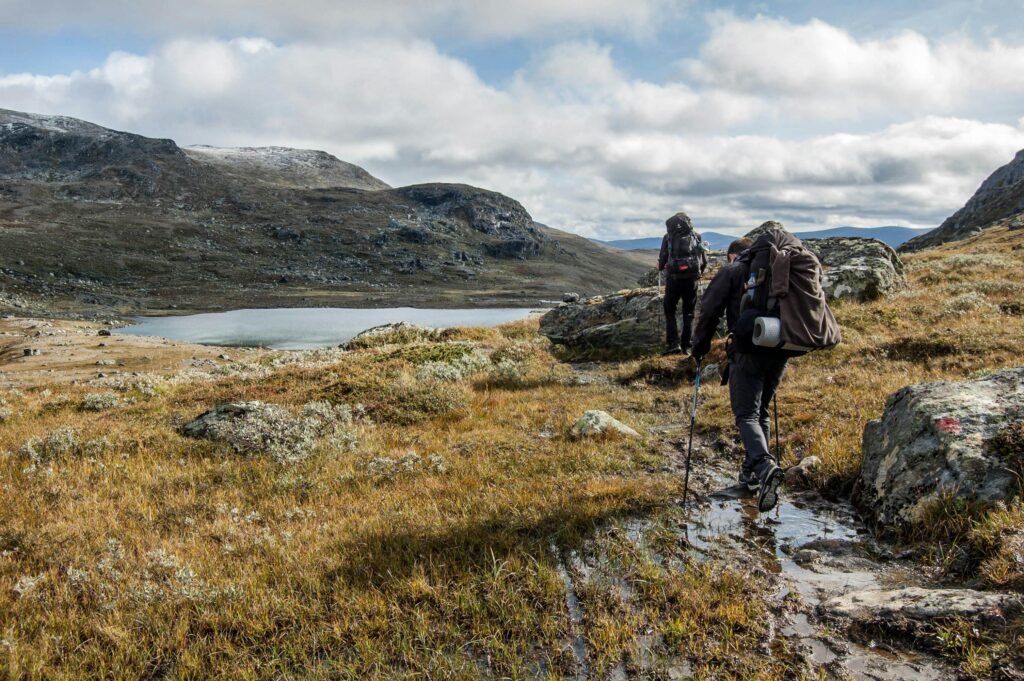
Backpacking means traveling (or hiking) while carrying everything you need on your own back. Trekking means a multi-day walk through rugged or remote terrain, often on a set route and often with some support such as guides, porters or teahouses. When you carry your own gear on a multi-day trek, the two overlap. Trekking is usually harder and more route-specific, while backpacking is the broader idea.
That’s the short version. The longer version is that “backpacking” has three common meanings, and knowing which one someone is using clears up most of the confusion.
Meaning 1: Backpacking as self-supported camping
This is the common meaning in the US, Canada and Australia. You hike for several days, carry your tent, sleeping bag, food and stove, and camp along the way. Nobody carries anything for you, and you don’t rely on lodges or villages.
Typical features: a heavy pack (often 10–15 kg or more), a planned route through national parks or wild areas, and full self-reliance for food, water and shelter.
Meaning 2: Backpacking as budget independent travel
This is the common meaning across Asia, Europe and much of the world. A “backpacker” is someone traveling on a modest budget with a backpack instead of a suitcase, hopping between hostels, guesthouses, buses and trains. There’s no wilderness involved. The “backpacking” is the style of travel, not the hiking.
Think of the well-worn routes through Thailand, Laos, Vietnam and Cambodia, or a loop through Rajasthan and Himachal. If you’ve heard of the “banana pancake trail,” that’s this kind of backpacking.
Meaning 3: Trekking, guided, teahouse or self-led
Trekking is a long walk, usually lasting several days to a few weeks, through hills or mountains. In the Himalaya especially, it often means staying in simple village teahouses or lodges rather than camping. You might carry a daypack while a porter takes the heavy bag, or you might carry everything yourself. Routes tend to be well known, such as the Annapurna Circuit, Everest Base Camp, Langtang or Bhutan’s Snowman Trek.
Where hiking, mountaineering and bikepacking fit
A few neighboring terms are worth separating out, because they get tangled with these two:
- Hiking: a walk of a few hours up to a day. You go home or to your hotel afterward.
- Mountaineering: climbing peaks, often with ropes, crampons and technical skill. It’s more extreme than trekking.
- Bikepacking: backpacking, but by bicycle with bags attached to the bike.
Backpacking vs Trekking at a Glance
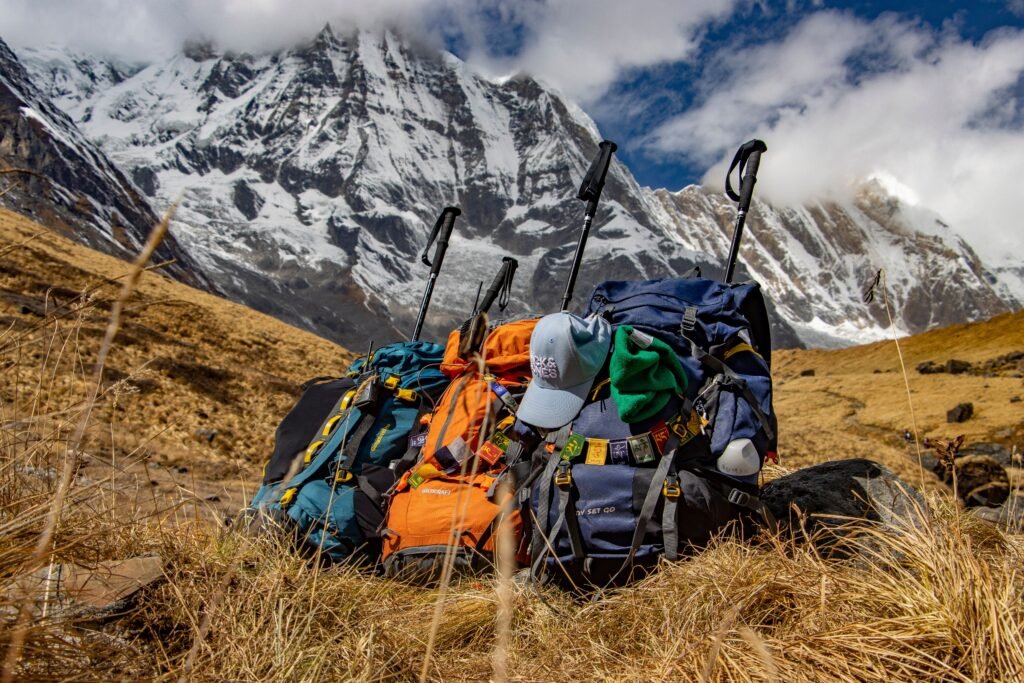
Here’s a side-by-side comparison. I’ve used “self-supported backpacking” (Meaning 1) and “trekking” for the table, and I’ll note where budget backpacking (Meaning 2) differs underneath it.
| Factor | Backpacking (self-supported) | Trekking |
|---|---|---|
| Typical length | 2 days to several weeks | 3 days to several weeks |
| Who carries gear | You carry everything | You, or a porter/pack animal, depending on setup |
| Where you sleep | Your own tent or shelter | Teahouses, lodges, huts, or camping |
| Terrain | Varies, from forest trails to mountains | Rugged, remote, often high altitude |
| Fitness needed | Moderate to high | Moderate to high (altitude adds difficulty) |
| Permits | Often park or camping permits | Frequently required, sometimes with a licensed guide |
| Cost per day | Low once gear is bought | Varies widely, with permits, guide and porter fees |
| Flexibility | High, you set your own route and pace | Lower, since routes and lodging are usually fixed |
| Best for | Independent, self-reliant adventurers | Scenery-focused travelers who want structure |
If you mean budget backpacking (Meaning 2): there’s no wilderness and no special permits, fitness demands are low to moderate, flexibility is very high, and cost is usually the lowest of the three.
The simple decision framework
Different websites split these terms differently. Some say if you carry your own gear it’s backpacking and if you use a porter it’s trekking. Others say trekking is lodge-to-lodge and backpacking is camping. Both ideas have some truth, but neither is a rule.
Skip the labels and ask yourself three questions instead:
- Who is carrying the gear? You, or a porter or animal?
- Where will you sleep? In a tent you carry, or in a lodge someone else runs?
- Is the route fixed? Are you following a famous trail with set stages, or making it up as you go?
If you carry it all, sleep in your own tent and choose your own route, that’s backpacking. If the route is set, lodging is provided and a guide or porter helps, that’s trekking. If you’re riding buses and booking hostels with a pack on your back, that’s budget backpacking. Many trips blend two of these, and that’s completely fine.
What Each One Actually Costs
Cost is where the two styles differ most, and it’s the part most guides skip. Here’s how the money works. I’m leaving the exact numbers for you to fill from your own receipts, because I’d rather publish real figures than rough guesses.
Backpacking costs per day
For budget backpacking in Asia, your daily spend is made up of four things: a bed, food, local transport and activities. In much of Southeast Asia and India, you can keep all four low by choosing dorm beds or simple guesthouses, eating where locals eat, and taking buses and trains instead of flights.
For self-supported wilderness backpacking, the daily cost is even lower once you own the gear: mostly food, permits and the occasional resupply stop. The big cost is upfront, because a decent tent, sleeping bag, pack and stove can add up quickly.
Trekking costs per day
Trekking has more line items, and some of them are fixed whether you like it or not:
- Permits: Many popular trekking regions charge national park or conservation area fees, and some require a trekker registration card.
- Guide: Required in some places, optional in others, but it changes your daily cost significantly.
- Porter: Optional on most routes, and a good choice if you don’t want to carry your main bag.
- Lodging: Teahouse beds are cheap, but the rooms are usually priced on the expectation that you’ll buy meals there.
- Food: Prices rise the higher and more remote you go, because everything has to be carried up.
- Transport to the trailhead: Often a long bus ride or a short, expensive flight.
Always check current fees. Permit and entry fees change, and some destinations have raised prices sharply in recent years. Bhutan, for example, charges a daily Sustainable Development Fee for most visitors. Check the official tourism authority for the country you’re visiting before you budget.
Hidden costs most people forget
- Gear: Renting a sleeping bag or down jacket in a trekking hub is cheap compared with buying one.
- Insurance: Many standard policies don’t cover trekking above a set altitude. You often need a specific adventure or high-altitude add-on.
- Emergency evacuation: A helicopter rescue can cost thousands of dollars without cover, so this is the line item that matters most.
- Buffer days: Weather can delay flights and close passes. Budget one or two spare days.
- Visas: Entry costs vary a lot by country. See our comparison of visa costs across 8 Asian countries.
Best Time for Backpacking vs Trekking

The best season for each style often isn’t the same. Budget backpacking follows the dry or cool seasons of a country, because rain makes buses slower and beaches less fun. Trekking follows the weather windows of the mountains, which are narrower and less forgiving.
Best time to trek in the Himalaya
In Nepal and Bhutan, the two classic windows are spring (roughly March to May) and autumn (roughly late September to November). Spring brings rhododendron blooms and warmer days. Autumn usually brings the clearest skies and the most stable weather. These are also the busiest months, so book lodging and flights early.
The monsoon (roughly June to September) means rain, leeches at lower elevations, cloud-covered views and landslides on roads. Winter is cold, and high passes can be blocked by snow.
Northern India differs. Ladakh’s trekking season runs mainly in summer, roughly June to September, because the high passes are closed by snow for much of the year. Himachal and Uttarakhand have good windows in late spring and early autumn.
| Region | Generally best months | Notes |
|---|---|---|
| Nepal (trekking) | Mar–May, Oct–Nov | Monsoon June–Sept |
| Bhutan | Mar–May, Sep–Nov | Festival dates drive crowds |
| Ladakh, India | Jun–Sep | Passes closed by snow in winter |
| Thailand, Laos, Cambodia | Nov–Feb | Cool and dry; hottest in Mar–May |
| Vietnam | Varies by region | North, center and south have different rainy seasons |
| Sri Lanka hill country | Jan–Apr (Ella, Kandy region) | Different coasts have different monsoons |
Pros and Cons: Backpacking vs Trekking
Backpacking: the upsides
- Freedom. You can change your route, stay longer somewhere you love, or leave a place you don’t.
- Low daily cost. Especially true for budget backpacking, and for wilderness backpacking once you own the gear.
- Real self-reliance. Learning to handle food, navigation and problems yourself is a big part of the appeal.
- Meeting people. Hostels and shared transport make it easy to find travel companions.
Backpacking: the downsides
- Carrying everything. A heavy pack makes long days harder and can cause injuries if packed badly.
- More planning. You’re responsible for logistics, water, food and shelter.
- Upfront gear cost. Good equipment isn’t cheap if you’re starting from nothing.
- Less safety net. In remote areas, help can be far away.
Trekking: the upsides
- Spectacular scenery. Classic routes pass through some of the most dramatic landscapes on earth.
- Infrastructure. Teahouses mean you don’t have to carry a tent or cook for yourself.
- Cultural contact. You pass through villages and often meet the people who live there.
- Support options. Guides and porters make it accessible to people who’d struggle with a full pack.
Trekking: the downsides
- Altitude. Higher routes carry a real risk of altitude sickness, which can be serious.
- Set routes and schedules. Less spontaneity than backpacking.
- Permits and fees. They add cost and paperwork.
- Crowds on popular trails. Peak season on famous routes can feel busy.
The deal-breaker to think about: if you hate carrying weight, trekking with a porter is the better fit. If you hate fixed itineraries, backpacking suits you better.
Gear, Permits and Safety

This is the section most competing articles skip, and it’s where trips go wrong.
Altitude sickness: when it starts to matter
Altitude sickness can begin from around 2,500 meters, and it’s a real concern on most Himalayan treks. Symptoms include headache, nausea, dizziness and poor sleep. Serious cases can become life-threatening.
The most widely repeated guidance from medical bodies such as the Wilderness Medical Society and the CDC is to ascend gradually. Once you’re above about 3,000 meters, avoid raising your sleeping altitude by much more than roughly 500 meters a day, and take a rest day every few days. If symptoms get worse, don’t go higher, and descend if they don’t improve.
Do you need a guide or a porter?
It depends entirely on where you’re going. Some regions require a licensed guide or an official registration, and rules have changed more than once in recent years, especially for solo trekkers. Others still allow independent trekking on established routes.
Check the current rules with the official tourism board or a reputable local agency before you book anything. If you do hire a guide or porter, pay fairly, make sure they have proper clothing and insurance, and use a local company so the money stays in the community.
Gear that differs between the two styles
- Backpacking (self-supported): tent or shelter, sleeping bag rated for the coldest night, sleeping pad, stove and fuel, water filter, a pack that fits your back properly.
- Trekking (teahouse): layered clothing, a good sleeping bag (rental is often possible), trekking poles, sturdy broken-in boots, a daypack, a headlamp, sun protection.
- Both: a basic first aid kit, a power bank, waterproof layers, and copies of your documents.
How Fit Do You Really Need to Be?
This is the question I get asked most, and the honest answer is: less than you fear, but more than you’d like if you do nothing at all.
For budget backpacking, the main physical demand is carrying a pack through stations, up hostel stairs and along town streets. If you can walk for a few hours and lift your bag onto a luggage rack, you’re fine.
For self-supported wilderness backpacking, you need real stamina. You’ll walk for several hours a day, often uphill, with a heavy load, and then set up camp and cook when you’re tired.
For trekking, fitness matters, but it matters in a particular way. You’re not sprinting. You’re walking steadily for five to eight hours a day, several days in a row, often at altitude where each step takes more effort. Endurance and recovery count for more than raw strength.
A simple way to prepare
- Walk first. Start with regular long walks, then add hills and stairs.
- Add weight gradually. Fill your pack with the weight you plan to carry and build up over a few weeks.
- Practice back to back. Two long days in a row teaches you far more than one very long day.
- Strengthen your legs and core. Squats, lunges and step-ups all help with climbs and descents, and descents are where knees complain.
- Wear your actual gear. Boots, socks and pack should all be tested before the trip, not on day one.
A good starting point is eight to twelve weeks of preparation before a serious trek, though your own starting level changes this. If you have any health concerns, speak to a doctor before heading to high altitude.
What Each Style Looks Like in Practice
It’s easier to choose when you can picture the days. These are simple frameworks, not fixed plans, so adjust them to your own pace, season and budget.
A one-week budget backpacking route
Pick a loop through one or two countries. In Southeast Asia, for example, that might mean spending your first two days in a major city, then moving by bus or train to a smaller town, then finishing with a few slower days in a quieter area. The pattern is simple: one big base, one or two stops in between, and at least one day with nothing planned. That empty day is where the best surprises tend to happen.
A short, well-supported trek (4 to 6 days)
This is the best first trek for most people. Short routes in Nepal such as the Poon Hill area, or lower-altitude trails in Bhutan or Sri Lanka’s hill country, are good examples. You sleep in lodges, eat at the places you stay and walk four to six hours a day. You get mountain scenery without the demands of a long, high-altitude expedition.
A classic long trek (10 to 14+ days)
Routes such as Everest Base Camp and the Annapurna Circuit fall in this category. They need proper acclimatization days, careful timing and good insurance. Plan buffer days at both ends for flight delays, especially if your route involves mountain airstrips, which are notoriously weather-dependent.
A hybrid two-week trip
This is my favorite structure for first-timers who want a bit of everything. Spend the first few days in a city adjusting to the time zone. Take the next four or five days for a short trek. Then use the remaining time to backpack onward, slowly and without pressure, while your legs recover.
| Trip type | Typical length | Best for |
|---|---|---|
| Budget backpacking loop | 1–3 weeks | Flexibility, low cost, meeting people |
| Short supported trek | 4–6 days | First-time trekkers |
| Classic long trek | 10–14+ days | Experienced or well-prepared travelers |
| Hybrid trip | 2+ weeks | Variety with a safety net |
Travel Responsibly, Whichever You Choose
Both styles take you into places that are fragile, whether that’s a mountain village or a small guesthouse town. A few habits make a real difference:
- Carry out what you carry in. Trash disposal is limited in remote areas, so pack out your waste where you can.
- Stay on the trail. Cutting corners erodes slopes and damages vegetation.
- Reduce plastic. Bring a refillable bottle and a water filter or purification tablets instead of buying bottled water at every stop.
- Respect local customs. Dress modestly in villages, ask before photographing people, and learn a few words of the local language.
- Treat porters and guides fairly. Check that they have warm clothing, proper shoes and insurance, and tip fairly.
- Spend locally. Eat at family-run places and stay in locally owned lodges where you can.
These small choices are part of what makes backpacking and trekking worth doing, and they’re why the people who live along these routes keep welcoming visitors.
Common Mistakes to Avoid
These are the errors I see travelers make most often. Most come from treating the two styles as the same.
- Booking a “trek” without checking what’s included. Some trips include meals, a guide and a porter. Others include none of it. Read the inclusions line by line.
- Packing too much. Every extra kilo feels heavier at the end of a long day. Pack what you’ll use, not what you might.
- Skipping acclimatization days. Rushing up high is the fastest way to get sick, and it’s the main reason people turn back.
- Assuming your insurance covers it. Many policies exclude trekking above a certain altitude. Read the exclusions before you leave.
- Wearing brand-new boots. Break them in on shorter walks first. Blisters can wreck a multi-day trip.
- Ignoring the season. A beautiful route in the right month can be miserable or closed in the wrong one.
- Not leaving buffer days. Flights get cancelled and weather turns. A tight schedule leaves no room for either.
Pro Travel Tips

- Combine them. One of the best ways to travel is to backpack through a country on a budget and add a 3–5 day trek in the middle. You get variety without committing to one style.
- Start small. If you’ve never done either, try a 2–3 day trek or a short overnight hike before booking something big.
- Hire locally. Local guides and porters know the weather, the trail conditions and the real distances, and your money supports the community directly.
- Train a little. Walk with a loaded pack on hills for a few weeks before you go. It makes a bigger difference than most people expect.
- Carry some cash. Remote villages often have no ATMs and no card readers.
- Tell someone your plan. Share your route and expected return with a friend or your accommodation.
- Plan the border or entry side too. If your trip crosses countries, our Laos vs Vietnam vs Cambodia guide covers the route planning side of backpacking.
Who Should Choose What
Choose backpacking if:
- You’re on a tight budget and want the lowest daily cost.
- You like making plans as you go.
- You want to cover several countries or cities on one trip.
- You enjoy meeting other travelers.
Choose trekking if:
- Mountain scenery is the main reason you’re traveling.
- You want a clear route with lodging already along the way.
- You’d rather not carry a heavy pack, and a porter suits you.
- You have a fixed block of time, such as 10–14 days, for one big goal.
Do both if:
- You have two or more weeks and want variety.
- You’re a first-timer who wants to build confidence on an easy trek and then travel independently afterward.
If you’re still unsure, here’s the honest summary. First-time travelers with limited time and a modest budget will usually do best with budget backpacking plus one short, well-supported trek. Fit, experienced hikers who want solitude and full independence will love self-supported backpacking. And if big mountains are the whole reason you’re going, choose trekking and plan the season and altitude carefully.
Frequently Asked Questions
What is the main difference between backpacking and trekking?
Backpacking usually means carrying your own gear and sleeping in a tent or basic lodging, and it can also describe budget travel with a backpack. Trekking is a multi-day walk through rugged terrain, often on a set route and supported by guides, porters or teahouses.
Is trekking the same as backpacking?
Not always. They overlap when you carry your own gear on a multi-day route. Trekking is typically harder and more route-specific, while backpacking is a broader term that also covers budget travel by bus, train and hostel.
Which is harder, backpacking or trekking?
Trekking is generally harder because of altitude, steep terrain and long walking days. Backpacking varies widely, from easy hostel hopping to demanding wilderness camping, depending on the route.
Which is cheaper, backpacking or trekking?
Budget backpacking is usually cheaper per day. Trekking adds permits, guides or porters and gear costs, though teahouse treks in places like Nepal can still be affordable.
Do I need a guide for trekking?
It depends on the region. Some areas legally require licensed guides or registration, while others allow independent trekking on established routes. Check the current rules with the official tourism board before you go.
What is the best time of year to trek in Asia?
For the Himalaya, spring (roughly March to May) and autumn (roughly late September to November) are typically the best windows. Monsoon and deep winter bring rain, closed routes and poor visibility.
Can beginners go trekking?
Yes, on shorter, lower-altitude routes with a guide or established teahouse infrastructure. Start with a 2–4 day trek before attempting high-altitude routes.