

If you’re staring at a map of Southeast Asia trying to figure out where to start, you’re not alone. Laos, Vietnam, and Cambodia sit right next to each other, share a chunk of history, and show up on the same “backpacker trail” lists — which makes picking just one feel almost arbitrary. It isn’t.
We’re comparing these three specifically — not Thailand, not Myanmar — because they share borders, a chunk of colonial and wartime history, and a well-worn overland route that makes it genuinely realistic to combine two or more of them on one trip. That’s also why so many people end up Googling exactly this question: it’s rarely a clean either/or, it’s usually “which one do I start with, and can I fit the others in too.”
Table of Contents
ToggleWhich to Visit First
If you only read one paragraph, read this one.
Choose Vietnam first if you want the most complete introduction to Southeast Asia — beaches, mountains, cities, and food all in one country, with the best tourist infrastructure of the three. Choose Cambodia first if your trip is shorter than 10 days and you want a compact, history-heavy route built around Angkor Wat. Choose Laos first only if you’ve already traveled in the region before, want a slower pace, and aren’t chasing a packed itinerary.
For most first-time visitors to this part of the world, Vietnam is the strongest single-country starting point — but if you’re combining two or three (more on that below), the order changes.
Laos vs. Vietnam vs. Cambodia at a Glance
| Category | Laos | Vietnam | Cambodia |
|---|---|---|---|
| Average daily budget (mid-range) | $35–55 | $40–65 | $35–55 |
| Visa | VOA/e-visa, ~$35–42 (source: laoevisa.gov.la — verify current rate before publishing) | E-visa, $25 (single-entry) / $50 (multiple-entry) per Circular 28/2026/TT-BTC | E-visa $36 or VOA $30 (source: evisa.gov.kh) |
| Best for | Slow travel, nature, second-time visitors | First-timers wanting variety | Short trips, history/culture focus |
| Ease for beginners | Moderate — infrastructure is thinner | Easy — most developed tourist infrastructure | Easy — compact, well-trodden route |
| Signature sight | Luang Prabang / 4000 Islands | Ha Long Bay / Hoi An | Angkor Wat |
A Quick Overview of Each Country
Laos — The Slow, Untouched Route

Laos is landlocked, mountainous, and moves at the pace of the Mekong River that cuts through it. There’s no coastline, no mega-cities, and far fewer tourists than its neighbors — which is exactly the appeal. Luang Prabang, with its saffron-robed monks and French-colonial streets, is the anchor most people build a trip around, along with Vang Vieng (now more about tubing and limestone karsts than the party-town reputation it used to have) and the 4000 Islands region down south near the Cambodian border.
The trade-off is pace. Roads are slower, distances feel longer than they look on a map, and you’ll spend more time in transit relative to time spent doing things. That’s fine if you’re not in a rush — frustrating if you are.
Vietnam — The Full-Spectrum Trip

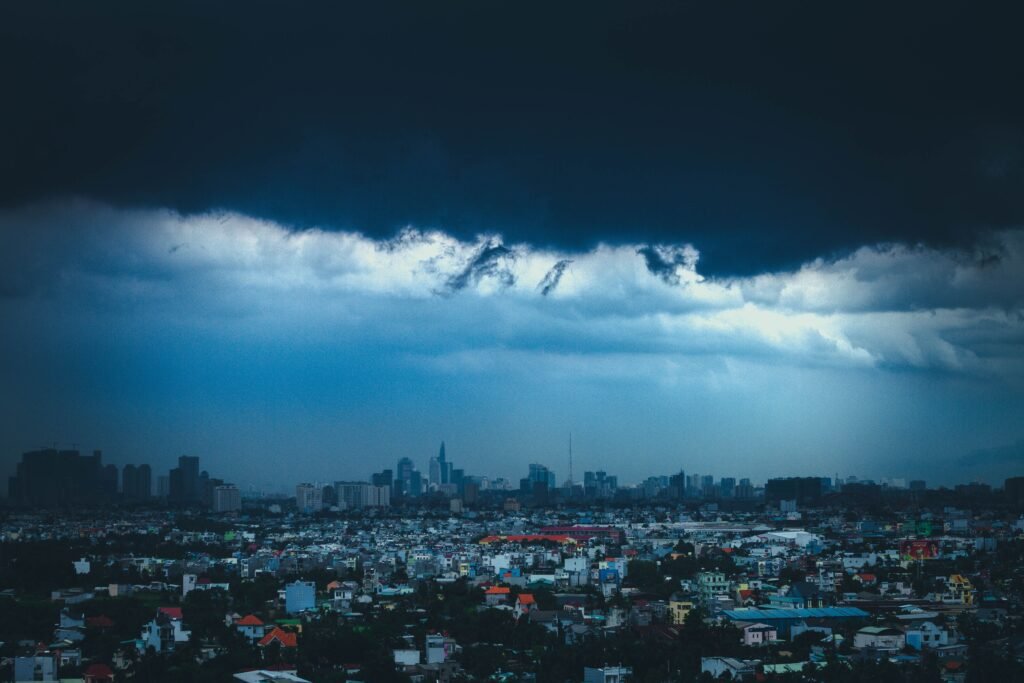
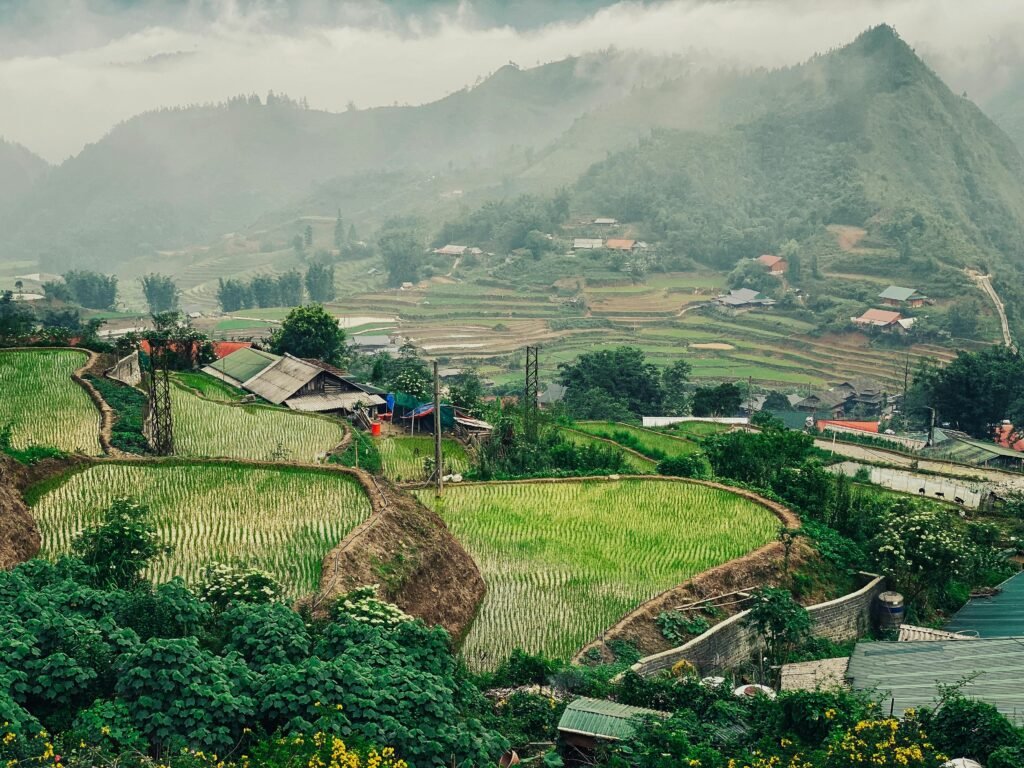
Vietnam is long and narrow, stretching from the misty mountains of Sapa in the north to the Mekong Delta in the south, which means a single Vietnam trip can feel like three different countries. Hanoi’s Old Quarter chaos, Ha Long Bay’s limestone islands, Hoi An’s lantern-lit streets, and Ho Chi Minh City’s energy all sit on one train line.
It also has the best tourist infrastructure of the three — trains, sleeper buses, domestic flights, and a well-worn backpacker route that makes logistics genuinely easy, even for a first trip to the region.
Cambodia — History-First Travel

Cambodia’s trip is more compact, and for most visitors it’s built around one thing: Angkor Wat and the surrounding temple complex outside Siem Reap. That’s not a knock — it’s one of the most genuinely awe-inducing sights in Southeast Asia, and the pricing has stayed consistent (a 1-day pass is $37, 3-day $62, 7-day $72, verified against Angkor Enterprise’s official pricing).
Beyond Angkor, Cambodia’s south coast (Sihanoukville, Koh Rong, Kampot, Kep) offers a beach-and-pepper-farm alternative to Vietnam’s coastline, and Phnom Penh adds a heavier, more sobering layer of recent history. It’s a shorter, denser trip than Vietnam — which suits people with less time.
Getting There: Flights, Entry Points, and Land Borders

Where you fly into matters almost as much as which country you pick, since it shapes how the rest of the trip flows.
Vietnam has two main international gateways — Hanoi (Noi Bai) in the north and Ho Chi Minh City (Tan Son Nhat) in the south — plus a growing number of direct international flights into Da Nang. Flying into one and out of the other is common and genuinely useful, since it means you never have to backtrack.
Cambodia‘s main entry points are Siem Reap (closest to Angkor Wat) and Phnom Penh. Siem Reap’s airport has expanded international routing in recent years, so it’s increasingly possible to fly directly there rather than routing through Phnom Penh first.
Laos is the one where flying in isn’t always the obvious choice. Vientiane (the capital) has the most international connections, but many travelers actually enter overland from Thailand, Vietnam, or Cambodia rather than flying in directly, since Laos is most often visited as an add-on to a longer regional trip rather than a standalone destination.
One thing worth flagging on land borders specifically: Vietnam currently restricts e-visa use at certain land crossings, including the Dansavan/Lao Bảo crossing with Laos — meaning travelers entering Vietnam overland from Laos at that specific point may need a different visa type than the standard e-visa. Always check the current land-border e-visa list for your specific crossing before relying on an e-visa to enter overland.
What You'll Actually Spend
Numbers matter more than adjectives here, so here’s the real range per day, broken out by travel style.
| Style | Laos | Vietnam | Cambodia |
|---|---|---|---|
| Backpacker | $20–30/day | $25–35/day | $20–30/day |
| Mid-range | $35–55/day | $40–65/day | $35–55/day |
| Comfort | $70+/day | $80+/day | $70+/day |
On our own trip through Laos, we averaged around $35 day, including a $10 guesthouse in Luang Prabang and $5 for the minivan connection down toward Vang Vieng — cheap by most standards, but slower travel days meant we spent less per day simply because there was less to spend on.
Vietnam runs slightly higher day to day, mostly because of how much there is to do and how easy it is to upgrade — a $6 sleeper bus becomes a $35 domestic flight the moment you’re short on time, and it’s tempting to make that trade more than once.
Cambodia sits close to Laos on daily cost, but the one place your budget will take a real hit is the Angkor Pass itself — at $37 for a single day, it’s the single biggest line item most Cambodia itineraries have, and worth budgeting for separately rather than folding into a daily average.
Visa costs add up faster than people expect when you’re comparing all three: Vietnam’s e-visa runs $25–50 depending on entry type, Cambodia’s e-visa is $36 (or $30 for visa-on-arrival), and Laos sits in the $35–42 range depending on nationality and entry point — worth checking against each country’s official portal close to your travel date, since these fees have shifted more than once in the past two years.
Best Time to Visit Each Country

Laos
Dry season (November–April) is the easiest window, with December and January the coolest and most comfortable. The wet season (May–October) brings the Mekong up and can make river travel between towns unpredictable.

Vietnam (North vs. South Split)
This is the one first-timers get wrong most often: Vietnam doesn’t have one season, it has two, running in opposite directions. The north (Hanoi, Sapa, Ha Long Bay) is coolest and driest from October to April. The south (Ho Chi Minh City, Mekong Delta) has its dry season from December to April. If your trip spans the whole country, there’s no single “perfect” month — you’re choosing which region’s weather to prioritize.

Cambodia
Dry season, November to April, is the standard recommendation — and for good reason, since Angkor Wat in the wet season means slippery stone and afternoon downpours. December through February is the coolest stretch and the most popular, which also means the biggest Angkor crowds.

Best Pick by Month
November through February is genuinely the best window for all three at once, which is part of why it’s peak season everywhere. If you’re traveling March–May, Vietnam’s north or Laos are more comfortable than Cambodia’s building pre-monsoon heat. June–September, lean toward Vietnam’s central coast or accept that afternoon rain is part of the deal wherever you go.
Ease of Travel for First-Timers

This is where the three countries separate the most, and it’s underrated in most comparisons.
Vietnam has the most developed tourist infrastructure — open-tour buses, an extensive train line, widespread English in tourist areas, and a well-established backpacker circuit that makes it genuinely hard to get stuck somewhere with no way out. Scams exist (taxi meter tricks, overpriced tours), but they’re well-documented and easy to research ahead of time.
Cambodia is close behind — smaller country, shorter distances, and a route (Siem Reap → Phnom Penh → south coast) that most tourists follow almost identically, which means good information is easy to find.
Laos is the one that takes more patience. Fewer paved roads, less English outside Luang Prabang and Vientiane, and bus schedules that are more “approximate” than fixed. None of this makes it unsafe — it just makes it a country that rewards travelers who’ve already built some Southeast Asia travel instincts elsewhere first.
Money logistics are worth a quick mention too. Vietnam and Cambodia both have ATMs readily available in tourist areas and cities, and Cambodia in particular runs heavily on US dollars alongside its own currency, which simplifies budgeting for American travelers especially. Laos is more cash-dependent outside Luang Prabang and Vientiane, so carrying enough kip (or USD as backup) before heading to smaller towns or the 4000 Islands region is worth planning ahead for rather than assuming an ATM will be around the corner.
Pros and Cons Comparison

Laos
Pros: Fewer tourists, genuinely relaxed pace, dramatic Mekong scenery, lower cost per attraction.
Cons: Slower transit, thinner infrastructure, fewer “must-see” headline sights compared to the other two, limited nightlife outside a couple of towns.
Vietnam
Pros: Best infrastructure, huge geographic variety, strong food scene, easy to extend or shorten on the fly.
Cons: Can feel chaotic (traffic, noise, persistent street vendors), higher daily cost than the other two, long distances if you try to cover the whole country.

Cambodia
Pros: Angkor Wat alone justifies the trip, compact route, good value outside the temple pass itself, welcoming coastal towns.
Cons: Heavier, harder history to process in places like Phnom Penh’s Tuol Sleng, hot season is more punishing than Vietnam’s north, fewer geographic “acts” once you’ve done Angkor and the coast.
Culture, Food, and Day-to-Day Experience

Vietnam’s food scene is the deepest of the three — pho and banh mi are just the entry point; regional variation between Hanoi, Hue, and Ho Chi Minh City alone could fill its own trip. Cambodia’s food leans on similar Southeast Asian staples with its own identity (fish amok, Kampot pepper dishes worth building a stop around). Laos food is less internationally known but worth seeking out deliberately — sticky rice, laap, and Mekong fish dishes rarely make it onto “best of Southeast Asia” food lists, which is part of the appeal if you already know the more famous dishes elsewhere.
Culturally, Cambodia carries the heaviest recent history — the Khmer Rouge period is not ancient history to most Cambodians you’ll meet, and sites like Tuol Sleng and the Killing Fields are sobering in a way that’s worth preparing for mentally, not just logistically. Vietnam’s history (colonial period, the war) comes up constantly but is handled with more built-in tourist infrastructure around it. Laos carries its own conflict history too — including unexploded ordnance from the Vietnam War era still being cleared in parts of the country — but it surfaces less directly on the standard tourist route than in Cambodia or Vietnam.
Daily rhythm differs too, and it’s easy to underestimate how much this affects how a trip actually feels. Vietnam’s cities run early and loud — street vendors and traffic start well before sunrise in Hanoi, and the pace rarely lets up until late evening. Cambodia’s rhythm slows outside Phnom Penh, with Siem Reap’s temple visits often built around sunrise starts to beat both the heat and the crowds. Laos is the outlier: Luang Prabang’s daily alms-giving ceremony at dawn, where monks walk the streets collecting food from kneeling locals, sets a quiet, almost meditative tone that carries through the rest of the day — a genuinely different experience from anything on offer in Vietnam or Cambodia’s more built-up towns.
Safety Comparison

All three countries are considered generally safe for tourists, with petty theft and scams being the realistic risk rather than anything more serious. That said, there are real differences worth knowing before you go.
Vietnam’s biggest practical risk isn’t crime, it’s traffic — motorbike-dense streets in Hanoi and Ho Chi Minh City take real getting used to, and pedestrian crossings work on a logic that isn’t obvious until you’ve done it a few times (walk steadily, don’t stop, let traffic flow around you). Cambodia’s roads carry similar caution, with rural routes less well-lit and maintained than Vietnam’s. Laos has the lowest traffic density of the three but the least developed emergency infrastructure if something does go wrong in a rural area — one more reason it suits travelers who’ve already built some regional travel experience.
Laos also carries a specific, lesser-discussed risk: unexploded ordnance (UXO) left from the Vietnam War era, concentrated in certain rural provinces and almost entirely a non-issue on the standard tourist route (Luang Prabang, Vientiane, Vang Vieng, 4000 Islands), but worth knowing about if your itinerary strays off the main path. Sticking to marked trails and established tour routes avoids this entirely.
Common Mistakes to Avoid

- Trying to do all three in under 10 days. Land border crossings, flight connections, and simple distance eat more time than people budget for. Two countries in 10 days is realistic; three usually isn’t.
- Assuming Laos moves at Vietnam’s pace. A “4-hour” bus ride on a map can run 6–7 in practice. Build slack into any Laos leg.
- Treating Cambodia as “just Angkor Wat.” The south coast (Kampot, Kep, Koh Rong) is a genuinely different, underrated side of the country that most rushed itineraries skip entirely.
- Not checking land border status before planning a route. The Thailand-Cambodia land border has been closed since June 2025 with the ceasefire breaking down again in January 2026 — a route that worked for a friend a year or two ago may not work now. Always verify current border status close to your travel dates.
- Booking visas through the wrong site. All three countries have official e-visa portals, and all three also have scam sites that charge a markup for the same service.
Pro Travel Tips

- If you’re combining two countries, pair Cambodia with Vietnam, not Laos. The Bavet-Moc Bai and Vinh Xuong border crossings between Cambodia and Vietnam are well-established and fast; Cambodia-Laos crossings (like Veun Kham-Dom Kralor near the 4000 Islands) take longer and run less frequently.
- Buy the multi-day Angkor Pass even on a tight budget. The jump from a 1-day ($37) to a 3-day ($62) pass is smaller than it looks once you realize how much ground the temple complex actually covers — most people regret rushing it on a single day.
- If Laos is on your route, enter or exit through the 4000 Islands. It’s a genuinely different pace than Luang Prabang and pairs naturally with a Cambodia border crossing if you’re linking the two countries.
- Don’t book Vietnam’s north and south on the same short trip if you’re also trying to fit in Laos or Cambodia. Pick one half of Vietnam per trip if you’re combining countries — trying to do all of Vietnam plus a neighbor in two weeks usually means seeing all of it exhausted and none of it properly.
Which Country Fits Your Travel Style?
| Traveler type | Best first pick | Why |
|---|---|---|
| Solo backpacker | Vietnam | Easiest logistics, most established backpacker route, lowest risk of getting stuck |
| Couple / honeymoon | Cambodia or Vietnam | Cambodia for a shorter, temple-and-coast trip; Vietnam for more variety over a longer trip |
| Family with kids | Vietnam | Best infrastructure and most flexible transport options if plans need to change |
| Short trip (under 7 days) | Cambodia | Compact route built around Angkor Wat and the south coast, minimal backtracking |
| Foodie | Vietnam | Deepest and most regionally varied food scene of the three |
| History/culture-focused | Cambodia | Angkor Wat plus recent history sites offer the densest cultural experience |
| Nature/slow travel | Laos | Lowest tourist density, most river- and mountain-focused pace |
| Strict budget traveler | Laos or Cambodia | Both run slightly cheaper day-to-day than Vietnam, especially outside Angkor Pass costs |
Can You Visit All Three? Combining Laos, Vietnam, and Cambodia
A lot of people land on this article not because they’re choosing one country, but because they’re trying to figure out how to fit two or three into one trip. It’s doable — just not in the time most people initially plan for.
The classic route runs Vietnam → Cambodia → Laos (or reverse), using the Bavet-Moc Bai or Vinh Xuong land crossing between Vietnam and Cambodia, then either flying Siem Reap to Vientiane/Luang Prabang or taking the longer overland route through the Veun Kham-Dom Kralor border near the 4000 Islands. Realistically, this needs 3–4 weeks to not feel rushed — closer to 2 weeks per country if you want to see each properly rather than skim it.
If you only have 2 weeks total, pick two countries, not three. Vietnam and Cambodia pair naturally given the fast, well-established border crossing between them. Laos is the one most people add on a second regional trip rather than a first — which loops back to the core recommendation in this guide.
Sample 3-Week Route: All Three Countries
If you do have the time, here’s roughly how we’d structure it:
- Days 1–8: Vietnam. Fly into Hanoi, cover the north (Ha Long Bay, Sapa if time allows), then either fly or take a sleeper train south to Hoi An and Ho Chi Minh City.
- Days 9–15: Cambodia. Cross overland via Bavet-Moc Bai or Vinh Xuong into Cambodia. Spend 3–4 days around Siem Reap and Angkor Wat, then head to Phnom Penh, and down to the south coast (Kampot/Kep) if you can stretch it.
- Days 16–21: Laos. Fly from Phnom Penh or Siem Reap to Vientiane or Luang Prabang rather than taking the slower Cambodia-Laos land crossing, given the time already spent. Spend the remaining days in Luang Prabang and, if time allows, a short add-on to Vang Vieng.
This order front-loads the country with the best infrastructure (Vietnam), moves through the most time-efficient country second (Cambodia), and ends on the slowest-paced country (Laos) — which also happens to be the best note to end a long trip on, since there’s genuinely less to “do” and more room to just decompress before flying home.
Which Should You Visit First?

If we had to pick one country for a reader’s first Southeast Asia trip with no other context, it’s Vietnam — the infrastructure, geographic variety, and forgiving backpacker route make it the easiest place to build confidence before tackling somewhere less developed.
Cambodia is the right call if your trip is short and you want maximum impact per day — Angkor Wat alone is worth the flight, and the compact route means less time lost to transit.
Laos is genuinely worth visiting, but it’s rarely the right “first” pick. Save it for when you’ve already got a Southeast Asia trip or two behind you and you’re ready to trade sights-per-day for a slower, quieter pace.
If you can combine two, Vietnam and Cambodia is the most natural pairing given the border logistics and complementary pace. All three together is a fantastic trip — just give it the 3–4 weeks it actually needs rather than trying to compress it.
Frequently Asked Questions
Is Vietnam, Laos, or Cambodia cheaper?
Laos and Cambodia run slightly cheaper day-to-day than Vietnam, typically $20–55/day depending on travel style versus $25–65/day in Vietnam. Cambodia's biggest single cost is the Angkor Pass ($37–72), which can skew a short trip's average upward.
Which is safer for solo female travelers: Vietnam, Laos, or Cambodia?
All three are considered safe for solo female travelers relative to global standards, with Vietnam's more developed tourist infrastructure making logistics slightly easier. Standard precautions (transport booked through reputable operators, awareness in nightlife areas) apply across all three.
Can you visit Laos, Vietnam, and Cambodia in 2 weeks?
It's possible but rushed — 2 weeks is better spent on two of the three countries rather than all three, since land border crossings and internal distances eat significant travel time.
Do you need a visa for Laos, Vietnam, and Cambodia?
Most nationalities need a visa for all three, available as e-visas or visa-on-arrival: Vietnam ($25–50), Cambodia ($30–36), and Laos (roughly $35–42, varying by nationality). Always confirm current fees on each country's official immigration portal before booking.
Which country has better food: Vietnam or Cambodia?
Vietnam generally has the more internationally recognized and regionally varied food scene, though Cambodia's cuisine — including Kampot pepper dishes and fish amok — is distinct and worth exploring on its own terms rather than as a Vietnam comparison.
Is Cambodia or Vietnam better for first-time Southeast Asia travelers?
Vietnam is generally the easier first pick due to more developed tourist infrastructure and a longer-established backpacker route, though Cambodia is a strong choice for a shorter first trip focused on Angkor Wat.
What's the best way to travel between Laos, Vietnam, and Cambodia?
Land border crossings connect all three, with the Vietnam-Cambodia crossings (Bavet-Moc Bai, Vinh Xuong) being the fastest and most established. The Cambodia-Laos crossing near the 4000 Islands takes longer and runs less frequently — flying between Siem Reap and Laos is often more time-efficient.
How many days do you need in each country minimum?
A worthwhile minimum is about 7 days for Cambodia, 10 days for Vietnam (fewer if focusing on just one region), and 7–10 days for Laos given its slower transit times.
Is Laos worth visiting if you've never been to Southeast Asia before?
Yes, but it's rarely the ideal starting point — the slower transit and thinner tourist infrastructure are easier to navigate once you've already built some regional travel experience in Vietnam or Cambodia first.
Which country has the best beaches: Vietnam or Cambodia?
Vietnam has more developed and varied coastline (Da Nang, Nha Trang, Phu Quoc), while Cambodia's south coast (Koh Rong, Sihanoukville) offers a quieter, less commercialized alternative for travelers wanting fewer crowds.