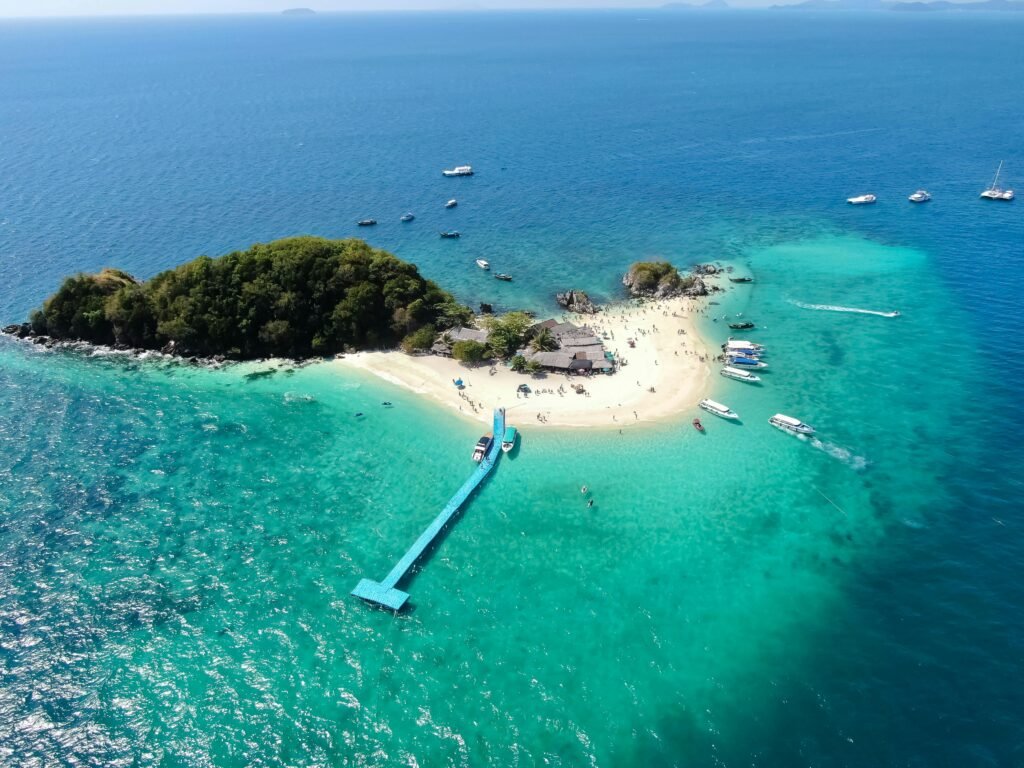

Seven days sounds like a lot until you look at a map of the Philippines and realize there are over 7,000 islands and you can maybe, realistically, cover two provinces well. I learned that the hard way on my first trip, trying to squeeze in Manila, Cebu, and Palawan in a week and ending up spending more time in airports than on boats. So this itinerary picks one region — Palawan, specifically Coron and El Nido — and goes deep instead of wide. If you want the Visayas version instead, I’ve included a shorter alternate route near the end.
Table of Contents
ToggleItinerary at a Glance
| Day | Base | What You’re Doing |
|---|---|---|
| 1 | Coron | Arrive, settle in, easy first evening |
| 2 | Coron | Coron Island tour — Kayangan Lake, Twin Lagoon |
| 3 | Coron | Wreck snorkeling, Maquinit Hot Springs |
| 4 | Coron → El Nido | Transfer day (ferry, flight, or van) |
| 5 | El Nido | Tour A — Big Lagoon, Small Lagoon |
| 6 | El Nido | Tour C or D, or a lazy day at Nacpan Beach |
| 7 | El Nido | Departure buffer day |
Best Time to Go

Palawan has two real seasons, and it matters more here than in most of the Philippines because island hopping tours get cancelled in rough weather.
November to May is dry season, and within that, February to May is the sweet spot — calm seas, minimal rain, and the lagoons look like the photos. The trade-off is that this is also peak season, so boats are fuller and prices are higher.
June to October is wet season, and July through October overlaps with typhoon season. This doesn’t mean don’t go — locals still run tours most days — but you should expect at least one day where boats don’t go out, and build in a buffer instead of scheduling tours back-to-back. Check PAGASA’s forecasts once you’re closer to your travel dates rather than relying on general seasonal advice, since typhoon tracks shift fast.
My plan B for cancelled tours: if a boat day gets scrubbed, El Nido and Coron both have enough on land — waterfalls, viewpoints, decent food scenes — that a lost day isn’t a lost trip. I’d rather tell you that upfront than have you panic when it happens.
What 7 Days Actually Costs

This is the section most guides get lazy on, quoting a single tour price and calling it a budget. A seven-day Palawan trip is more complicated than that: accommodation, food, island-hopping tours, the Coron–El Nido ferry, domestic flights and the small fees that appear along the way all add up.
The figures below are realistic planning ranges per person, rather than a fixed package price. Prices change with the season, booking date and whether you travel independently or choose private services, so use them as a starting point and replace them with your actual paid amounts after your trip.
| Category | Budget | Mid-range | Comfort |
| Accommodation (per night) | ₱700–1,200 | ₱2,000–4,000 | ₱5,000–10,000+ |
| Food (per day) | ₱500–700 | ₱900–1,500 | ₱1,800–3,000+ |
| Coron island tours (per day) | ₱1,200–1,700 | ₱1,700–2,500 | ₱3,000–5,000+ |
| El Nido island tours (per day) | ₱1,300–1,800 | ₱1,800–2,500 | ₱4,000–7,000+ |
| Coron–El Nido transfer | ₱1,760–2,000 | ₱1,760–2,500 | ₱2,800–4,500 |
| Domestic flights (Manila–Coron, El Nido–Manila) | ₱5,000–9,000 total | ₱8,000–14,000 total | ₱14,000–20,000+ total |
Accommodation: Budget travellers can find dorm beds and basic guesthouses for roughly ₱700–1,200 per night, while private mid-range rooms commonly fall around ₱2,000–4,000. El Nido generally has a wider range of accommodation, with boutique and resort properties quickly pushing the price much higher. Current 2026 accommodation estimates show budget rooms/dorms from roughly ₱450–1,000 and mid-range rooms around ₱2,800–6,800 in El Nido.
Food: ₱500–700 a day is realistic if you eat mainly at local carinderias and inexpensive restaurants. For a mix of local food and tourist-oriented restaurants, ₱900–1,500 is a more comfortable allowance. El Nido food estimates currently put local meals around ₱100–150, while restaurant meals can run ₱300–600 or more.
Coron island tours: Shared tours generally fall around ₱1,200–2,200 per person depending on the route and inclusions. A typical Ultimate or island-hopping day can be budgeted at around ₱1,500–1,700, while private boats cost considerably more.
El Nido island tours: Shared Tours A–D generally sit around ₱1,300–1,800 per person in current 2026 pricing. Tour A, for example, is currently listed around ₱1,500 by one operator, while Tours B, C and D are around ₱1,500–1,700. Private boats start much higher.
Coron–El Nido transfer: The standard fastcraft fare is currently around ₱1,760 per person, with a small terminal fee added at the ports. The crossing takes roughly 3½ hours.
Domestic flights: This is one category where I would avoid giving readers a false “average.” Manila–Coron fares can change significantly depending on the date and airline. Philippine Airlines, for example, is currently displaying selected round-trip Manila–Coron fares from around ₱5,169, while promotional fares can be considerably lower.
What does that mean for a 7-day trip?

For a 7-day Coron + El Nido itinerary, I would roughly plan on:
- Budget: ₱25,000–35,000 per person
- Mid-range: ₱40,000–60,000 per person
- Comfort: ₱70,000–100,000+ per person
Those totals assume the traveller is sharing accommodation where appropriate and doing a few shared island-hopping tours rather than booking private boats every day. Flights are included as a broad allowance, but international flights to Manila are not.
The important point is that you don’t spend the island-tour amount every day. A seven-day trip might include two or three boat days, one transfer day and several days where your main expenses are your hotel, meals and local transportation.
Costs people forget to budget for

Environmental and eco-tourism fees — these are often charged separately from the advertised tour price. El Nido’s current Eco-Tourism Development Fee is ₱400 per visitor and is valid for 10 days. Lagoon fees can also be added depending on the route; for example, Big Lagoon and Small Lagoon are currently listed at around ₱200 each.
Coron’s individual site fees — Coron works differently from El Nido. Entrance fees can be charged at individual attractions, often around ₱100–300 depending on the site, so check exactly what your tour operator includes.
Kayak rental — some El Nido lagoon visits require or strongly encourage a separate kayak rental. Budget around ₱150–300 where applicable.
Checked-bag fees — don’t assume your cheapest domestic flight fare includes checked luggage. Add baggage when comparing flight prices rather than discovering the extra cost at checkout.
Airport and terminal transfers — getting between Busuanga Airport, Coron town, El Nido Airport and your accommodation is another small but easy-to-forget expense.
ATM and card fees — carry enough Philippine pesos for tours, small restaurants, transport and entrance fees. Card acceptance is much better in established hotels and restaurants than with small operators and vendors.
Tips — tipping isn’t normally included in the advertised tour price. Keep some small bills available if you want to tip your boat crew or guide.
The realistic takeaway

If you’re travelling on a budget, ₱25,000–35,000 per person for seven days is a sensible starting point for a Coron–El Nido trip, excluding your international flight to the Philippines. A mid-range traveller should allow roughly ₱40,000–60,000, particularly if staying in private rooms and eating at tourist-oriented restaurants.
The biggest mistake is building your budget around the cheapest advertised island tour and forgetting everything around it. In Palawan, the boat ticket is only one piece of the trip.
Getting There and Getting Around

Manila to Coron: Direct flights run daily into Busuanga (the airport serving Coron town), roughly an hour and change in the air. Book these early in peak season — seats sell out and prices climb fast in the two weeks before departure.
Coron to El Nido — the trickiest leg of this whole trip. You have three options:
| Option | Time | Trade-off |
|---|---|---|
| Fast ferry | Roughly 4–8 hours depending on operator and sea conditions | Cheapest, but schedule-dependent and can be cancelled in rough weather |
| Flight via Manila or Puerto Princesa | Half a day with layover | Fastest reliable option, costs more |
| Private van + short boat combo | Full day | More flexible timing, physically tiring |
Verify current ferry operator schedules close to your trip — routes and frequency change season to season, and this is the one leg where an outdated blog post will actively mess up your plans.
Getting around locally: tricycles for short hops in both towns, vans for anything longer, and boats are hired as part of organized tours rather than independently in most cases.
The 7-Day Itinerary

Day 1 — Arrive and Settle Into Coron
Give yourself this day to just land. Flights into Busuanga connect to Coron town by shuttle van, about 45 minutes and use the afternoon to walk the town, get your bearings, and eat somewhere unfussy near the port. Skip booking a tour for today; you’ll want the buffer if your flight runs late.
Day 2 — Coron Island Tour: Kayangan Lake and Twin Lagoon
This is the tour most people come to Coron for. Boats leave early — aim to be at the departure point by 7:30–8am to beat the crowds at Kayangan Lake, which gets genuinely packed by mid-morning in peak season.
The standard route covers Kayangan Lake (a short, steep climb up wooden stairs to reach it), Twin Lagoon, Barracuda Lake, and usually a stop for snorkeling and lunch on a beach. Bring water shoes — a lot of the entry points are over sharp coral or rock.
Day 3 — Wreck Snorkeling and Maquinit Hot Springs
Coron’s WWII Japanese shipwrecks are one of the best reasons to visit if you snorkel or dive — several sit shallow enough to see without a tank. If you’re not certified for diving, ask specifically for a snorkel-friendly wreck tour; not all wreck tours are snorkeler-appropriate.
End the day at Maquinit Hot Springs, one of the few saltwater hot springs in the world, a short tricycle ride from town. Go around sunset if you can — it’s quieter and cooler out of the water.
Day 4 — Transfer to El Nido
Treat this as a travel day, not a sightseeing day. Whichever transfer option you picked, don’t schedule anything else — ferries run late, vans hit traffic, and you don’t want to be racing a tour booking. Arrive and have an easy dinner in town.
Day 5 — El Nido Tour A: Big Lagoon and Small Lagoon
El Nido’s tours are grouped into lettered packages (A, B, C, D), each covering a different set of lagoons and islands, and this is where a lot of guides get vague. Here’s the actual difference:
- Tour A — Big Lagoon, Small Lagoon, Shimizu Island, Secret Lagoon, Seven Commandos Beach. The most iconic stops; also the most crowded.
- Tour B — Snake Island, Cathedral Cave, Pinagbuyutan Island. More cave exploring, fewer crowds.
- Tour C — Hidden Beach, Matinloc Shrine, Secret Beach, Helicopter Island. Longer route, further out.
- Tour D — Cadlao Lagoon, Paradise Beach, Pasandigan Beach, Ipil Beach. Least crowded, good for a slower day.
Do Tour A first since it’s the essential one — Big Lagoon in particular is what most people picture when they think “El Nido.”
Day 6 — Tour C or D, or a Slow Day at Nacpan Beach
If you want more lagoon time, Tour C is the long-haul option. If two consecutive tour days sounds exhausting (it can be — full days on a banca boat add up), swap it for Nacpan Beach instead: a long stretch of sand about 45 minutes from town, far less crowded, good for just doing nothing for a day.
Day 7 — Departure Buffer
Don’t book a flight out first thing in the morning. Boat tours run late, ferries get delayed, and El Nido’s airport (Lio) is small enough that a rushed departure is more stressful than it needs to be. Build in slack.
Prefer the Visayas Instead? A Shorter Alternate Route

If Palawan doesn’t fit your dates or interests, a Cebu–Bohol–Siquijor route covers similar island-hopping ground with a different feel: Moalboal and Kawasan Falls near Cebu, the Chocolate Hills and tarsier sanctuaries in Bohol, and Siquijor’s quieter beaches and waterfalls. It’s a full second itinerary on its own, so I’ll cover it in a dedicated post rather than compress it here.
Pros and Cons of This Route
| Pros | Cons |
|---|---|
| The most photogenic lagoons and lakes in the country | Big Lagoon and Kayangan Lake get genuinely crowded in peak season |
| Manageable logistics once you accept the Coron–El Nido leg | That transfer day is a real cost in time either way |
| Good infrastructure for a relatively remote area | Pricier overall than mainland Southeast Asia island trips |
| Diving and snorkeling quality is excellent | Weather-dependent — typhoon season can cancel tours |
Common Mistakes to Avoid

- Booking a same-day flight after your ferry or van transfer. Any delay and you miss it. Leave a night’s buffer.
- Skipping travel insurance. Boat transfers and remote islands are exactly the scenario insurance exists for.
- Underestimating cash needs. ATMs are limited on the smaller islands — withdraw more than you think you’ll need in Coron or El Nido town before heading out.
- Pre-booking every tour before you arrive. Weather changes tour availability day to day; booking one day ahead locally gives you flexibility a locked-in itinerary doesn’t.
- Using regular sunscreen near the reefs. Reef-safe sunscreen isn’t just an eco-nicety in some spots — it’s enforced.
Pro Travel Tips

- Book tours locally, a day ahead, so you can shift plans around weather.
- Bring a dry bag — boats get wet, and phones don’t forgive salt water.
- Water shoes are worth packing; a lot of entry points are rocky or coral.
- Carry small bills — change is often scarce on the smaller islands.
- Get a local SIM or eSIM in Manila or Coron; signal is patchy but workable in both towns.
Who Should Choose What
Choose this Coron–El Nido route if you want the most visually striking lagoons and lakes in the Philippines and don’t mind one logistically heavy transfer day.
Choose the Visayas route instead if you’d rather mix beaches with wildlife (tarsiers, whale sharks near Cebu) and want slightly easier internal transport.
Skip island hopping altogether this trip if you have fewer than 5 days total — you’ll spend most of it in transit and see very little.
Frequently Asked Questions
Is 7 days enough for the Philippines?
Enough for one region done properly — Palawan or the Visayas — not the whole country. Trying to cover both in a week means mostly airports.
What's the best month for island hopping in the Philippines?
Roughly February to May in Palawan: the driest, calmest window, though also the busiest and most expensive.
How much does a 7-day trip to the Philippines cost?
Depends heavily on travel style — see the tiered budget breakdown above for the full category-by-category range.
Coron or El Nido — which is better?
Different strengths: Coron for wreck diving and lakes, El Nido for lagoons and beaches. With 7 days, do both.
How do you get from Coron to El Nido?
Fast ferry (roughly 4–8 hours), a flight via Manila or Puerto Princesa, or a private van-and-boat combo. Verify current ferry schedules close to your travel dates.
Do you need to book island hopping tours in advance?
In peak season, yes for the popular tours. Otherwise, booking a day ahead locally gives you weather flexibility a pre-booked schedule doesn't.
Is island hopping in the Philippines safe?
Generally yes with licensed operators and proper life jackets. Check weather advisories and don't board if there's a storm warning in effect.