

Search “3-3-3 rule for travel” and you’ll land on a pile of pages that all seem to be talking about different things. One says it’s about driving 300 miles a day. Another says it’s about packing three tops, three bottoms and three pairs of shoes. A third is about the first three months after you move to a new country.
Here’s the honest answer: they’re all right. “3-3-3” is not one official rule. It’s a label travelers have stuck on three separate habits that share the same idea: keep things simple, keep a steady pace, and give yourself time to adjust.
This guide puts every version in one place, helps you pick the one that fits your kind of trip, and shows where each rule bends or breaks on the road in Asia. The short version: the miles-based rule needs real changes before it works on a Southeast Asian bus route, and the packing rule needs a few tweaks for heat, humidity and temples.
The 3-3-3 rule for travel is an unofficial guideline with three common versions. (1) RV and road-trip pacing: drive no more than 300 miles a day, arrive by 3 PM, and stay at least 3 nights. (2) Packing: bring 3 tops, 3 bottoms and 3 pairs of shoes. (3) Settling in abroad: expect 3 days of overwhelm, 3 weeks to build routines, and about 3 months to feel at home.
Table of Contents
ToggleWhy "3-3-3" Means Different Things to Different Travelers

The number three is easy to remember, and that’s really the whole reason this rule exists in so many forms. A rule that fits in your head gets repeated in forums, blog posts and group chats, and each community bends it to fit its own problem. RVers had a problem with exhausting driving days. Carry-on travelers had a problem with overstuffed bags. People moving abroad had a problem with the rough first few weeks.
None of these versions is an official regulation or a tested scientific method. They’re rules of thumb that travelers found useful. That’s actually good news, because it means you’re allowed to change the numbers when your trip needs it.
| Version | The three 3s | Best for |
|---|---|---|
| Pacing | 300 miles a day, arrive by 3 PM, stay 3 nights | Road trips, RV travel, overland routes |
| Packing | 3 tops, 3 bottoms, 3 pairs of shoes | Carry-on travel, backpackers, one-bag trips |
| Settling in | 3 days, 3 weeks, 3 months | Expats, slow travelers, digital nomads |
The Pacing Rule: 300 Miles, Arrive by 3 PM, Stay 3 Nights

This is the most popular meaning of the 3-3-3 rule, and it came out of RV and road-trip culture. It’s a guide for how to structure travel days so that you enjoy the trip instead of just surviving the drive.
The three numbers, and why each one exists
300 miles (about 480 km) a day, at most. The idea is that long driving days wear you down faster than you expect. When you cap the distance, you arrive with energy left to actually do something. It also keeps fuel costs and vehicle wear under control.
Arrive by 3 PM. Arriving early gives you daylight to set up, find food, ask questions and fix problems while shops, offices and reception desks are still open. Arriving at 9 PM tired and hungry is how small problems turn into bad evenings. Many hotels and campgrounds also start check-in in the early afternoon, so 3 PM lines up with real life.
Stay at least 3 nights. The first night is for arriving and recovering. The second is when you actually start enjoying the place. The third lets you relax instead of already thinking about packing. If you move every single night, you lose roughly half of each day to checkout, transit and check-in.
Is it realistic?
Sometimes. The rule works best as a guideline, not a law. If your trips usually feel rushed, your travel days run long, or you often reach your stop after dark, it’s worth trying. If you only have a week and want to see five places, you’ll need a different approach, and that’s fine.
There are also neighbouring versions. Some travelers use a 4-4-4 rule (400 miles, four nights, arrive by 4 PM) for a slightly faster pace. Others go slower with a 2-2-2 rule. Some add a bonus “3”: stop and stretch every three hours, whether you feel you need it or not. The numbers aren’t sacred. The point is a steady rhythm.
How I'd adapt the pacing rule for Asia
This is where most articles stop, and where the rule gets interesting. Miles-per-day makes sense on a US highway. It makes much less sense on a mountain road in Laos or a coastal bus in Vietnam, where 100 km can take four hours or more. So here’s how I’d rework it:
- Count hours, not distance. Instead of 300 miles, try capping door-to-door travel at around 5 to 6 hours a day. That includes waiting, transfers and delays, not just time on the move.
- Keep the 3 PM arrival. Near the equator, sunset is usually around 6 to 6:30 PM all year, so arriving at 3 PM gives you about three useful hours of daylight. In monsoon season, heavy rain often shows up in the afternoon in many regions, which is one more reason to be settled early.
- Treat border days as full days. Land border crossings are unpredictable. Queues, paperwork and transport connections can eat hours. Don’t schedule anything else that day. If you’re planning one, read our guide to land border crossings in Cambodia first.
- Be honest about overnight buses and sleeper trains. They break the 3 PM rule completely, but they also save you a hotel night and a daytime. Use them deliberately, not by accident, and give yourself a slow day afterwards.
- Be careful with scooters. Only ride if you hold a valid licence and have proper insurance, and avoid riding after dark. This is one more good reason for the early arrival rule.
- Use “3 nights” for places worth it, and 1 night for transit towns. Not every stop deserves three nights. A town you’re passing through to reach somewhere better can be one night. A place you came for should get three or more.
What a 10-day plan looks like with the rule applied
To make this concrete, here’s how I’d structure ten days in a region like Southeast Asia if I wanted to follow the spirit of the rule without being rigid. It’s a template, not a fixed route, so swap in your own places.
- Days 1 to 3: Your first base, the place you’re most excited about. Arrive early, rest, and explore close to where you’re staying. Day 3 is for the one big thing you came for.
- Day 4: A travel day, and nothing else. Morning departure, afternoon arrival, an easy evening.
- Days 5 to 7: Your second base. Again, one big activity, one slow day, one flexible day.
- Day 8: A one-night transit town if the route needs it. Keep expectations low and your bag packed.
- Days 9 and 10: Your final base, close to the airport if possible, so your last day isn’t a stressful sprint.
That’s three bases and one or two transit stops in ten days. It looks less impressive on a map than seven cities, but in practice it usually feels far better. You’ll remember places instead of bus stations.
The Packing Rule: 3 Tops, 3 Bottoms, 3 Pairs of Shoes
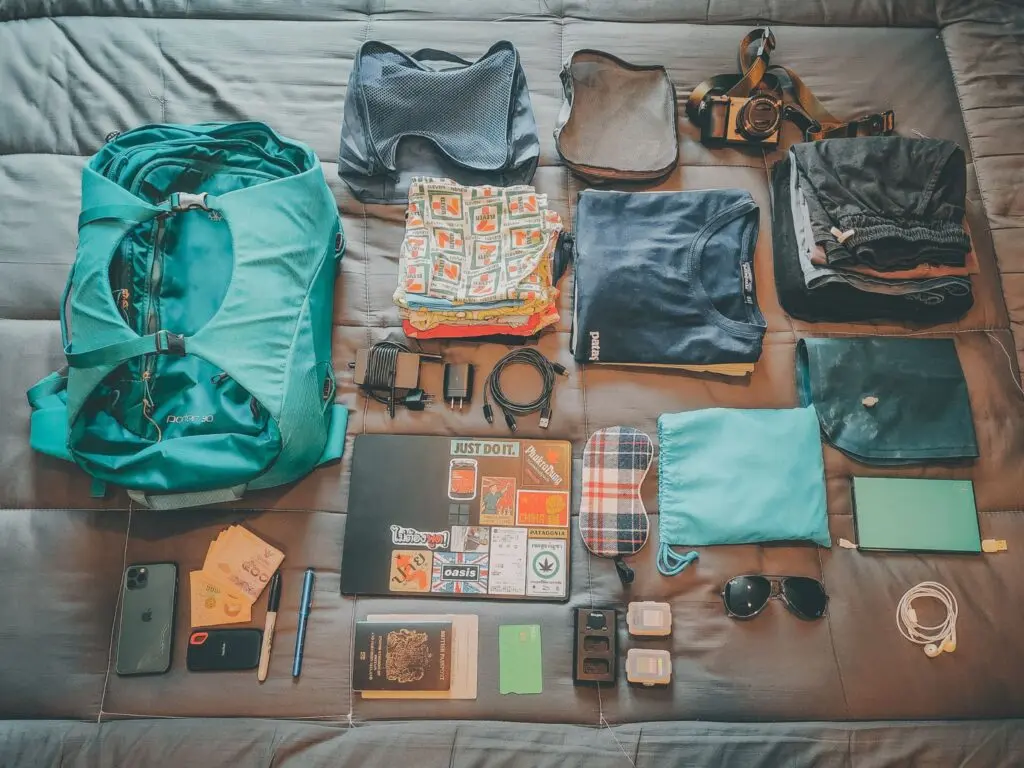
The second meaning has nothing to do with driving. It’s a packing method: bring three tops, three bottoms and three pairs of shoes. That’s it. Everything is chosen so that it mixes and matches, so nine items can make a surprising number of outfits.
Some versions add a few extras, like a jacket or a few accessories, but the core idea stays the same. Pack fewer things, and make sure each one earns its place.
Who it suits
- Carry-on only travelers who want to skip baggage fees and baggage carousels
- Backpackers moving often and carrying everything on their back
- Anyone who tends to overpack “just in case”
Where it breaks down
The rule is a great starting point, but it needs adjusting for Asia:
- Heat and humidity. Clothes get sweaty fast. Three tops can feel thin if you change shirts twice a day. Choose light fabrics that dry quickly overnight.
- Laundry. The rule only works if you can wash clothes. Across much of Asia, laundry is easy to find and usually priced by the kilo, which makes this rule easier here than in many other parts of the world.
- Temples and dress codes. Many temples expect covered shoulders and knees. Make sure at least some of your three tops and bottoms qualify.
- Rain. If you travel in monsoon season, add a light rain jacket. Treat it as separate from the nine items.
- Shoes. My usual split is one pair of sandals, one pair of comfortable walking shoes, and one versatile pair that can pass for a slightly nicer evening. Shoes are heavy, so this is where the rule really saves space.
A sample 3-3-3 list for a hot-climate Asia trip
Here’s one way to fill the nine slots. Adjust it to your own style and your destination’s dress codes.
- Tops: one lightweight t-shirt or quick-dry shirt, one collared or smarter shirt for temples and evenings, and one long-sleeve or light layer for sun, air conditioning and cool buses.
- Bottoms: one pair of lightweight trousers, one pair of shorts or a skirt that works for the beach, and one pair that covers the knees for temples and formal places.
- Shoes: sandals for everyday use and showers, walking shoes for long days, and one pair that looks neat enough for dinner.
Underwear, socks, swimwear, sleepwear and a rain jacket sit outside the nine, since most people don’t count them in the rule. That’s how most travelers use it in practice, but decide on your own rules before you pack, and write the list down so you stick to it.
Pick one colour palette so everything matches everything else. And remember the toiletry rules at airports: the liquids limit is a separate rule, covered below.
The Settling-In Rule: 3 Days, 3 Weeks, 3 Months

The third meaning is about people, not luggage. It’s most often shared by people who are moving abroad, travelling slowly, or working remotely from a new country. The idea is that adjusting to a new place happens in stages:
- The first 3 days: You feel overwhelmed. Everything is new, you’re tired, and small tasks like buying a SIM card or finding food feel harder than they should.
- The first 3 weeks: You start to build routines. You know your local cafe, you’ve figured out transport, and the place stops feeling quite so strange. Sometimes this is also when homesickness or frustration shows up.
- The first 3 months: You begin to feel settled. You know the city, you have a rhythm, and it starts to feel like home.
A note on honesty: this is a popular rule of thumb, not a clinical model. Everyone adjusts at their own speed, and it can depend on language, climate, support and your reasons for being there. The broader idea that moving to a new culture involves an adjustment period is real. The term “culture shock” was popularised by anthropologist Kalervo Oberg in 1960. But the exact 3-3-3 timeline is an informal framework, so treat it as a guide for what to expect, not a schedule you’re failing if you don’t match.
How to use it in practice
- In the first 3 days: Do only the essentials. Sleep, SIM or eSIM, money, food, and getting your bearings. Don’t try to see everything.
- By week 3: Build small routines. Same cafe, same walking route, same gym or market. Routines are what turn a strange place into a familiar one.
- By month 3: Reflect. Do you want to stay, move on, or change your setup? Many people make better decisions at this point than in the exciting first week.
Small things that make the first three weeks easier
- Sort the basics early. Get a local SIM or eSIM, find a reliable place to eat, and learn how local transport and payment work. Each of these removes a daily source of friction.
- Pick a base you can live in. If you plan to stay a while, a quiet room with decent internet, a desk and a laundry option matters more than a great view.
- Learn ten words. Hello, thank you, how much, no thank you, please, sorry, excuse me, water, yes and no. Locals notice the effort, and it changes how interactions feel.
- Stay in touch with home, but not constantly. A scheduled weekly call is often better than checking messages all day, which can make a new place feel further away.
- Don’t judge a place by day 2. Jet lag, heat and decision fatigue make everything look worse in the first few days. Wait before deciding you don’t like somewhere.
What About a 3-3-3 Rule for Flights?

You may see a “3-3-3 rule for flights” mentioned online. There’s no official rule by that name from any airline or airport authority, and different pages define it differently. Some versions suggest arriving three hours before an international flight, which is a common cautious habit but not a rule.
The real “rule of threes” you do need to know at airports is the US TSA 3-1-1 rule for liquids: containers of 3.4 ounces (100 ml) or less, in 1 clear quart-sized bag, 1 bag per passenger. For anything specific to your airline or airport, check the official website directly, because rules change.
What the 3-3-3 Rule Does to Your Costs

The pacing rule is often described as saving money, but “it saves money” is a lazy claim unless you do the maths. So here’s how to check it for yourself.
Where slow travel saves money
- Fewer transfers. Every move costs a bus, train, taxi or flight. Three one-night stays means three transfers. One three-night stay means one.
- Longer-stay discounts. Many guesthouses and apartments offer better rates for multi-night stays. It’s worth asking directly.
- Fewer rushed, expensive decisions. When you arrive early and rested, you’re less likely to pay extra for a last-minute taxi or an overpriced meal.
- Lower luggage costs. The packing rule can mean no checked bag fees on budget airlines.
Where it can cost more
- Staying 3 nights in an expensive city can cost more than passing through it quickly.
- In peak season, some places have minimum-stay rules or higher prices for short bookings.
- Slower travel means more nights in total for the same distance, so your accommodation total can go up even if your transport spend goes down.
The hidden cost nobody counts: your time and energy
Money isn’t the only thing you spend on a trip. Every extra transfer also costs you a few hours and a chunk of energy, and tired travelers tend to spend more: a pricier taxi because the bus feels like too much, a hotel booked in a hurry, meals eaten wherever is closest. When you slow down, you often make cheaper and better choices without even trying. That doesn’t show up on a receipt, but it’s a real benefit of the pacing rule.
A quick word on safety and insurance
Part of the reason the pacing rule exists is safety. Tired drivers and rushed arrivals after dark are where many avoidable problems begin. Whatever version of the rule you follow, make sure you have valid travel insurance that covers the activities you plan to do, and check the fine print if you’ll be riding a scooter or motorbike, since many policies have conditions. Keep copies of your passport, insurance details and accommodation bookings somewhere you can reach them offline.
Best Time to Use Each Version of the Rule

The right time to use the rule depends on the season, and on which version you mean.
- Monsoon or wet season: This is when the pacing rule matters most. Roads can flood, flights get delayed and afternoon storms are common. Arriving by 3 PM and staying put for three nights gives you a buffer. Wet-season timing varies by country, and it can differ even within one country, so check the local pattern for your exact dates.
- Hot season: Heat makes long travel days draining. Keep moves short, and travel in the morning.
- Peak tourist season: Accommodation is more expensive and busier. Three-night stays can be easier to book, but check for minimum-stay rules.
- Shoulder season: This is the sweet spot for flexibility. You can follow the rule or ignore it without penalty.
- For the packing rule: Season changes what your nine items should be. Light fabrics for heat, plus a rain layer for monsoon.
- For the settling-in rule: Arriving in extreme heat or the wettest weeks can make the first three weeks harder. Plan an easier start.
Pros and Cons of the 3-3-3 Rule
| Pros | Cons |
|---|---|
| Easy to remember | Not an official rule, so advice varies between sources |
| Prevents travel burnout | You’ll see fewer places on short trips |
| Fewer transfers and hotel changes | 300 miles doesn’t translate well to many Asian roads |
| Lighter bag with the packing version | Nine clothing items can feel tight in hot, humid weather |
| Helps you plan realistic expectations when moving abroad | The 3-day, 3-week, 3-month timeline isn’t backed by hard research |
The biggest strength of the rule is that it makes you think about pace. The biggest weakness is that people treat it as a law. Use it as a starting point.
Common Mistakes to Avoid

1. Mixing up which 3-3-3 rule you’re following
If you tell a friend you’re “doing the 3-3-3 rule,” they may assume you mean packing when you mean pacing. Be specific, especially when planning a trip with other people.
2. Applying miles to roads that don’t work that way
Three hundred miles on a motorway is a very different day from 300 miles through mountains. Plan around hours and road conditions, not just distance.
3. Treating it as mandatory
If a place only deserves one night, give it one night. If you fall in love with somewhere, stay five. The rule is there to serve you.
4. Forgetting about border and transit days
A border crossing or a long connection can take most of a day. Don’t plan activities on those days, and don’t book a tight onward connection.
5. Packing the nine items, then adding twenty more
The whole point of the packing rule is restraint. If you pack three tops and then add “just a few extras,” you’ve defeated it. Decide first, then stick to it.
6. Expecting to feel settled at exactly 3 months
Some people feel at home in weeks and some take much longer. If you don’t feel settled by the three-month mark, that’s not a failure.
Pro Travel Tips

- Adjust the numbers, keep the idea. If 300 miles doesn’t fit, use 5 to 6 hours of travel. If 3 nights is too long, try 2.
- Book the first night, leave the rest flexible. This gives you a landing spot without locking you in. Where possible, choose refundable options.
- Build a buffer day every week. One day with nothing planned is where delays, laundry and rest all fit.
- Put the hard days first. If you must do a long border crossing, do it early in your trip when you’re fresh.
- Pack around one colour palette. This makes the 9-item wardrobe actually work.
- Check official sources for entry rules. Visa and arrival rules change, and they affect how long you can stay. Always check the government site for your destination before you travel.
- Ask for a longer-stay rate. A simple “what’s the price for 3 nights?” can lead to a discount at many guesthouses.
How to Decide in 60 Seconds
If you’re still not sure which version to use, ask yourself three questions:
- What’s my biggest problem right now? If it’s exhausting travel days, use the pacing rule. If it’s an overstuffed bag, use the packing rule. If it’s feeling lost in a new place, use the settling-in rule.
- How long is my trip? Under a week, the pacing rule is usually too slow, so try 2-2-2 or just limit yourself to two bases. Over a month, all three versions become useful.
- Who am I travelling with? Solo travelers can change plans on a whim. With family, kids or older parents, the pacing rule is often the difference between a good trip and a stressful one, since slower days suit everyone.
You can also combine them. Plenty of travelers pack light with the packing rule, use a slower pace with the pacing rule, and then expect an adjustment period at the start. They aren’t competing. They solve different problems.
Who Should Choose What
| If you are… | Choose this version |
|---|---|
| Planning a road trip, RV trip or overland route | Pacing rule (adapt the miles to hours) |
| Travelling carry-on only or backpacking | Packing rule |
| Moving abroad, working remotely or travelling slowly | Settling-in rule |
| On a short trip with lots to see | Lighter 2-2-2 version, or no rule at all |
| Travelling in monsoon season | Pacing rule, strictly, with a buffer day |
My overall take: the 3-3-3 rule isn’t magic, but it’s a useful reminder that slower, lighter and more patient travel usually works better than the opposite. Pick the version that solves your actual problem, change the numbers where you need to, and ignore the rest.
FAQ: The 3-3-3 Rule for Travel
What is the 3-3-3 rule for travel?
It's an unofficial guideline with three common versions: RV and road-trip pacing (300 miles, arrive by 3 PM, 3 nights), packing (3 tops, 3 bottoms, 3 pairs of shoes), and settling in abroad (3 days, 3 weeks, 3 months).
What is the 3-3-3 rule for RV travel?
Drive no more than 300 miles a day, arrive at your campsite by 3 PM, and stay at least three nights. The aim is to reduce fatigue and avoid rushed, late-evening setups.
What is the 3-3-3 packing rule?
Pack three tops, three bottoms and three pairs of shoes that all mix and match. It suits carry-on travel and works best when you have access to laundry.
What is the 3-3-3 rule for living abroad?
It's a popular rule of thumb: expect to feel overwhelmed in the first 3 days, start building routines by 3 weeks, and feel more settled around 3 months. It's informal, not a clinical model, and everyone adjusts at a different pace.
Is the 3-3-3 rule official?
No. None of the versions is an official or regulated rule. They are community guidelines, so you can adapt the numbers to suit your trip.
Does the 3-3-3 rule work for backpacking in Asia?
Partly. Swap miles for hours of travel, plan around daylight and monsoon weather, treat border crossings as full days, and use one-night stops for transit towns. The packing version works especially well because laundry is easy to find in much of Asia.
Is there a 3-3-3 rule for flights?
There's no official 3-3-3 flight rule. The real airport "rule of threes" is the TSA 3-1-1 rule for liquids: containers of 3.4 ounces (100 ml) or less, in one clear quart-sized bag, one bag per passenger.