I’m a travel writer, not a doctor. This guide is general information built from the official sources listed at the bottom and checked by a health professional. It is not medical advice for your situation. If you take regular medication, have a health condition, are pregnant, or are traveling with children, talk to your doctor or a travel clinic before you go.
Nobody plans to get sick on a trip. But it happens, and it usually happens at the worst possible time: on a late-night train, on a small island where the only pharmacy closed at six, or the morning before a flight you can’t change.
That experience changed how I pack. My medicine pouch is now small, boring and organized. This guide covers exactly what goes in it, why each item is there, and the rules that can trip you up at the border.
Here’s what you’ll find below: a quick checklist, the legal rules most guides skip, the core kit item by item, add-ons for places like Southeast Asia, India and the mountains, what it all costs, and the mistakes travelers keep repeating.
Table of Contents
ToggleBasic Travel Medicine Checklist

The basic medicines to pack for travel are a pain and fever reliever such as paracetamol (acetaminophen), oral rehydration salts, an anti-diarrhea tablet, an antihistamine, motion sickness tablets, antiseptic and plasters, plus insect repellent and sunscreen. Add your own prescriptions in their original packaging, with a few spare days’ supply.
If you only want the list, here it is:
- Paracetamol (acetaminophen) for pain and fever
- Ibuprofen (skip it in dengue areas, more on that below)
- Oral rehydration salts (ORS)
- Loperamide for non-bloody diarrhea
- An antacid for heartburn and upset stomach
- An antihistamine (cetirizine or loratadine)
- Motion sickness tablets
- Antiseptic wipes, plasters and blister pads
- Hydrocortisone cream for bites and rashes
- Insect repellent and SPF 30+ sunscreen
- Your regular prescriptions, plus a doctor’s letter
Everything below explains the “why,” because a list alone won’t help you at 2 a.m. when something feels wrong. For the bigger packing picture, see my guide on things you should carry on every trip.
Before You Pack: Rules That Can Stop Your Medicine at the Border

Most lists jump straight to what to buy. I’d start here instead, because a medicine that’s completely normal at home can be restricted, or even illegal, in the country you’re flying to. Getting this wrong is a bigger risk than forgetting an antacid.
Prescription medicine: how to carry it
- Keep the original packaging. The box or pharmacy bottle should show your name, the medicine and the dose.
- Know the generic name. Brand names change from country to country. The active ingredient is what officials and foreign doctors will recognize.
- Carry a doctor’s letter. It should be signed and dated, on letterhead, and list each medicine by generic name, the dose, and why you take it.
- Bring only what you need, plus a buffer. I add a few spare days in case of delays. Large quantities can raise questions.
- Take photos. Photograph your prescriptions, labels and the doctor’s letter and keep copies in your phone and email.
Controlled and restricted medicines
Some countries are very strict about medicines that are sold casually elsewhere. The categories most likely to cause trouble are strong painkillers (especially opioids and codeine), sleeping pills, anti-anxiety medicines, ADHD medicines, and some cold and sinus products.
A few well-known examples:
- Japan: Many cold and sinus medicines containing pseudoephedrine, and some Vicks-style inhalers, are prohibited. Certain prescription medicines above set quantity limits need an advance import certificate called a Yunyu Kakunin.
- Singapore: Some codeine-containing products and certain sedatives and sleeping pills are controlled and may need prior approval.
- United Arab Emirates: Codeine, tramadol and several other medicines are tightly controlled and may need advance registration.
Rules change, so please check the official site for your destination before every trip. Good places to look are the country’s health ministry or customs website, your own embassy’s travel page, and the International Narcotics Control Board’s guidance for travelers. If you can’t find a clear answer, email the embassy and keep the reply.
Airport and airline rules
- Medicine goes in your carry-on. Checked bags get delayed, lost and exposed to extreme temperatures.
- Liquid medicines are usually allowed above the normal liquid limit if they’re medically necessary. Declare them at security and keep them in their original containers.
- Needles, syringes and insulin need the original packaging and a doctor’s letter.
Airport rules vary, so check your departure airpo0rt’s security page and your airline before you fly. I also like to read my guide to the questions asked at immigration before any long trip, so nothing about my bag surprises me.
The Core Travel Medicine Kit, Item by Item
This is the kit I build for most Asia trips. The table gives you the overview, and the sections after it explain each category and when to stop self-treating.
| Type | Common generic names | What it’s for | See a doctor if |
|---|---|---|---|
| Pain and fever | Paracetamol (acetaminophen), ibuprofen | Headaches, aches, mild fever | Fever stays high or lasts more than a couple of days, or you get any fever after a trip to a malaria area |
| Dehydration | Oral rehydration salts | Replacing fluids and salts after diarrhea, vomiting or heat | You can’t keep fluids down, or very young and older travelers get weak or dizzy |
| Diarrhea | Loperamide | Slowing non-bloody diarrhea | Blood, fever, severe pain, or no improvement after a couple of days |
| Heartburn | Antacid or omeprazole | Upset stomach from unfamiliar or spicy food | Pain is severe, constant or comes with vomiting |
| Allergies | Cetirizine, loratadine | Hay fever, itchy bites, mild reactions | Swelling of the face or lips, or trouble breathing (emergency) |
| Motion sickness | Dimenhydrinate, meclizine | Buses, boats, winding roads | Symptoms are severe or you can’t keep anything down |
| Cuts and scrapes | Antiseptic wipes, plasters | Small wounds and blisters | Redness spreads, swelling, heat or pus |
| Skin | Hydrocortisone cream | Insect bites, mild rashes | Rash spreads quickly or you also have a fever |
| Sun and insects | SPF 30+ sunscreen, DEET or picaridin repellent | Prevention | Severe sunburn with blisters, fever or confusion |
Same medicine, different name
Brand names change from country to country, and this is where travelers get confused at foreign pharmacies. Learn the generic name and ask for that.
| Generic name | Brands you may see |
|---|---|
| Paracetamol / acetaminophen | Tylenol (US), Panadol (UK and widely in Asia), Crocin and Dolo (India) |
| Ibuprofen | Advil, Motrin, Nurofen, Brufen |
| Loperamide | Imodium |
| Cetirizine | Zyrtec |
| Loratadine | Claritin |
| Oral rehydration salts | Pedialyte (US), Dioralyte (UK), Electral (India) |
Pain and fever relief
Paracetamol (called acetaminophen in the US) is my first pick. It handles headaches, body aches and mild fever, and it’s gentle on the stomach. Ibuprofen is useful for sore muscles after a long trek, but take it with food.
Two things to know. First, many cold and flu products already contain paracetamol, so check labels before combining anything. Second, if you’re somewhere with dengue, health authorities including the CDC advise using paracetamol and avoiding aspirin and NSAIDs such as ibuprofen and naproxen, because they can raise bleeding risk. Dengue is common in much of Southeast and South Asia, so I carry paracetamol as my default.
Always follow the dose on the label or your doctor’s advice. I won’t give dosing numbers here because they depend on your age, weight and health.
Stomach and digestion
Upset stomachs are the most common travel health problem, and most are not dangerous. The goal is to stay hydrated and keep moving.
- Oral rehydration salts (ORS): If I could only pack one item, it would be this. Diarrhea and vomiting drain fluids and salts, and ORS replaces both. Sachets weigh almost nothing.
- Loperamide: It slows diarrhea, which is handy on a travel day. It is only for diarrhea without blood or fever.
- Antacid: For heartburn after rich, spicy or unfamiliar food.
- Bismuth subsalicylate (like Pepto-Bismol): Some travelers use it for mild stomach upset. It contains a salicylate, so it isn’t for children or anyone allergic to aspirin, and it can darken your tongue and stool.
What about antibiotics? A travel doctor may prescribe one for severe traveler’s diarrhea, with instructions on when to use it. Don’t buy antibiotics yourself and start them “just in case.” Wrong use causes side effects and fuels drug resistance.
For prevention, my habits are simple: sealed bottled water, hot freshly cooked food, and clean hands. I wrote about this in how to avoid getting sick in India, and most of it applies across Asia.
Allergy and itching
A non-drowsy antihistamine (cetirizine or loratadine) is useful for hay fever, itchy bites and mild allergic reactions. Older antihistamines like diphenhydramine cause drowsiness, which can help at night but is a bad idea before a scooter ride or a day of sightseeing alone.
Add a small tube of hydrocortisone cream for bites and rashes. If you carry prescribed emergency medicine for a severe allergy, such as an epinephrine auto-injector, it goes in your carry-on with your doctor’s letter. Swelling of the face or lips, or trouble breathing, is an emergency and needs urgent medical help.
Cold, cough and sore throat
Air-conditioned buses, dry plane cabins and changing weather make colds common on the road. I carry throat lozenges and a saline nasal spray, which are simple and rarely cause problems.
This is also where border rules bite. Decongestants and some cold remedies can be restricted in certain countries, Japan being the classic example. When in doubt, leave the strong cold medicine at home and check the rules first.
Motion sickness
Winding mountain roads, overnight buses and small boats are part of travel in Nepal, India, Bhutan, Vietnam and the islands of Southeast Asia. Motion sickness tablets work best when you take them before the journey, not after you feel sick.
Many cause drowsiness, so read the label. Ginger candies are a gentle extra. A scopolamine patch is prescription-only in many countries, so ask your doctor if you want one.
Wound care and skin
Pack antiseptic wipes, a mix of plasters, blister pads, a small roll of gauze and tape, and tweezers. In hot, humid places even small cuts can get infected, so clean them and cover them. If you carry small scissors, check your airport’s blade length rules.
Blister pads are the most underrated item here. One bad blister can wreck a week of walking.
Sun, insects and heat
Use broad-spectrum sunscreen of SPF 30 or higher and reapply it. For insects, a repellent with DEET or picaridin is a reliable choice, as recommended by the CDC. Remember that the mosquitoes that spread dengue bite during the day, so repellent isn’t just for evenings.
In hot weather, add electrolyte sachets or ORS to your water on long sightseeing days.
Small extras worth the space
- A digital thermometer
- Hand sanitizer
- Lip balm
- Earplugs
- Face masks (useful in polluted cities and crowded transport)
Red flags: when to stop self-treating
Medicine from your pouch is for minor problems. Get medical help promptly if you have:
- Blood in your stool or vomit
- A high fever that won’t settle, or any fever after being in a malaria-risk area
- Signs of dehydration, such as very dark urine, dizziness, or not passing urine
- Severe or constant stomach pain
- Swelling of the face or lips, or trouble breathing
- Confusion, a severe headache, or a stiff neck
- A wound with spreading redness, heat or pus
If you’re unsure, ask. Your travel insurer’s 24-hour line or a local clinic is better than guessing.
A simple plan for the first 24 hours of a stomach bug
Having the medicine is half the job. Knowing what to do with it is the other half. This is the general approach that travel health sources describe for mild traveler’s diarrhea, so adapt it to your own situation and your doctor’s advice.
- Start fluids early. Sip ORS or safe water steadily. Small, frequent sips work better than gulping.
- Eat light when you can. Plain rice, bananas, toast or soup are easy on the stomach. Skip alcohol and very oily food.
- Rest. Cancel the sunrise trek. Pushing through usually makes it worse.
- Use loperamide only if you need it, for example before a long journey, and only without blood or fever.
- Watch the clock. If you’re not improving after a day or two, or any red flag from the list above appears, see a doctor.
At a foreign pharmacy: what to say
If you do need to buy something abroad, make it easy for the pharmacist and safe for you:
- Show the generic name on your phone, and a photo of the box if you have one.
- Mention your allergies and any regular medicine you take.
- Ask what it contains and check the expiry date and sealed packaging.
- Use a clean, established pharmacy, ideally one inside or next to a hospital or in a well-known chain.
- If a pharmacist offers an antibiotic without asking a single question, take that as a reason to see a doctor instead.
Add-Ons by Destination and Situation
The core kit works almost everywhere. These are the extras I think about depending on where I’m going.
Southeast Asia and India
- Traveler’s diarrhea: It’s common in much of South and Southeast Asia, so ORS is not optional. Ask your travel doctor about a backup plan.
- Dengue: Use repellent in the daytime and keep paracetamol as your fever reliever.
- Heat: Electrolyte sachets and sunscreen matter more than you expect.
- Animal bites: Monkeys and street dogs are common around temples and tourist spots. If you’re bitten or scratched, wash the wound thoroughly with soap and water for at least 15 minutes, then get medical advice quickly. Rabies treatment is time-sensitive.
- Pharmacies: They’re easy to find in most cities. Some sell medicines over the counter that need a prescription at home. That’s convenient, but it also tempts people to self-prescribe antibiotics. I’d avoid that, and buy from clean, established pharmacies, because substandard and fake medicines do exist.
High altitude: Nepal, Bhutan, Ladakh
Altitude sickness is mainly prevented by climbing slowly, not by pills. Headache, nausea and poor sleep above roughly 2,500 meters can be early signs. If symptoms get worse, descending is the safest fix. Some doctors prescribe medicine such as acetazolamide for certain itineraries, so this is a conversation to have before you go, not a guess to make at the airport.
Malaria-risk regions
Malaria prevention medicine is prescription-only and depends on exactly where you’re going, since risk varies by region, season and elevation. Don’t borrow tablets from a friend or pick one yourself. See a travel clinic, and check the maps in the CDC Yellow Book or WHO travel health resources.
Cold weather and long flights
Pack lip balm and a good moisturizer, because dry air cracks skin quickly. If you use sleep aids for long flights, check that they’re legal at your destination. For winter trips to cities with heavy air pollution, a proper N95-type mask is worth carrying.
Special Travelers: Kids, Seniors and Chronic Conditions
This is where “one-size-fits-all” advice fails, so my rule is simple: talk to a doctor or pharmacist first.
- Children: Use child-specific products and follow the label or your pediatrician for the dose, which depends on weight and age. Bring a thermometer and the medicines your child is already used to, since flavors and brands abroad differ.
- Older travelers: Carry a full medication list and a few extra days’ supply. Check with a pharmacist before adding over-the-counter medicines, because some interact with prescriptions, such as blood thinners or blood pressure medicines.
- Chronic conditions: Carry the doctor’s letter, split supplies between two bags, and ask your doctor how to handle dose timing across time zones. Medicines that need cooling, such as insulin, need a travel plan too.
- Pregnancy: Talk to your doctor about destination risks and which common medicines are safe for you.
- Allergies: Keep a card in your wallet listing your allergies by generic name. Consider adding a translation in the local language.
How to Pack Your Medicines
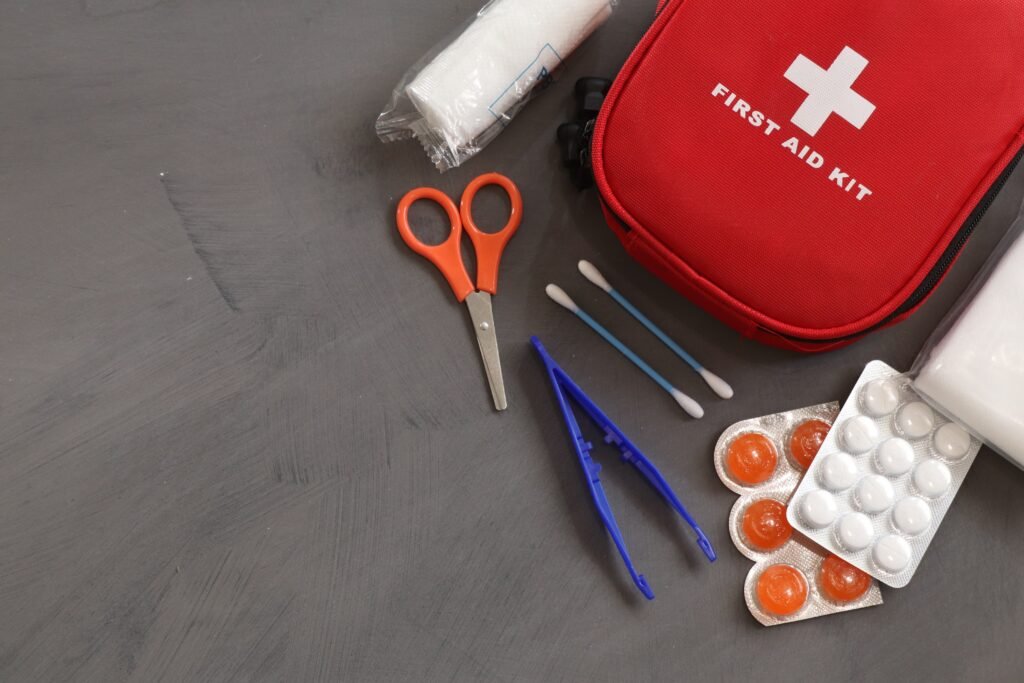
- Carry-on only. Never put essential medicine in checked luggage.
- Split it. Keep a small backup supply of key items in a second bag, in case one gets lost or stolen.
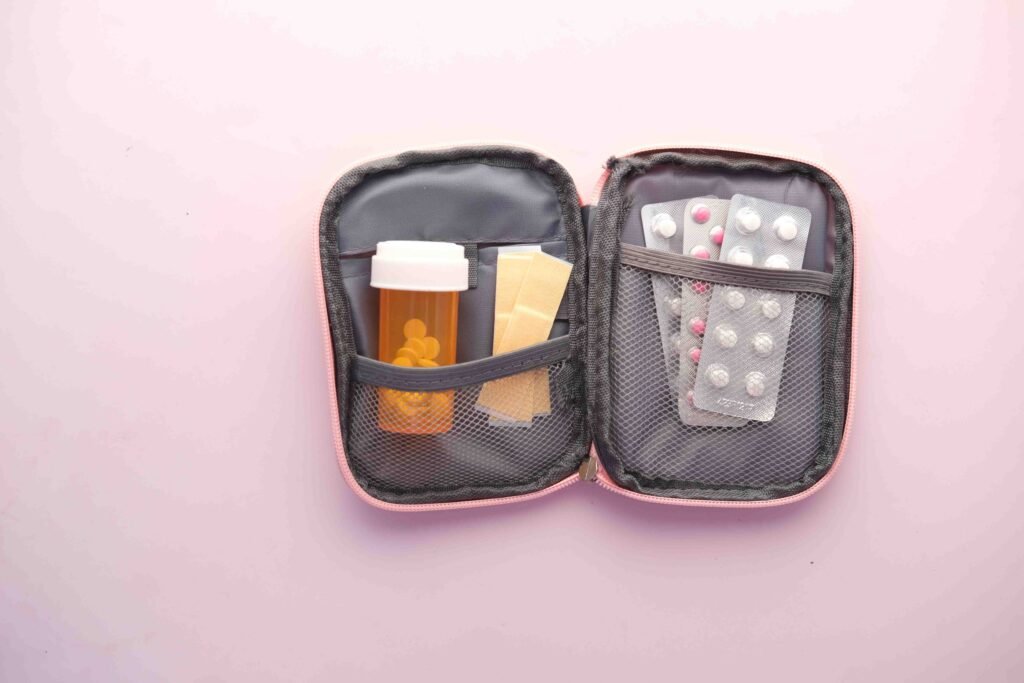
- Use a clear zip pouch. It’s quick to open at security and easy to find in a hurry.
- Keep prescriptions in original containers. For over-the-counter strips, keep the name and expiry date visible, and photograph the leaflet so you can bin the bulky box.
- Beware of heat. Don’t leave medicine in a hot car, in direct sun, or in a bag on a scooter all day. Most labels give a storage temperature, so check yours.
- Check expiry dates a week before you leave.
What a Travel Medicine Kit Costs
You don’t need to spend much. These are rough ranges in US dollars, and your prices will vary by country and store. Buying generics (the same active ingredient without the brand premium) saves money.
| Item | Rough cost |
|---|---|
| Minimal kit: paracetamol, ORS, loperamide, antihistamine, plasters, repellent | About $15 to $25 |
| Full kit: adds thermometer, antiseptic, blister pads, hydrocortisone, motion sickness tablets, sunscreen | About $40 to $70 |
| Travel clinic consultation | Varies widely, often $50 to $200, plus any vaccines |
| Prescription medicines (malaria prevention, altitude, others) | Depends on the medicine and your insurance |
| Travel insurance with medical cover | Often a few percent of your trip cost |
A few honest notes. Medicine is often much cheaper in Asian pharmacies than at home, so you don’t need to overpack. But the biggest cost isn’t the kit. A hospital visit abroad can easily cost more than your kit and your insurance combined, so make sure your policy covers medical care and emergency evacuation.
Best Time to Prepare: Your Pre-Trip Timeline

- 6 to 8 weeks before: See your doctor or a travel clinic. Ask about vaccines, malaria prevention, altitude medicine and a backup plan for stomach problems. Check destination rules for your medicines.
- 4 weeks before: Refill prescriptions and ask for the extra days’ supply you need.
- 2 weeks before: Get your doctor’s letter, buy travel insurance, and photograph all prescriptions.
- 1 week before: Buy and assemble your kit, then check every expiry date.
- Travel day: Medicine goes in your carry-on, in a clear pouch, with your letter.
Season matters too. Dengue risk in much of South and Southeast Asia tends to rise with the rains, so lean harder on repellent then. Peak heat calls for electrolytes and sun protection, and winter air quality in some Indian cities makes a mask worth packing.
Pros and Cons: Packing Medicines From Home vs. Buying Abroad
| Pack from home | Buy abroad | |
| Pros | Familiar brands and dosing. Available at 2 a.m. or on a remote island. No language barrier. Known quality. | Lighter luggage. Often cheaper. Pharmacies are plentiful in most Asian cities. |
| Cons | Takes up space. Some items may be restricted at your destination. Costs more upfront. | Unfamiliar brand names and ingredients. Quality can vary. Closed at night or in rural areas. Easy to self-prescribe by mistake. |
My take: bring the essentials from home, and buy the extras abroad from a reputable pharmacy once you know what you need. That balance keeps your bag light and your trip safe.
Common Mistakes to Avoid

- Packing medicine in checked luggage. If your bag is lost, so is your medicine. Always carry it with you.
- Throwing away the original packaging. Without the label, a prescription medicine is much harder to explain at customs.
- Assuming it’s legal everywhere. A cold medicine from your home pharmacy can be prohibited in another country. Check first.
- Self-prescribing antibiotics. It’s tempting when pharmacies sell them freely. Don’t. Get advice from a doctor.
- Packing aspirin or ibuprofen for a dengue region. Paracetamol is the safer default there.
- Doubling up on paracetamol. Many cold and flu products already contain it. Read every label.
- Not bringing a buffer. Flight delays and cancellations happen, so a few spare days of essential medicine is cheap insurance.
- Skipping the travel clinic. Some of the most important protection, like malaria prevention or vaccines, can’t be bought at a pharmacy on the way.
Pro Travel Tips

- Keep a list of your medicines, allergies and blood type in your phone and in your wallet.
- Photograph your prescriptions, the doctor’s letter, and your insurance card.
- Save the local emergency number and your insurer’s 24-hour line before you land.
- Know the generic names. They work at any pharmacy in the world.
- Start ORS at the first sign of stomach trouble. Don’t wait for it to get bad.
- Take motion sickness medicine before the journey, not during it.
- Restock from reputable pharmacies, and avoid roadside stalls.
- Check your kit after every trip and replace anything used or expired.
Who Should Pack What
- Weekend or city traveler: The minimal kit is enough. Pharmacies are close, so keep it light.
- Backpacker in Asia: Go with the full kit, with extra ORS, repellent and blister care, and see a travel clinic first.
- Trekkers and mountain travelers: Add a doctor’s advice on altitude and a solid first-aid setup.
- Families with children: Child-specific medicines, a thermometer, and your pediatrician’s guidance.
- Older travelers or anyone on regular medication: Your doctor’s letter, a full medication list, extra supply and a pharmacist’s check on any new over-the-counter medicine.
The best travel medicine kit is a small one that you’ve checked against your own trip. Pack the basics, know the rules, and ask a professional about everything that isn’t basic.
Frequently Asked Questions
What basic medicines should I pack for travel?
Pack paracetamol (acetaminophen), oral rehydration salts, loperamide, an antihistamine, motion sickness tablets, antiseptic wipes, plasters, and insect repellent. Add sunscreen and your regular prescriptions in original packaging. Adjust the kit for your destination, and check with a doctor if you have health conditions.
Can I carry medicines in hand luggage?
Yes, and you should. Keep medicines in your carry-on in their original packaging. Medically necessary liquids are usually allowed above the normal limit if you declare them at security. Carry a doctor's letter for prescription medicines, and check your airline and airport rules before flying.
Do I need a doctor's note for prescription medicine abroad?
It's strongly recommended. A signed letter listing the generic names, doses and reason for each medicine helps at customs and with foreign doctors. Some countries require advance permission for certain medicines, so check the destination's official rules before you travel.
What medicine should I take for traveler's diarrhea?
Start with oral rehydration salts to replace lost fluids. Loperamide can slow non-bloody diarrhea when you must travel. See a doctor if you have blood, fever, severe pain, or no improvement after a couple of days. Don't self-prescribe antibiotics.
Which medicines are banned or restricted in some countries?
Strong painkillers like codeine and opioids, sleeping pills, anti-anxiety medicines, ADHD medicines, and some cold remedies containing pseudoephedrine can be restricted. Japan and the UAE are known for strict rules. Always check the official health or customs site for your destination.
Should I pack antibiotics when traveling?
Only if a doctor prescribes them for your trip. A travel doctor may give you a backup course for severe traveler's diarrhea with clear instructions. Using antibiotics without advice can cause side effects, hide serious illness and contribute to drug resistance.
Is it better to buy medicine abroad or bring it from home?
Bring essentials from home so you have known brands and quality, especially for prescriptions. Buy extras abroad from a reputable pharmacy. Medicine is often cheaper in Asia, but brand names differ and quality can vary, so ask for the generic name.