The 30-second answer
- Whether you need a visa depends on your passport, not on how long you stay or why you’re going.
- Visa required? You apply for an e-Visa through an authorised agent (or a Singapore sponsor) before you fly.
- Visa-free? You skip the pre-approval, but an immigration officer still decides at the border and issues your Short-Term Visit Pass.
- Everyone, visa or not, files the free SG Arrival Card online within 3 days before arriving.
- Neither route guarantees entry. The officer at the checkpoint has the final say.
Here’s the mix-up that catches a lot of first-time visitors to Singapore. They hear “visa-free” and assume it means no paperwork at all. Or they hear “visa required” and picture weeks of embassy queues.
Neither is quite true.
Singapore is one of the easiest countries in Asia to enter, but it’s also one of the most rule-driven. Entry works in three separate layers: the visa, the visit pass, and the arrival card. Most guides blur them together, and that’s exactly how travellers end up with the wrong paperwork, or none at all.
In this guide I’ll untangle all three in plain language. You’ll see who needs a visa and who doesn’t, what each route really costs, how to do each one step by step, the mistakes that get people into trouble, and which path fits which kind of traveller.
One note before we start: immigration rules change. I checked everything below against official Singapore government sources, but always confirm the final details on the website of the Immigration & Checkpoints Authority (ICA) before you book or fly.
Table of Contents
ToggleVisa vs Visa-Free

Visa required means your passport is on ICA’s visa-required list. You must hold an approved entry visa (issued electronically) before you board your flight.
Visa-free (also called visa-exempt) means your passport is not on that list. You don’t apply for anything in advance, and you receive a Short-Term Visit Pass when you arrive.
Here’s the short version by passport:
If you hold a passport from… | What you need |
|---|---|
Most Western countries (US, UK, Canada, Australia, much of Europe), Japan, South Korea, UAE and many others | Visa-free entry + SG Arrival Card |
China (ordinary passports) | Visa-free entry + SG Arrival Card. Confirm current status on ICA. |
India, Bangladesh, Pakistan, Russia, Nigeria and roughly 35 countries in total | An approved e-Visa + SG Arrival Card |
Only changing planes | Depends on your passport. Some visa-required nationalities can use the 96-hour Visa-Free Transit Facility |
How Singapore’s Entry System Actually Works
Think of entering Singapore as passing through three gates. Which gates you pass through depends on your passport.
Gate 1: The Visa (Only If Your Passport Requires One)
A visa is advance permission to travel to Singapore’s border and ask to enter. It’s approved by ICA before you fly.
If your passport requires one, you generally apply in one of two ways:
- Through an authorised visa agent appointed by a Singapore embassy or high commission in your country. This is the route most tourists use.
- Through a local sponsor in Singapore, such as a relative, friend or employer with a Singpass or CorpPass account, who submits the application online.
The visa is issued electronically (an e-Visa). The Singapore High Commission in India encourages applicants to print an extra copy for safekeeping.
Two things worth knowing:
- Every application, including its validity period, is considered on its own merits. Approval isn’t automatic.
- A visa gets you to the border. It does not guarantee the officer will let you in.
Gate 2: The Short-Term Visit Pass (Everyone Gets One)
This is the layer most guides skip, and it’s the most important one.
When you reach the immigration checkpoint, the officer issues you a Short-Term Visit Pass, delivered electronically. That pass, not your visa, decides how long you can stay. The number of days is shown on your electronic pass after you enter.
- For many travellers the baseline is around 30 days. Some nationalities get up to 90 days.
- The pass is meant for tourism, social visits or medical reasons. You can’t work on it, and you can’t enrol in formal study.
- It’s designed for a single stay. Frequent in-and-out trips (“visa runs”) can raise questions at the border and may lead to refusal.
- Need longer? You can apply to extend it online through ICA. More on that later.
Gate 3: The SG Arrival Card (Everyone Files One)
The SG Arrival Card (SGAC) is a free online arrival and health declaration. You submit it through ICA’s official e-service within 3 days before you arrive.
It applies whether you’re visa-free or visa-required. Having a visa doesn’t replace it, and being visa-free doesn’t exempt you.
The official card is free. If a website asks you to pay for it, you’re on the wrong site.
Related reading: “Is the SG Arrival Card Still Required?” (add internal link)
What the Officer Can Still Check at the Border
Whichever route you take, entry is assessed at the checkpoint. Be ready to show:
- A passport with at least six months of validity
- Your confirmed onward or return ticket
- Proof of accommodation for your stay
- Proof of funds to cover your trip
- A yellow fever vaccination certificate if you’ve recently travelled from certain countries on ICA’s list
Most visitors are never asked for half of this. But the officer can ask, and “I wasn’t told” won’t help you at the counter.
Who Needs a Visa and Who Doesn’t
Here’s a detail that surprises people. ICA doesn’t really publish a “visa-free list.” It maintains a visa-required list of roughly 35 countries and regions, and everyone else is automatically exempt for short visits.
That’s why a single glance at ICA’s page answers the question: if your passport isn’t on the list, you don’t need a visa.
Visa-Free Travellers
Citizens of the large majority of countries can enter without a visa for short visits. This includes, for example, the US, UK, Canada, Australia, most of the EU, Japan, South Korea, the UAE, Sri Lanka and most ASEAN countries.
How long can you stay? Typically 30 or 90 days, depending on nationality. Sources online disagree on exactly which passports get which, so don’t rely on a blog (including this one) for the number. The date shown on your electronic visit pass is the only figure that counts.
Related reading: “Singapore 30/60/90 Days: How Long Can You Stay?” (add internal link)
Visa-Required Travellers
If your passport is on ICA’s visa-required list, you need an approved visa before you travel. The list includes, for example, India, Bangladesh, Pakistan, Russia, Nigeria, Iran, Iraq, Egypt, Jordan and Myanmar, among others. That’s a sample, not the full list. Check ICA for the current version.
If you’re applying from India, visa applications go through the High Commission’s authorised visa agents. The High Commission advises applying within about 30 days before your arrival date.
Related reading: “How to Get a Singapore Tourist Visa” and “Do Indians Get Visa on Arrival in Singapore?” (add internal links)
What About China?
Holders of ordinary Chinese passports now get 30 days visa-free under a mutual exemption arrangement, according to current travel guides. Exceptions exist, so check ICA before you go.
Is There a Visa on Arrival?
No. Singapore doesn’t run a typical visa-on-arrival system. If your passport requires a visa, it must be approved before you board. Turning up at Changi without one will end with a refused entry and a flight home.
Just Transiting? The 96-Hour Visa-Free Transit Facility
Some travellers who normally need a visa can still pass through Singapore without one under the Visa-Free Transit Facility (VFTF), which allows up to 96 hours.
The eligible nationalities include citizens of India, China (PRC), the CIS countries, Georgia, Turkmenistan and Ukraine. The conditions matter:
- You must be in transit to a third country, with a confirmed onward ticket.
- Indian and PRC passport holders must also hold a valid visa or long-term pass from one of a short list of specified countries. ICA publishes that list. Check it before you rely on this.
If you meet the conditions, a long layover can turn into a bonus city break without a visa application. It’s a clever route, but only if you’re certain you qualify.
Visa vs Visa-Free: Side-by-Side Comparison

| Visa Route | Visa-Free Route |
|---|---|---|
Who it applies to | Passports on ICA’s visa-required list | Everyone else |
Approval before travel | Yes, e-Visa required | No |
Government cost | SGD 30 processing fee (non-refundable) + agent charge | SGD 0 |
Lead time | Typically 3–5 working days once documents are complete, sometimes longer | None |
SG Arrival Card | Required | Required |
Who decides your stay length | The officer, via your visit pass | The officer, via your visit pass |
Can you be refused at the border? | Yes | Yes |
Extension possible? | Yes, online through ICA | Yes, online through ICA |
Pros and Cons of Each Route

Visa route
- ✅ You know your application was approved before you pay for flights and hotels
- ✅ Processing is usually quick when your documents are complete
- ❌ Extra cost: the government fee plus an agent’s service charge
- ❌ Extra work and lead time, and a rejection is possible
- ❌ The government fee is non-refundable, even if the application is rejected or withdrawn
Visa-free route
- ✅ Zero cost and no application
- ✅ Spontaneous trips are easy; you only need the SG Arrival Card
- ❌ No advance confirmation, since the officer decides at the border
- ❌ Fewer days than people assume if you’re on a 30-day pass
- ❌ Rules for your nationality can change, so you have to keep checking
The honest takeaway: neither route is “safer.” Both depend on a correct passport, correct paperwork and a satisfied officer.
What Each Route Really Costs

Let’s put numbers on it.
The Visa-Free Route
Item | Cost |
|---|---|
Visit pass | Free |
SG Arrival Card | Free |
Total for entry paperwork | SGD 0 |
Your only real “paperwork” spend is optional: travel insurance, and a printed copy of your bookings.
The Visa Route
Item | Cost |
|---|---|
Government visa processing fee | SGD 30 (non-refundable) |
Authorised agent’s service charge | Varies by agent. Some guides quote roughly SGD 15–50. Always ask for the all-in price before paying |
Passport photos / courier | Small, depends on your agent |
SG Arrival Card | Free |
Travel insurance (optional but wise) | Depends on provider and trip length |
Costs People Forget
- Visit pass extension. A fee applies if you extend. Check ICA for the current amount.
- Rebooking or lost bookings if you’re refused boarding or entry.
- Rush charges if an agent offers expedited processing.
The cheapest mistake to make is none. A few minutes on ICA’s site costs nothing, and a denied entry costs your flight, your hotel and your trip.
Step-by-Step: What to Do for Each Route
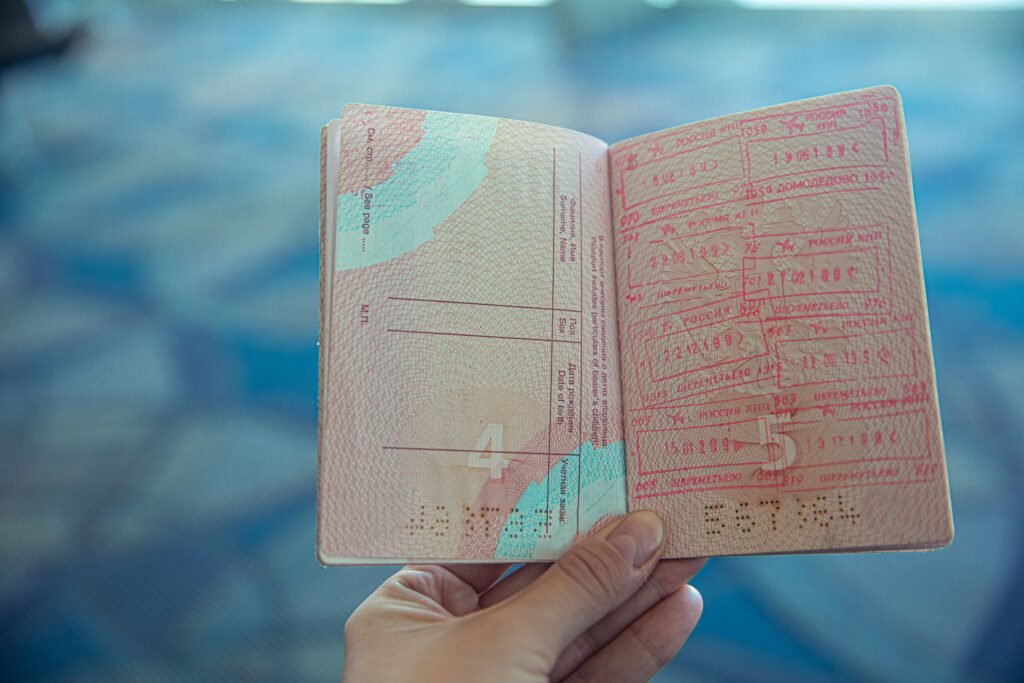
If You Need a Visa
- Confirm you’re on the visa-required list on ICA’s website.
- Choose an authorised agent from the list published by the Singapore High Commission or Embassy in your country. Use only listed agents.
- Gather your documents. Your agent will give you a checklist, which typically includes the completed application form, passport copy, photo and travel details. Requirements can vary, so follow your agent’s list.
- Pay the fee. That’s the SGD 30 government fee plus the agent’s service charge.
- Wait for approval. Allow around 3–5 working days from the point your documents are complete. Some applications take longer.
- Receive and print your e-Visa. Keep the reference number too.
- File your SG Arrival Card within 3 days before arrival.
A safety note. There have been cases of fraudulent documents circulating in India. Never pay a stranger or an unofficial website. If an agent isn’t on the High Commission’s list, walk away.
If You’re Visa-Free 1.
- Check your passport’s validity. It should have at least six months left.
- Book your onward or return ticket and keep proof of accommodation handy.
- File your SG Arrival Card on the official ICA site, within 3 days before arrival.
- Screenshot everything. Wi-Fi at the airport isn’t something to depend on.
- At the checkpoint, answer the officer’s questions simply and honestly. Your visit pass is issued electronically.
Want to Stay Longer? Extending Your Visit Pass
You can apply to extend your Short-Term Visit Pass online through ICA. There’s no walk-in option.
- Apply before your pass expires. The Singapore High Commission advises at least 5 working days ahead.
- Extensions are usually considered for special circumstances, so don’t plan a trip that depends on getting one.
- Overstaying is a serious offence.
Best Time to Visit Singapore (and When to Sort Your Paperwork)

Singapore is hot and humid all year, so there’s no bad season, only different trade-offs.
Period | What to expect |
|---|---|
Feb to April | Generally the drier stretch, and a good all-round window |
May to July | Hot, with the Great Singapore Sale usually running around June–July |
August to October | Occasional haze from regional fires is possible. The F1 night race typically falls around September–October, so hotels fill up and prices rise |
November to January | The wetter monsoon season, but Orchard Road’s festive lights are a highlight. Year-end holidays are peak season |
Late January to February | Chinese New Year brings festive atmosphere and crowds. Dates move every year |
Event dates change annually, so confirm them before booking.
How This Affects Your Paperwork
- Visa-required travellers: apply well ahead of peak periods (year-end, Chinese New Year, F1 weekend), when agents tend to be busier. But remember the High Commission advises applying within about 30 days of arrival, so don’t apply too early.
- Everyone: the SG Arrival Card has a 3-day window. Set a reminder so you don’t file it too early or forget it entirely.
- Peak season tip: book flights with a refundable fare until your visa is approved.
Common Mistakes to Avoid

These are the slip-ups that cause real trouble.
1. Assuming “visa-free” means “no checks”
Visa-free means no pre-approval. The officer still decides at the border, and you still need the SG Arrival Card, a valid passport and a clear reason for your visit.
2. Skipping or mis-filing the SG Arrival Card
Filing too early (outside the 3-day window), using a wrong passport number, or forgetting it altogether leads to delays at the counter. Use only ICA’s official site, because the card is free.
3. Travelling with less than six months of passport validity
This is one of the most common reasons for trouble at check-in. Check the expiry date when you start planning, not at the airport.
4. Booking non-refundable flights before the visa is approved
Applications are considered on their merits, and rejection is possible. Hold off on locked-in bookings until the e-Visa is in your inbox.
5. Treating the visit pass like a “90-day visa”
Your stay length is whatever is printed on your visit pass. Don’t assume the number you read on a blog.
6. Doing “just a bit” of work on a tourist pass
The Short-Term Visit Pass doesn’t allow employment. Attending a meeting is different from working for a Singapore client or employer. If in doubt, check with MOM before you travel.
7. Using unofficial agents or websites
Stick to agents listed by the Singapore embassy or high commission. Unofficial “fast-track” services are a favourite spot for scams and fake documents.
8. Visa runs
Leaving and re-entering repeatedly to reset your stay can raise concerns and lead to refusal at the border. A visit pass isn’t built for it.
Pro Travel Tips

Small habits that make arrival smooth, whichever route you’re on.
- Screenshot everything. Your SG Arrival Card confirmation, e-Visa, hotel booking, onward ticket and the photo page of your passport. Airport Wi-Fi and data roaming can be unreliable.
- Build a one-page “entry pack.” Print or save offline: passport copy, e-Visa (if you have one), accommodation details and onward ticket. You may never be asked, but if you are, it takes seconds.
- Check ICA the week you fly. Rules and lists change. Note the date you checked.
- Match your answers to your paperwork. Keep your answers about purpose, accommodation and length of stay simple and consistent with what you submitted.
- Read your visit pass the moment it arrives. Check the end date and put your departure day in your calendar.
- Make sure the passport matches. The passport number on your SG Arrival Card and e-Visa must match the passport you’re carrying.
- Stick to official domains. ICA and Singapore embassy or high commission pages end in .gov.sg. If a site asks you to pay for the arrival card, close it.
- Got a long layover? Check whether you qualify for the 96-hour Visa-Free Transit Facility. It’s an easy way to see the city without a full visa process.
- Buy travel insurance. It isn’t an entry requirement for most visitors, but it’s cheap protection against cancellations and medical bills.
Who Should Choose What
If you… | Your route | What to do |
|---|---|---|
Hold a visa-free passport and visit for a short trip | Visa-free | File the SG Arrival Card, check passport validity, read your visit pass date on arrival |
Hold a visa-required passport (for example India) and visit as a tourist | Visa route | Use an authorised agent, apply within about 30 days of arrival, and don’t book non-refundable flights until the e-Visa arrives |
Are visiting family or friends in Singapore on a visa-required passport | Visa route via a sponsor | Ask your host (with a Singpass account) to apply on your behalf, or use an authorised agent |
Have a long layover on a visa-required passport | Check the 96-hour transit facility | Confirm your nationality and any specified-country visa condition on ICA |
Want to stay longer than your pass allows | Extension | Apply online before expiry, and don’t build a plan around it being approved |
Plan to work or study | Neither | You need the right pass through MOM or the relevant authority, not a visit pass |
visa vs visa-free only decides whether you need approval before you fly. The visit pass, the SG Arrival Card and the officer’s judgement apply to everyone. Get those right and Singapore is one of the smoothest entries in Asia.
Frequently Asked Questions
Do I need a visa to visit Singapore?
It depends on your passport. ICA maintains a list of roughly 35 countries and regions whose citizens need a visa. Citizens of most other countries enter visa-free and receive a Short-Term Visit Pass on arrival. Check ICA’s list for your passport.
What’s the difference between a Singapore visa and visa-free entry?
A visa is approved before you travel, usually through an authorised agent or a local sponsor. Visa-free means no advance approval, but the immigration officer still issues your visit pass at the border. Both routes require the SG Arrival Card.
Do visa-free travellers need the SG Arrival Card?
Yes. The SG Arrival Card is free and submitted online through ICA within 3 days before you arrive. It applies to visa-free and visa-required travellers alike.
How long can I stay in Singapore without a visa?
Typically 30 or 90 days, depending on your nationality. The exact number is shown on your electronic Short-Term Visit Pass after you enter, and that date is the one that counts.
Can I be refused entry to Singapore even with a visa or visa-free status?
Yes. A visa or visa exemption doesn’t guarantee entry. Immigration officers assess every traveller at the checkpoint, including passport validity, onward travel and purpose of visit.
How much does a Singapore visa cost?
The government processing fee is SGD 30 and is non-refundable, even if the application is rejected. Authorised agents add their own service charge, so ask for the all-in price before you pay.
Is there a visa on arrival in Singapore?
No. Singapore doesn’t offer a typical visa on arrival. If your passport requires a visa, it must be approved before you board your flight.
Can I transit through Singapore without a visa?
Some nationalities can. The Visa-Free Transit Facility allows up to 96 hours in Singapore for eligible travellers with a confirmed onward ticket. Indian and PRC passport holders must also hold a valid visa or long-term pass from specified countries, so check ICA’s conditions first.