
Open any booking site for the Maldives and you’ll hit the same confusing moment. One tab shows an overwater villa at $900 a night. Another shows a guesthouse room on a real, lived-in island for $90. Same country, same turquoise water, wildly different trips.
So which one is right for you? The short answer: a resort is better if you want privacy, polish, and a drink in your hand at sunset. A local island is better if you want to spend far less, meet actual Maldivians, and still snorkel with turtles and rays. The long answer depends on your budget, your travel style, and a few rules nobody warns you about until you’ve already booked.
This guide breaks down real costs (including the taxes and transfers that quietly double a quote), what daily life is like in each option, when to go, the mistakes I see people make, and a straight verdict at the end. If you’d rather start with the big picture, see our Maldives travel guide.
Table of Contents
ToggleResort vs Local Island
If you only have thirty seconds, here is the comparison in one table.
| Resort island | Local island | |
| Typical cost per night (couple) | Roughly $350 to $1,500+ before taxes | Roughly $60 to $200 |
| Privacy | Very high, the whole island is for guests | Moderate, you share the island with residents |
| Alcohol | Available at bars and restaurants | Not sold on inhabited islands |
| Beach | Private, resort-maintained | Designated “bikini beach,” varies by island |
| Snorkeling | House reef steps from your villa | Guided boat trips, some islands have reef close to shore |
| Food | Resort dining, often half or full board | Guesthouse meals plus small local cafés |
| Getting there | Seaplane, speedboat, or domestic flight plus boat | Public ferry, speedboat, or domestic flight plus boat |
| Best for | Honeymoons, luxury, relaxing | Budget travelers, culture, longer trips |
Choose a resort if you want seclusion, service, and alcohol, and you’re comfortable paying for it. Choose a local island if you want the Maldives without the five-figure price tag and don’t mind following local customs. Many travelers do a bit of both, which I’ll cover below.
How Maldives Tourism Actually Works
This is the part most blogs skip, and it explains almost everything else in the article.
One island, one resort
For decades, the Maldives kept tourism and local life apart on purpose. Resorts sit on their own private islands, each with a single operator, and locals don’t live there (staff commute or live in staff quarters). Guests arrive, stay inside the resort bubble, and leave. That’s the classic Maldives postcard: the overwater villa, the private jetty, the empty beach.
What a local island is
A local island is an ordinary inhabited island with schools, mosques, shops, fishermen, and families. Since 2009, residents have been allowed to run guesthouses, which opened the Maldives to travelers who couldn’t afford a resort. Today there are dozens of guesthouse islands, from small quiet ones to busier ones like Maafushi.
The middle ground
You’ll also see boutique hotels on local islands, liveaboard boats that cruise between atolls, and “day-use” resort passes that let guesthouse travelers visit a resort for lunch and a swim. We’ll come back to these, because they can change the whole trade-off.
What Each Option Really Costs
The nightly rate is never the real price. Taxes, transfers, meals, and excursions are where the Maldives quietly gets expensive, and they hit resorts much harder.
The taxes you need to know
- TGST (Tourism Goods and Services Tax): 17% on tourism goods and services, up from 16% since July 2025.
- Service charge: typically 10% at resorts and hotels, added on top.
- Green Tax: $12 per person per night at resorts, hotels, and safari vessels, and $6 per person per night at guesthouses and small hotels on inhabited islands. Children under two are exempt.
Stack the service charge and TGST on a resort rate and you’re often paying close to 30% more than the headline number. Always ask: “Is this price inclusive of all taxes, service charge, and Green Tax?” Prices on booking platforms also may shift as new rules on foreign booking platforms take effect, so compare the final checkout total, not the search-result price.
Resort costs
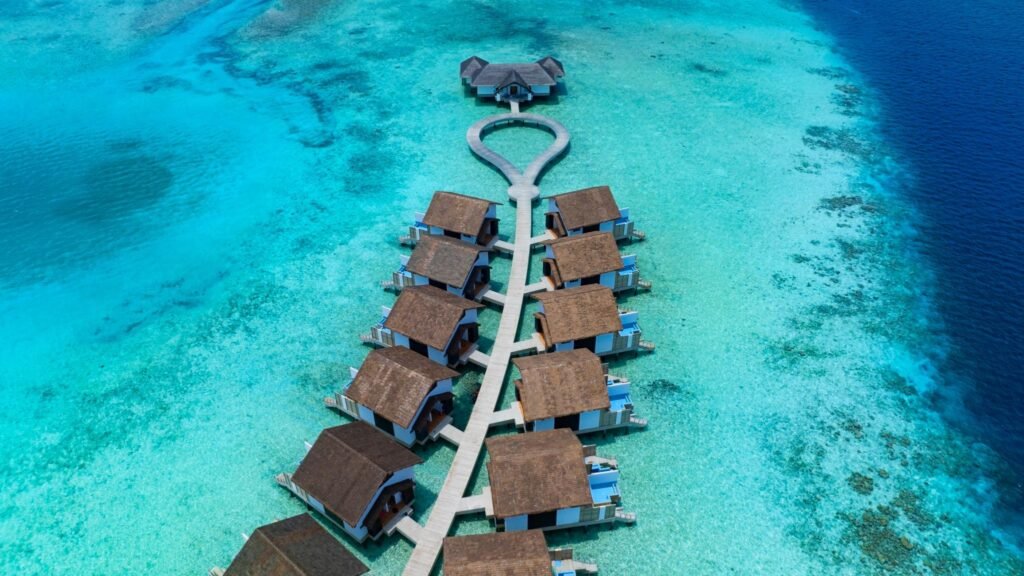
A basic beach villa at a mid-range resort commonly starts around $350 to $600 a night for two, before tax. Overwater villas at well-known resorts easily run $900 to $2,000+ a night. Meal plans matter a lot: breakfast only keeps the room rate lower but you’ll pay resort prices for everything else, while half or full board costs more upfront but keeps your daily spending predictable. Drinks are rarely included unless you’re on an all-inclusive plan, and a cocktail at a resort bar can cost what a full meal costs on a local island.
Transfers are a big line item. Speedboat transfers to nearby resorts can run roughly $100 to $300 per person round trip. Seaplane transfers to farther atolls commonly cost $300 to $800+ per person round trip. For a couple, that’s $400 to $1,600 before you’ve unpacked.
Local island costs
Guesthouse rooms commonly run $60 to $200 a night depending on the island and season. Breakfast is usually included, and a local meal costs a fraction of a resort one. Public ferries are very cheap (a few dollars), while private speedboats cost more but are faster and more flexible. Add Green Tax at $6 per person per night, and budget for excursions, which are where most of your fun (and spending) goes: snorkeling trips, sandbank picnics, dolphin cruises, and whale shark outings.
A sample 5-night budget for two
These are rough estimates for a couple, excluding international flights. Prices change with season and booking platform, so treat them as a planning guide, not a quote.
| Item | Local island guesthouse | Mid-range resort |
|---|---|---|
| Accommodation (5 nights) | $450 – $750 | $1,750 – $3,000 base, about $2,250 – $3,900 with service charge and TGST |
| Green Tax | $60 | $120 |
| Transfers (round trip, both of you) | $20 – $150 | $400 – $1,600 |
| Meals not included | $250 – $400 | $300 – $800 (more with drinks) |
| Excursions | $250 – $500 | $150 – $600 |
| Rough total | $1,100 – $2,100 | $3,100 – $6,500 |
A luxury overwater stay with seaplane transfers and drinks can easily pass $7,000 for the same five nights. The gap between the two options is real: a local island trip often costs a third to a half of a mid-range resort trip.
Hidden costs on both sides
- Resorts: Wi-Fi fees at some properties, spa and excursion prices, late-arrival transfer surcharges, and bottled drinks.
- Local islands: snorkel gear rental, boat trips that must be paid per person, a transfer to a resort if you want a day of beach clubs, and occasionally cash-only payments.
Getting There and Around: Transfers Explained
Transfers are where Maldives itineraries quietly fall apart, so plan them before you book a room.
Resort transfers
Most resorts are reached by one of three routes: a speedboat from Malé (for resorts in nearby atolls), a seaplane from the seaplane terminal (for farther resorts), or a domestic flight followed by a boat. Seaplanes generally fly only in daylight, so if your international flight lands in the evening you may have to spend a night in Malé or near the airport first. Good resorts will tell you this upfront, but some don’t, so ask.
Local island transfers
Local islands are reached by public ferry, private speedboat, or a domestic flight plus a short boat ride. Public ferries are cheap but run on set schedules and take longer. Speedboats are faster and priced per person. Guesthouses usually arrange these for you; ask for the exact timetable and whether pickup from the airport is included.
Weather and schedule risk
Rough seas in the wetter months can cancel or delay ferries. Late flights can miss the last boat or seaplane. Build one buffer night around your arrival or departure and don’t schedule a tight international connection on the same day as an island transfer.
The On-the-Ground Experience: What Daily Life Is Really Like

Beaches and snorkeling
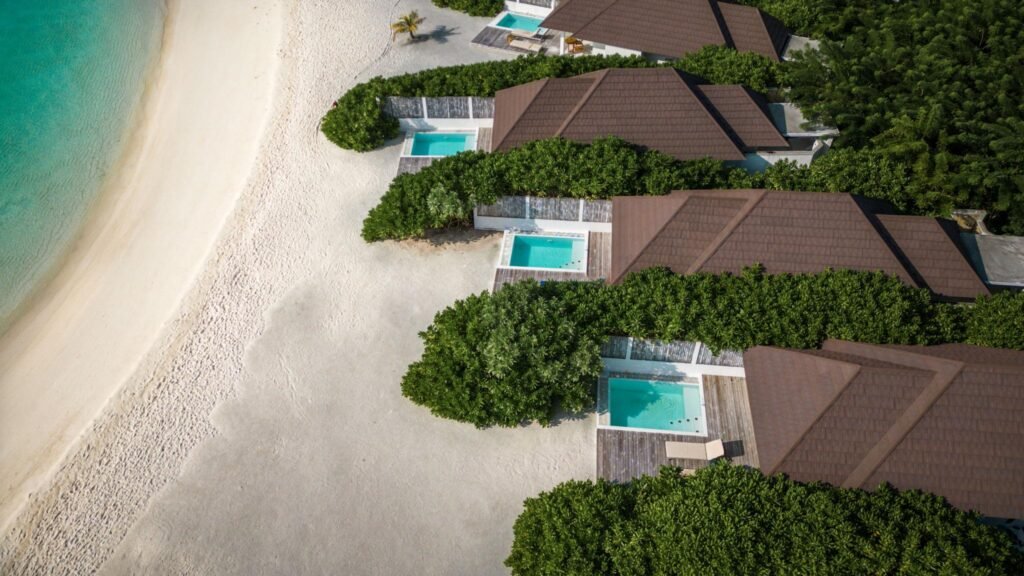
At a resort, the beach is private and maintained, and many resorts have a house reef you can snorkel straight from the sand or from your villa deck. That’s a genuine luxury: you can wake up and be in the water in two minutes.
On a local island, you swim at a designated “bikini beach,” which is a section set aside where tourists can wear swimwear. Quality varies by island. Some are clean and pretty, others are narrow and busy. For real snorkeling, you usually go by boat with a guide to nearby reefs or sandbanks. That’s often cheaper than it sounds and can be excellent, with turtles, reef sharks, and rays depending on the island and season.
Food and drink
Resorts offer polished dining, international menus, and bars. You’ll eat well, but you’ll also pay for every extra. Local islands offer simple, fresh food: fish curries, tuna dishes, roshi (flatbread), and small cafés. You get a real taste of Maldivian food, and it costs far less.
Alcohol is the biggest rule to understand. Alcohol is not sold on inhabited islands, and visitors can’t bring it in. Resorts and licensed safari boats are where it’s served. Some travelers book a day trip to a nearby resort or a boat excursion for a sunset drink. If a sundowner is non-negotiable, a resort (or a hybrid trip) is the safer choice.
Dress code, prayer times, and Ramadan
The Maldives is a Muslim country, and local islands follow local customs. In village areas, cover your shoulders and knees. Swimwear belongs on the bikini beach, and nudity or topless sunbathing is not allowed anywhere. Friday is the main prayer day, so shops and services may slow down or close for a while. During Ramadan, many local cafés close in the daytime, and eating or drinking openly in public is discouraged. You can still travel then, but plan on guesthouse meals and quieter days.
Privacy, crowds, and noise
Resorts are quiet by design. Local islands are livelier: you’ll hear the call to prayer, see kids playing football, and share boats with other tourists. Some people love that texture. Others want total quiet and should pick a resort.
A typical day in each option
Numbers only tell half the story, so here’s what an ordinary day actually feels like.
On a resort island: you wake up in your villa, walk to a buffet or à la carte breakfast, and spend the morning snorkeling the house reef or lying on a quiet stretch of sand. Lunch is at a restaurant a few minutes’ walk away. The afternoon might be a spa treatment, a paddleboard session, or nothing at all. Sunset means a drink at the bar, then dinner, then bed. Everything is within walking distance, nothing is rushed, and you rarely see anyone who doesn’t work there or isn’t a guest.
On a local island: breakfast is at the guesthouse, often eggs, fresh fruit, flatbread, and a tuna dish. Around mid-morning, a boat picks you up for a snorkeling trip to a nearby reef, where you might see turtles, reef fish, and rays. You’re back by lunch, which is a simple local meal for a few dollars. Afternoons are for the bikini beach, a walk around the island, or a nap. In the evening you wander the village lanes, find a café for dinner, and watch the day wind down. It’s less polished and more personal, and a lot of travelers say that’s exactly what they remember most.
Choosing Your Island or Resort: What to Look For

If you're leaning toward a local island
Not all local islands are alike, so the island matters as much as the decision to stay local. Here are a few well-known options and what they’re generally known for. Check current reviews and recent photos before booking, because conditions change.
- Maafushi (South Malé Atoll): the most developed guesthouse island, with the widest range of guesthouses, restaurants, and excursion operators. It’s convenient and budget-friendly, but also the busiest and least “quiet village” feel.
- Ukulhas and Rasdhoo (Alif Alif Atoll): popular for a more relaxed feel, with good snorkeling and diving access. Often chosen by travelers who want a calmer island than Maafushi.
- Dhigurah and Maamigili (South Ari Atoll): known as base islands for whale shark excursions, which are frequently possible through much of the year.
- Thulusdhoo (Kaafu Atoll): known for surfing and an easy trip from Malé.
- Dharavandhoo (Baa Atoll): a base for visiting Hanifaru Bay during manta season, which runs roughly in the wetter months.
If you're leaning toward a resort
- House reef quality: if snorkeling is a priority, read recent reviews about the reef itself, not just the villas. A resort with a poor reef can still be beautiful, but you’d be paying for something you can’t use.
- Water villa vs beach villa: water villas are the iconic photo, but a beach villa often costs noticeably less and gives you more direct sand access and shade. Decide whether the overwater experience is worth the premium.
- Meal plan: half board, full board, or all-inclusive. If you plan to drink, an all-inclusive can be better value than paying for drinks individually, but only if you’ll use it.
- Distance from Malé: a nearby resort (speedboat) saves hours and hundreds of dollars compared with a far atoll (seaplane), but may feel less remote.
- Family and honeymoon features: kids’ clubs, adults-only options, and spa facilities vary widely, so match them to who’s traveling.
Two sample itineraries to compare
A 6-night local island trip: arrive in Malé, take a speedboat or ferry to your guesthouse island, spend most days on snorkel and sandbank trips, and keep one or two days free for the beach and wandering. Add a whale shark or manta excursion if you’re in the right season. This is a budget-friendly, activity-heavy trip.
A 5-night resort trip: arrive in Malé, transfer to the resort, spend the first day settling in, then split your time between the house reef, a spa day, and a sunset cruise. One excursion, like a dolphin cruise or a night fishing trip, adds variety. This is a slower, more indulgent trip.
Who should think twice
Solo female travelers often feel comfortable on local islands, but should dress modestly in town, stay at well-reviewed guesthouses, and read recent traveler experiences. Families with small children may find resorts easier, since many offer kids’ clubs, shallow lagoons, and meals that suit young eaters. Travelers with limited mobility should check the guesthouse’s access, since boats and jetties can be tricky, and resorts generally handle this more smoothly. Whatever your situation, check your government’s travel advice page before you book.
Best Time to Visit the Maldives

The Maldives has two main seasons, and the choice affects both options.
Dry season: roughly December to April
Expect more sun, calmer seas, and clear water. This is peak season, so resort and guesthouse prices are at their highest and the best places book early. It’s the safest bet if you have only one chance to visit and want the best odds of perfect weather.
Wet season: roughly May to November
More rain and wind are possible, and seas can be rougher, but you’ll often see sunshine between showers. Prices drop, and this is the better time for travelers on a budget. It’s also manta ray season in places like Hanifaru Bay in Baa Atoll, so snorkelers can see big marine life. [CITE: Maldives Meteorological Service for the monsoon pattern; verify manta timing with a marine conservation source.]
Shoulder months
The months on either side of the main seasons can give you a good balance of price and weather. If you’re flexible, they’re a smart way to save without gambling too hard on the weather.
Does the season matter differently for local islands?
- Ferries: rough sea days can disrupt public ferries in the wet season.
- Excursions: boat trips can be postponed in poor weather, so leave a flexible day.
- Ramadan: its dates shift each year and change the daily rhythm of local islands.
- Specific wildlife: whale sharks are often spotted around South Ari Atoll through much of the year, so islands like Dhigurah and Maamigili are popular for that.
Pros and Cons: Resort vs Local Island

Resort: pros
- Total privacy and a classic, polished Maldives experience
- House reef snorkeling right outside your door
- Alcohol, spa, and high service standards
- No need to think about dress codes or local customs
Resort: cons
- Much higher cost, with taxes and transfers on top
- Limited contact with real Maldivian life
- Everything costs resort prices, from water to dinner
- Seaplane transfers can limit arrival and departure times
Local island: pros
- Far lower cost, so you can stay longer
- Authentic culture, local food, and friendly guesthouse hosts
- Easy to mix in excursions: snorkeling, sandbanks, dolphins, whale sharks
- More flexibility to island-hop
Local island: cons
- No alcohol
- Dress and behavior rules to respect
- Beach quality and cleanliness vary by island
- Less privacy, and schedules shaped by ferries and prayer times
The Hybrid Option: Do Both

You don’t have to pick only one. A popular approach is to spend a few nights on a local island and a few at a resort. For example, four nights at a guesthouse for culture, snorkeling, and budget meals, then two or three nights at a resort to unwind with a drink and a private beach.
Do the local island first and finish at the resort, so your trip ends relaxed rather than rushed. The catch is transfers: every extra move costs time and money, so only do this if you have at least a week and your two stays aren’t far apart. For shorter trips, one base is usually better.
Common Mistakes to Avoid

- Comparing nightly rates without taxes and transfers. The real total can be 30% or more above the listed price at a resort, plus hundreds of dollars in transfers.
- Booking a seaplane resort with a late flight. Seaplanes generally don’t fly after dark, so you may need an extra hotel night.
- Expecting alcohol on a local island. It isn’t sold there. Decide early whether that’s a deal-breaker.
- Assuming you can wear swimwear anywhere. Keep it to the bikini beach and cover up in the village.
- Picking an island without checking ferry times. A “cheap” island that’s four hours away by slow ferry may cost you a day each way.
- Ignoring Ramadan and Friday schedules. Check the dates for your trip before booking.
- Skipping travel insurance. Weather can delay boats and flights, and insurance helps if connections are missed.
- Forgetting the entry declaration. You must complete it online before you arrive (details below).
Pro Travel Tips

- Book transfers first. Confirm how you’ll reach the island, and what time, before locking in a room.
- Ask your guesthouse questions. Is snorkel gear included, how far is the bikini beach, and what’s the ferry schedule?
- Carry some cash. Small shops and local ferries may not take cards.
- Pack smart. Reef-safe sunscreen, a rash guard, a light cover-up, a refillable water bottle, and a basic first aid kit.
- Compare the full checkout price. Look at the final total after taxes, not the search-page rate.
- Do the entry steps. Most visitors receive a free 30-day tourist visa on arrival, and every traveler must complete the free online traveller declaration (IMUGA) within 96 hours before arriving. Use only the official portal, imuga.immigration.gov.mv, and ignore sites that charge a fee.
- Add a buffer day. Don’t schedule a tight onward flight right after an island transfer.
Before You Book: A Quick Decision Checklist
If you’re still torn, run through these questions. Your answers usually make the choice obvious.
- What’s your total budget for the trip, excluding flights? Under about $2,500 for two people for a week almost always points to a local island. Above $5,000 opens up proper resort options.
- Is alcohol important to you? If a glass of wine at sunset is part of the dream, a resort or a hybrid trip is the honest answer.
- How do you feel about dress and behavior rules? If covering up in public and respecting prayer times sounds fine, a local island will suit you. If it sounds like a burden, don’t force it.
- How many days do you have? Short trips (three to four nights) favor a single resort with an easy transfer. Longer trips (a week or more) make local islands and hybrid plans more realistic.
- Do you want to be active or fully relaxed? Snorkel trips, sandbanks, and island-hopping are easier and cheaper from a local island. Total rest and pampering are easier at a resort.
- How comfortable are you with logistics? Ferries, schedules, and cash payments are part of the local island experience. Resorts handle most of it for you.
A note on honest expectations
Social media makes every Maldives photo look identical: the same turquoise lagoon, the same empty beach. In reality, a $90 guesthouse room won’t look like a $1,200 villa, and a bikini beach won’t feel like a private island. But the water is the same water, the sunsets are the same sunsets, and the turtles don’t care what you paid. Set your expectations to the option you choose, and either one can be a great trip.
Who Should Choose What
Choose a resort if…
- It’s your honeymoon, anniversary, or a once-in-a-lifetime splurge
- Privacy and service matter more than cost
- You want alcohol, spa treatments, and a house reef steps away
- You have a short trip and want everything handled in one place
Choose a local island if…
- You’re on a budget or want to stay longer without spending thousands
- You care about meeting locals and tasting real Maldivian food
- You’re happy to follow dress and alcohol rules
- You enjoy active days: snorkeling trips, sandbanks, and island-hopping
Choose both if…
- You have 7+ days, want culture and a splurge, and don’t mind an extra transfer
By traveler type: couples on honeymoon usually prefer a resort. Families often do well at a resort for the contained setting, though a quiet local island works for older kids. Solo travelers and budget backpackers are usually happier on local islands. Divers and snorkelers can have a great time in either, so pick based on budget and the specific atoll.
FAQ: Maldives Resort vs Local Island
Is it cheaper to stay on a local island in the Maldives?
Yes, usually by a wide margin. Guesthouse rooms typically cost a fraction of resort rates, and local meals are far cheaper. Transfers, excursions, and taxes narrow the gap a little, so compare the all-in totals rather than the nightly price.
Can you drink alcohol on Maldives local islands?
Generally no. Alcohol is not sold on inhabited islands. It's available at resorts and on licensed safari boats, so some travelers add a resort day trip or a boat excursion if they want a drink.
Can you wear a bikini on a local island?
Yes, but only on the designated bikini beach. In village areas, cover your shoulders and knees, and avoid swimwear when walking around town.
Is a resort or local island better for a honeymoon?
A resort is the classic choice for privacy and romance. A local island suits couples who want a lower budget and more activities. A hybrid trip with a few nights at each is a popular compromise.
What is the best time to visit the Maldives?
December to April is the driest and busiest period, with the best chance of sunny weather. May to November is wetter but cheaper, and it's manta ray season in some atolls.
How do you get to a Maldives local island?
Usually by public ferry or speedboat from Malé, or by a domestic flight plus a short boat ride. Schedules vary by island, so confirm timings with your guesthouse before booking.
Do I need a visa or any forms for the Maldives?
Most tourists get a free 30-day visa on arrival, with no advance application. You must complete the free online traveller declaration (IMUGA) within 96 hours before your flight arrives, using the official Maldives Immigration portal.