Most articles on this topic rank cities using the same handful of stock adjectives — “stunning,” “charming,” “vibrant” — without ever explaining what they actually mean by beautiful, or helping you figure out which type of beauty suits your trip. This guide fixes that. We’ll break Malaysia’s beauty down into four real categories, compare the cities honestly (including cost and timing), and tell you plainly which one fits which kind of traveler.
If you’re still planning your itinerary, our complete Malaysia Travel Guide covers everything you need to know before visiting, including visa requirements, transportation, trip costs, suggested itineraries, the best time to visit, and practical travel tips for first-time visitors.
Table of Contents
ToggleHow We Define "Beautiful"
“Beautiful” means something different depending on what you came for. To make this comparison useful rather than just opinionated, we’re splitting Malaysia’s most photogenic cities into four categories:
- Heritage & architecture — colonial shophouses, street art, old townhouses
- Modern skyline — skyscrapers, city lights, contrast of old and new
- Hill & nature scenery — cool climate, tea plantations, greenery
- Coastal & island beauty — beaches, waterfronts, laid-back scenery
Below, we match Malaysia’s most beautiful cities to each category, then compare them side by side.
Penang (George Town) — Best for Heritage & Street Art
What Makes It Beautiful
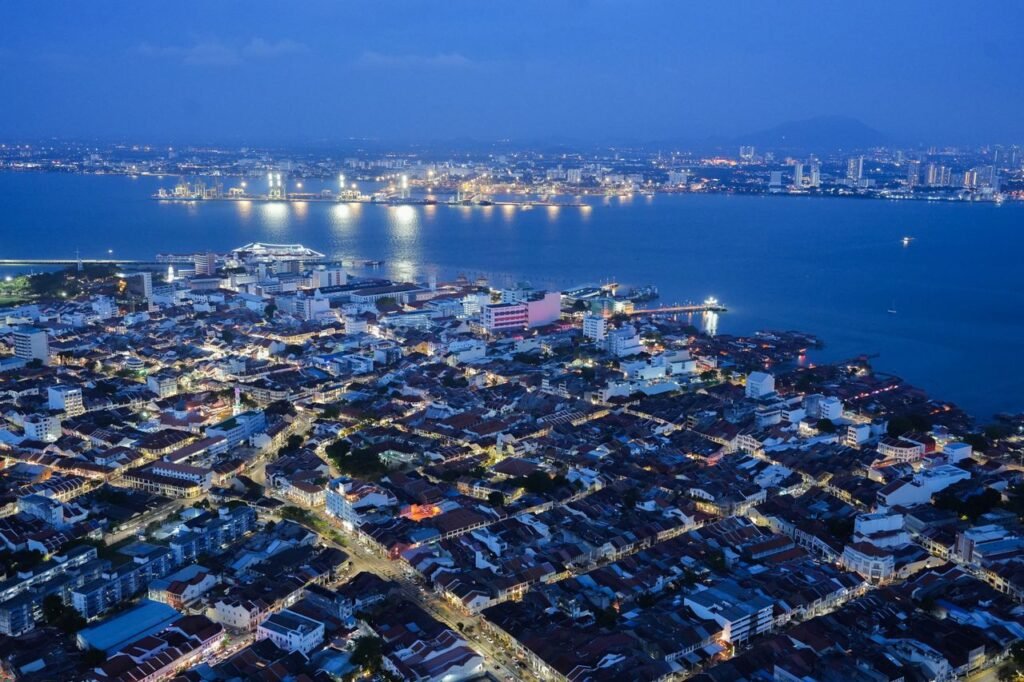
George Town, Penang’s capital, is a working museum of colonial-era shophouses, Peranakan (Straits Chinese) townhouses, and mural-covered back lanes. Faded pastel facades sit beside temples, mosques, and Chinese clan houses — a genuine architectural mix built up over centuries of trade. George Town’s historic core is a UNESCO World Heritage Site, listed as part of the Historic Cities of the Straits of Malacca.
Cost Snapshot for Penang
| Budget Tier | Daily Cost (RM) | What’s Included |
|---|---|---|
| Backpacker | RM 100–150 | Hostel bed, hawker food, walking |
| Mid-range | RM 250–400 | Guesthouse/hotel, mix of hawker and café meals |
| Comfort | RM 500+ | Boutique heritage hotel, sit-down dining |
Kuala Lumpur — Best for Modern Skyline & Contrast
What Makes It Beautiful
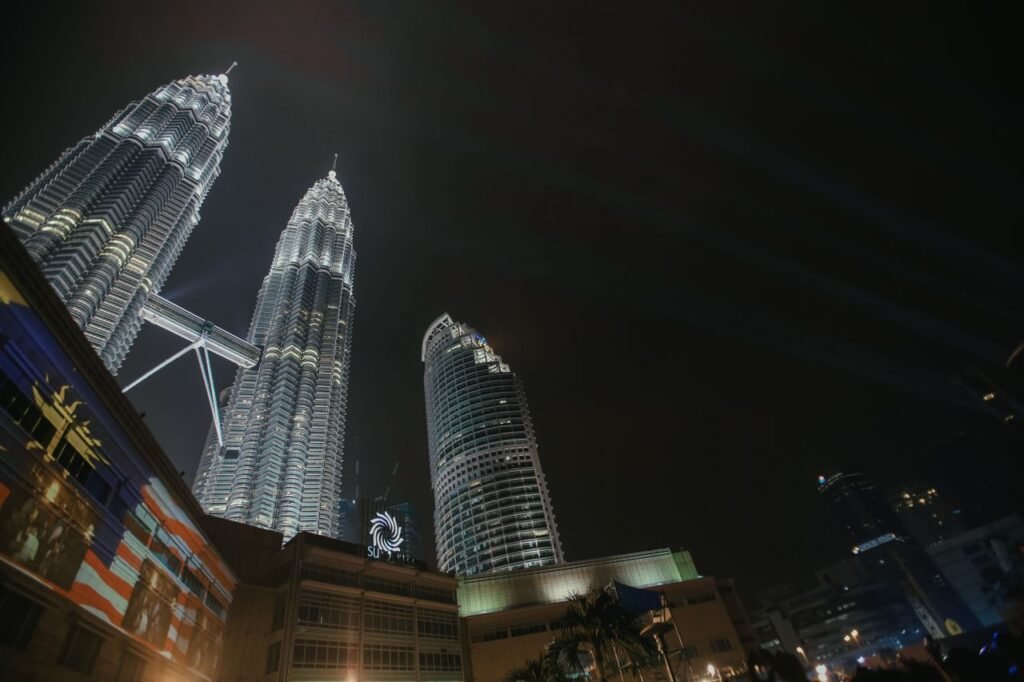
KL’s beauty is a different kind entirely — it’s the contrast. The Petronas Towers rise directly above KLCC Park’s green space, and within a few kilometers you’ll find colonial-era railway buildings, the Jamek Mosque at the river confluence, and Hindu temples tucked between glass office towers. It’s less about any single view and more about how much visibly coexists.
Cost Snapshot for KL
| Budget Tier | Daily Cost (RM) | What’s Included |
|---|---|---|
| Backpacker | RM 120–180 | Hostel, street/hawker food, public transit |
| Mid-range | RM 300–450 | 3-star hotel, mixed dining, occasional Grab rides |
| Comfort | RM 600+ | KLCC-area hotel, dining out, private transport |
Kuala Lumpur is famous for its skyline and cultural diversity, but it’s also closely connected to some of the country’s biggest tourist attractions. Discover the most visited place in Malaysia to see which landmark consistently attracts the highest number of visitors each year.
Malacca (Melaka) — Best for Colonial History
What Makes It Beautiful
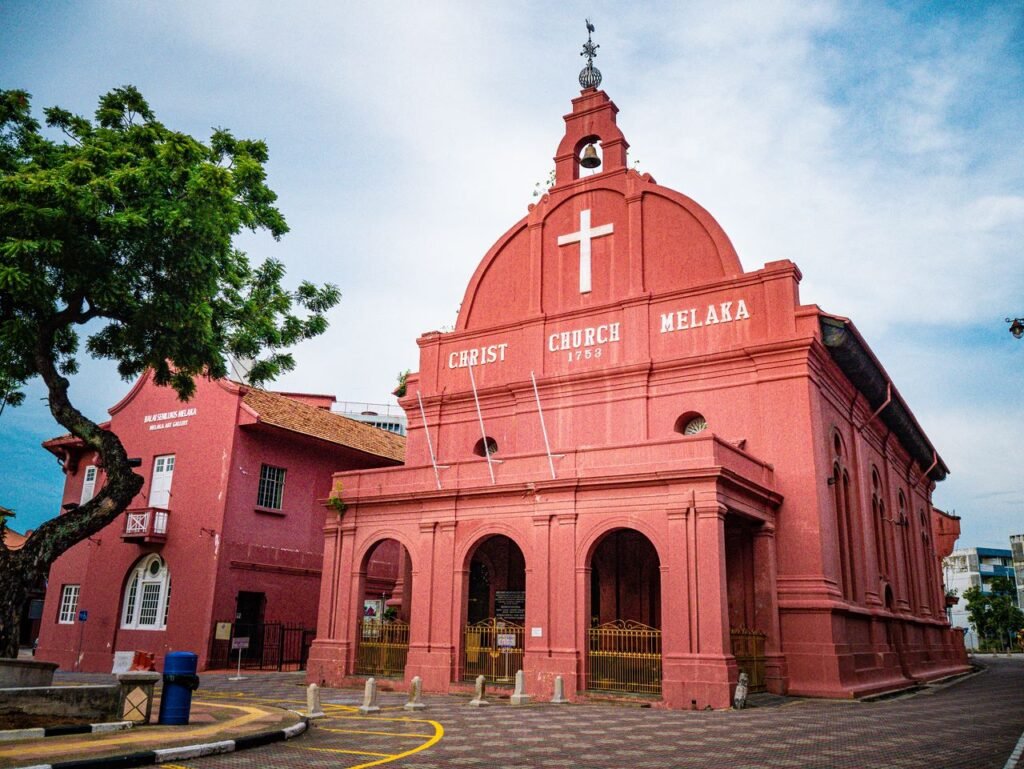
Malacca is Malaysia’s other UNESCO-listed heritage city, and it wears its history more visibly than anywhere else in the country — Portuguese, Dutch, and British layers stacked on top of each other around Dutch Square, with Jonker Street’s night market and the Malacca River lined with murals and cafés after dark.
Cost Snapshot for Malacca
| Budget Tier | Daily Cost (RM) | What’s Included |
|---|---|---|
| Backpacker | RM 90–130 | Hostel, hawker food, walking |
| Mid-range | RM 220–350 | Boutique riverside hotel, mixed dining |
| Comfort | RM 450+ | Heritage hotel, river cruise, private guide |
Cameron Highlands / Ipoh — Best for Nature & Hill Scenery
What Makes It Beautiful
If your idea of beautiful is cool air and green hillsides rather than architecture, the Cameron Highlands’ tea plantations and Ipoh’s limestone cave temples and colonial hill-station buildings are Malaysia’s answer. This is the only category on this list where the beauty is mostly natural rather than built.
Cost Snapshot for Cameron Highlands / Ipoh
| Budget Tier | Daily Cost (RM) | What’s Included |
|---|---|---|
| Backpacker | RM 90–140 | Guesthouse, local food, shared tours |
| Mid-range | RM 200–320 | Hillside hotel, café dining, private tea tour |
| Comfort | RM 400+ | Resort stay, private driver |
How to Get Between the Cities
If you’re chasing more than one type of “beautiful” on the same trip, logistics matter as much as looks. Kuala Lumpur is the natural hub — it has the best flight, train, and bus connections to everywhere else on this list. From KL, Penang is reachable by a roughly 4–5 hour train or a 1-hour domestic flight. Malacca is closer, at about 2 hours by bus or car. Ipoh sits almost exactly between KL and Penang on the ETS train line, making it an easy stopover rather than a dedicated side trip, while the Cameron Highlands require a further 2–3 hour bus or taxi transfer from Ipoh or Tapah, since there’s no direct train line into the highlands themselves.
A common route that covers all four beauty types in one loop: Kuala Lumpur → Cameron Highlands → Ipoh → Penang → (fly or bus back to KL, or continue to Malacca before flying out). Trying to squeeze Malacca into the same loop as the highlands usually means backtracking, so most travelers treat Malacca as either a standalone short trip or a day/overnight add-on at the start or end of a KL stay.
If you’re planning to explore beyond these cities, Malaysia has plenty more to offer, from tropical islands and UNESCO heritage towns to mountain retreats and wildlife destinations. Check out our guide to the best places to visit in Malaysia for even more ideas to include in your itinerary.
Budget Breakdown / Cost Guide

Across all four cities, backpacker-tier travel runs roughly RM 90–180/day, mid-range RM 200–450/day, and comfort tier RM 400–600+/day. Kuala Lumpur is consistently the most expensive of the four due to transport and dining costs; Malacca and the Cameron Highlands are the most affordable. Prices here reflect on-the-ground spending in [year] and can shift with exchange rates and seasonal demand — check current rates before budgeting a full trip.
The biggest hidden cost across all four cities isn’t accommodation — it’s inter-city transport. A KL–Penang flight or first-class train ticket can cost more than two full days of food and lodging in Malacca, so if you’re on a tight budget, it’s worth picking two adjacent cities (KL and Malacca, or Ipoh and Penang) rather than trying to loop through all four. Entry to most heritage sites in Penang and Malacca is free or under RM 20; the bigger cost driver in those two cities is food and guided tours, not admission fees.
Best Time to Visit Each City

Malaysia’s west coast (Penang, KL, Malacca) is driest roughly from December to February and June to August, while the Cameron Highlands can see rain and cooler temperatures year-round due to elevation, regardless of the coastal forecast. This is a genuine planning difference most comparison articles skip — if you’re combining a coastal city with the highlands, pack for two different climates in the same trip. Refer to the Malaysian Meteorological Department for current seasonal outlooks before booking.
Pros & Cons Comparison
Penang
Pros: dense, walkable heritage core; excellent food scene.
Cons: summer heat makes midday heritage walks uncomfortable.
Kuala Lumpur
Pros: best transit connections; widest range of dining and lodging.
Cons: least “beautiful” in the traditional sense — beauty here is about contrast, not charm.
Malacca
Pros: most concentrated historic sightseeing; good as a short trip.
Cons: can feel touristy and crowded on weekends and at Jonker Street market.
Cameron Highlands / Ipoh
Pros: only cool-climate, nature-forward option; genuinely different scenery.
Cons: further from the coast, requiring extra travel time to combine with other cities.
Weighing these against each other, the honest takeaway is that none of the four cities is objectively “better looking” than the others — they simply photograph differently. Penang and Malacca reward slow walking and close-up detail; Kuala Lumpur rewards wide shots and skyline views; the Cameron Highlands reward landscape shots over architectural ones. If you only have time for one city and aren’t sure which category matters more to you, Penang is the safest all-rounder, since it combines heritage architecture with a strong food and café scene that most travelers enjoy regardless of their usual travel style.
Common Mistakes to Avoid
- Trying to see all four cities in one short trip. Each deserves at least 2 days; rushing through leaves you with photos but no real sense of any of them.
- Heritage-walking Penang at midday. We made this mistake on our first day — by noon the heat off the shophouse walls was worse than the open street. Mornings or late afternoon are far better.
- Visiting the Cameron Highlands in peak season without booking ahead. Accommodation fills up fast around school holidays.
- Assuming Kuala Lumpur is Malaysia’s “prettiest” city by default just because it’s the capital — it’s a different kind of beautiful, not necessarily a better one.
Pro Travel Tips
- Take the ETS train between KL and Ipoh — it’s faster and more scenic than driving, and a good way to combine skyline and hill-scenery cities in one trip.
- In Penang, photograph the street-art trail before 8am or after 5pm to avoid both heat and crowds.
- In Malacca, do the river cruise after dark — the mural lighting is the main draw, not the daytime view.
- Pack a light jacket for the Cameron Highlands even if you’re coming straight from the coast; the temperature drop is bigger than most first-timers expect.
Who Should Choose Which City
If you want architecture and street-level charm, Penang wins. If you want a big-city skyline and easy logistics, choose Kuala Lumpur. If you have limited time and want concentrated colonial history, Malacca is the most efficient choice. If your version of beautiful is green hills and cool air rather than buildings, the Cameron Highlands and Ipoh are the only real options on this list. There’s no single “most beautiful city in Malaysia” — there’s the one that matches what you actually want to look at.
Whether you’re drawn to heritage streets, modern skylines, cool mountain landscapes, or vibrant local culture, Malaysia offers an incredible variety of experiences. To learn more about what attracts tourists to Malaysia, explore our guide explaining why millions of travelers choose the country every year.
Frequently Asked Question
What is the most beautiful city in Malaysia?
There's no single answer — Penang (George Town) is generally considered the most beautiful for heritage architecture and street art, while Kuala Lumpur and Malacca offer different types of beauty based on skyline and colonial history respectively.
Is Penang or Malacca more beautiful?
Penang has a larger, more walkable heritage district with more street art and food variety, while Malacca offers more concentrated colonial-era sites in a smaller area. Both are UNESCO-listed; the choice depends on whether you prefer a bigger city or a compact day-trip destination.
Which Malaysian city has the best skyline?
Kuala Lumpur has Malaysia's best skyline, centered on the Petronas Towers and the KLCC district.
Is Kuala Lumpur a beautiful city?
Kuala Lumpur's beauty comes from contrast — modern skyscrapers standing next to colonial buildings, mosques, and temples — rather than uniform heritage architecture like Penang or Malacca.
What is the prettiest small town in Malaysia?
Malacca is often cited as Malaysia's prettiest small city for its concentrated colonial architecture, though the Cameron Highlands is a common answer for travelers prioritizing natural scenery over buildings.
How many days do you need to see Malaysia's most beautiful cities?
Budget at least 2–3 days each for Penang and Kuala Lumpur, and 1–2 days for Malacca, if visiting all three. Adding the Cameron Highlands adds another 2–3 days and roughly 3–4 hours of travel time each way from the coast.
Is Malacca worth visiting for its architecture?
Yes — Malacca's Dutch Square, Jonker Street, and riverside are among the most concentrated collections of colonial-era architecture in Southeast Asia, and it's a UNESCO World Heritage Site.