The first time I mapped out a multi-country Asia trip, I assumed visa fees would barely register against the cost of flights and hotels. I was wrong in an interesting way — not because any single visa fee was huge, but because the spread between countries was so much wider than I expected. One country on this list charges you nothing at all. Another can run you close to $50 per person before you’ve left the airport.
That gap matters more than most planning guides let on, so this is a straight, numbers-first comparison of what a US passport holder actually pays to enter eight of the most-visited countries in Asia — Thailand, Vietnam, Cambodia, India, Indonesia (Bali), the Philippines, Singapore, and Sri Lanka — pulled from each country’s official immigration portal, not from a visa-agency price list.
| Country | What US Citizens Need | Cost (USD) | Max Stay | Processing Time |
|---|---|---|---|---|
| Thailand | Visa exemption (stamp on arrival) | $0 | 30 days (from Sept 15, 2026) | Instant on arrival |
| Singapore | Visa-free entry | $0 | 90 days | Instant on arrival |
| Philippines | Visa-free entry | $0 | 30 days | Instant on arrival |
| Sri Lanka | Free tourist ETA | $0 | 30 days, double entry | Usually under 24 hrs |
| India | e-Tourist Visa (30-day) | $25 + ~2.5% card fee | 30 days | 2–5 business days |
| Cambodia | e-Visa or Visa on Arrival | $30–$36 | 30 days (extendable) | 3 business days (e-visa) |
| Indonesia (Bali) | Visa on Arrival / e-VOA + Bali levy | ~$45 total ($35 VOA + $10 levy) | 30 days (extendable to 60) | Instant to 48 hrs |
| Vietnam | e-Visa (single or multiple entry) | $25 single / $50 multiple | 90 days | 3–7 business days |
Table of Contents
ToggleWhat Actually Determines Visa Cost in Asia
Before the country-by-country breakdown, it helps to understand why the numbers above vary so much, because it’s rarely about how “developed” a destination is.
E-visa vs. visa on arrival vs. visa-free
These are three different systems, and confusing them is the single biggest source of overpaying. Visa-free means exactly that — you show your passport and walk through. Visa on arrival means you still pay, but you pay in person at the airport. An e-visa means you pay and get approved before you fly, and you should only ever do that on the country’s own government portal — evisa.gov.kh for Cambodia, indianvisaonline.gov.in for India, and so on. Every one of the paid countries on this list also has a constellation of third-party “visa service” sites that charge double the government fee for doing nothing more than forwarding your form.
Reciprocity pricing
India is the clearest example on this list of a country that prices visas based on what your home country charges its citizens, not a flat global rate. A 30-day e-Tourist Visa is $25 for most nationalities including the US, but India’s longer-duration visas (the 1-year e-Business and 5-year e-Tourist) are priced specifically higher for American passport holders under this reciprocal model — the 5-year e-Tourist Visa jumped from $80 to $200 for US citizens in 2026. If you’re only doing a short trip, this doesn’t touch you. If you’re planning to return to India repeatedly, it’s worth knowing before you default to the longer visa.
The "arrival card is not a visa" trap
Cambodia, India, Indonesia, Thailand, Singapore, and the Philippines all now require a separate digital arrival card — a pre-arrival declaration form, not a visa. These are free everywhere on this list. The confusion costs travelers real money: scam sites routinely charge $20–$40 to “process” an arrival card that the government issues for nothing. If a site asks you to pay for an arrival card, close the tab.
The 8 Countries, Cost by Cost
1. Thailand — $0 (but the free stay just got shorter)

Thailand has been the easiest, cheapest country on this list for years, and it still is — US citizens enter under the visa exemption scheme with no application and no fee, only the free Thailand Digital Arrival Card (TDAC), filed online within 72 hours of arrival. Here’s the timing that actually matters right now: Thailand’s 60-day visa-exempt stay ends on September 15, 2026, dropping to 30 days for the same list of 93 nationalities, including the US. If you’re reading this before that date, you’ll still get the full 60 days; after it, plan around 30.
2. Vietnam — $25 single-entry / $50 multiple-entry

Vietnam is the one country on this list where I’d tell you not to bother looking for a visa-free loophole — every US citizen needs a visa, full stop, regardless of how short the trip is. The e-visa, applied for directly at Vietnam’s official portal, costs $25 for single entry or $50 for multiple entry, both valid up to 90 days, under the Ministry of Finance’s Circular No. 28/2026/TT-BTC that took effect April 1, 2026. Processing officially runs 3–7 business days, so this is the one visa on this list you genuinely cannot leave until the week you fly.
3. Cambodia — $30–$36

Cambodia gives you a real choice: the e-visa costs $30 plus a $6 processing fee ($36 total) through evisa.gov.kh, or you can pay $30 cash at the airport or a major land border for a visa on arrival, both good for a 30-day stay that can be extended once for another 30 days. Separately — and this trips people up constantly — every air arrival also has to file a free e-Arrival Card at arrival.gov.kh within 7 days before landing. That’s a different form from the visa, costs nothing, and skipping it can hold you up at immigration even with a valid visa in hand.
4. India — $25 for the standard 30-day e-Tourist Visa

India’s e-Tourist Visa for a 30-day stay runs $25 for US citizens through the official portal at indianvisaonline.gov.in, plus a roughly 2.5% card-processing surcharge, with approval typically in 2–5 business days. As of April 1, 2026, India also requires every foreign national to complete a free digital E-Arrival Card between 72 and 24 hours before departure — that’s on top of, not instead of, the e-visa. One number worth flagging if you’re a repeat visitor: India’s longer-duration visas got noticeably more expensive for Americans specifically in 2026 under the new reciprocal pricing model, so a single 30-day trip is still cheap, but don’t assume the 5-year option is proportionally priced the same way.
5. Indonesia (Bali) — around $45 all-in

Bali’s Visa on Arrival, or its online equivalent the e-VOA, costs IDR 500,000 — about $35 — for a 30-day stay that can be extended once for another 30 days. What most cost comparisons leave out is Bali’s separate tourism levy: IDR 150,000, roughly $10, charged to every international visitor entering Bali specifically, paid at lovebali.baliprov.go.id or on arrival. Add those together and you’re realistically looking at about $45 per person before you’ve left Ngurah Rai Airport, which is worth knowing before you budget based on the $35 headline VOA figure alone.
6. Philippines — $0

US citizens get 30 days visa-free under Executive Order 408, no fee, no application — just a valid passport with six months of validity left and an onward or return ticket. The one mandatory step is the free eTravel registration, completed online within 72 hours before you fly, which replaced the old paper arrival card. That’s the entire cost of entry: zero, provided you don’t overstay past 30 days, since extensions do carry a fee at a local immigration office.
7. Singapore — $0

Singapore gives US passport holders the longest visa-free stay on this list: 90 days, no visa, no fee. The only requirement is the free SG Arrival Card, submitted online at ica.gov.sg within three days of arrival. Singapore is also the strictest about that arrival card actually being checked — I’ve had it verified more carefully here than almost anywhere else on this list, so don’t treat it as a formality you can skip.
8. Sri Lanka — $0 (a recent, genuinely good change)

This is the newest shift on this list and one worth knowing about if your Sri Lanka research predates mid-2026: as of May 25, 2026, US citizens are eligible for a completely free tourist ETA, good for 30 days with double entry, through Sri Lanka’s Department of Immigration and Emigration. Before that date, Americans paid a standard ETA processing fee like most other nationalities. You still have to apply for the ETA — it isn’t visa-free entry in the Singapore or Philippines sense — but the fee itself is now zero.
If You Visited All 8: The Running Total
Put every fee in this guide together and a single US traveler entering all eight countries once — Thailand, Vietnam, Cambodia, India, Indonesia (Bali), the Philippines, Singapore, and Sri Lanka — pays a combined total of roughly $156 in government visa and entry fees for the entire trip: $0 + $25 + $36 + $25 + $45 + $0 + $0 + $0. That’s before any card-processing surcharges, which typically add another few dollars on the paid visas. For context, that’s less than a single night at a mid-range hotel in most of these cities. The number that actually moves is not the total — it’s how the fees are distributed. Four of the eight cost nothing, and the other four cluster tightly between $25 and $45, so there’s no single country on this list that blows up a budget on its own.
| Country | Fee | Running Total |
|---|---|---|
| Thailand | $0 | $0 |
| Singapore | $0 | $0 |
| Philippines | $0 | $0 |
| Sri Lanka | $0 | $0 |
| India (30-day e-TV) | $25 | $25 |
| Vietnam (single entry) | $25 | $50 |
| Cambodia (e-visa) | $36 | $86 |
| Indonesia / Bali (VOA + levy) | ~$45 | ~$131 |
How to Spot a Fake Visa Website Before You Pay
Every paid visa on this list has exactly one legitimate application route, and every single one of them also has a small industry of lookalike sites bidding on the same Google search terms. I’ve clicked through enough of these while researching this piece to know the tells are consistent:
- The price is round and suspiciously higher. Cambodia’s real e-visa fee is $36. A site quoting $69 or $80 “all-in” is a markup service, not fraud exactly, but not the government rate either — read the fine print before assuming you’re on the official portal.
- The URL doesn’t match the country’s own domain. India’s real portal is indianvisaonline.gov.in. Cambodia’s is evisa.gov.kh. Indonesia’s is evisa.imigrasi.go.id. Vietnam’s is under the Immigration Department’s own domain. Bookmark these directly rather than searching each time.
- It asks you to pay for a free arrival card. This is the single most common scam pattern across this list. Thailand’s TDAC, the Philippines’ eTravel, Singapore’s SG Arrival Card, Cambodia’s e-Arrival Card, and India’s E-Arrival Card are all genuinely free on the government’s own site.
- “Expedited” processing that isn’t actually faster than the standard government timeline. A handful of third-party sites charge a rush fee for a turnaround time that matches what the official portal already promises for free.
What Visa Cost Really Means for Your Trip
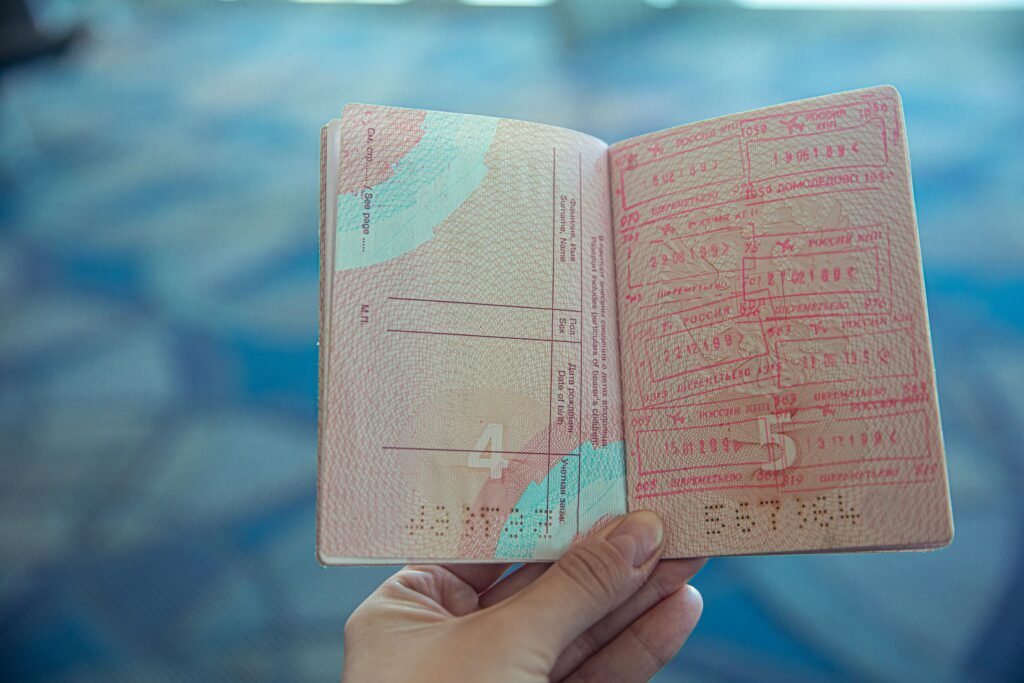
A $36 Cambodia visa or a $45 Bali entry fee sounds meaningful in isolation. It barely registers against a real trip budget. If you’re traveling on a backpacker-to-mid-range budget of roughly $40–$80 a day across Southeast Asia, a visa fee at the higher end of this list — Vietnam’s $50 multiple-entry e-visa, say — comes out to well under 2% of a two-week trip’s total cost. The four visa-free countries on this list (Thailand, Singapore, the Philippines, Sri Lanka) cost nothing at all, which matters more if you’re stitching together a long multi-country route where those fees would otherwise stack.
If You Want to Stay Longer: Extension Costs
| Country | Extension Available? | Extra Days | Approx. Cost |
|---|---|---|---|
| Thailand | Yes, once | +30 days | ฿1,900 (~$55) |
| Cambodia | Yes, once | +30 days | ~$45 at local immigration |
| Indonesia (Bali) | Yes, once | +30 days | IDR 500,000 (~$35) |
| Vietnam | Not on the standard e-visa | — | Reapply for a new e-visa instead |
| India | Not on the 30-day e-TV | — | Must apply for a different visa category |
| Philippines | Yes, multiple times | Varies | Fee at local Bureau of Immigration office |
| Singapore | At officer discretion | Varies | Application fee if granted |
| Sri Lanka | Yes | Varies | Applicable fee applies (not covered by the free ETA) |
Worth flagging: Thailand’s extension fee alone now costs more than the entry visa for four of the eight countries on this list — a reminder that the headline entry fee isn’t always where the real cost of a longer stay shows up.
Best Time to Visit — and How It Affects Your Visa

Weather isn’t the only seasonal factor here. E-visa processing times for Vietnam, Cambodia, and India can stretch during peak booking windows — roughly November through February, when Southeast Asia sees its highest Western tourist volume — so the standard “3–5 business days” quoted on official portals can run longer right before major holidays. Apply at least two to three weeks ahead of a peak-season trip rather than the week before, even for the visas that are normally fast. Thailand’s shift to a 30-day exemption from September 15, 2026, also means travelers stacking Thailand with a second visa-required country should double-check they’re not planning a stay that now runs past the new shorter window.
Pros & Cons: Cheapest vs. Most Convenient
| Approach | Pros | Cons |
|---|---|---|
| Sticking to the four $0-visa countries (Thailand, Singapore, Philippines, Sri Lanka) | Zero visa cost, no advance paperwork beyond free arrival cards, fastest entry | Narrower route options; Thailand’s window just got shorter (30 days from Sept 15, 2026) |
| Adding paid e-visa countries (Vietnam, Cambodia, India, Indonesia) | Opens up significantly more of the region; fees are still small relative to trip cost | Requires advance planning (3–7 business days), separate applications, and vigilance against third-party markup sites |
Common Mistakes US Travelers Make With Asia Visa Costs

- Paying a third-party site 2–3x the government fee. Every paid visa on this list has an official government portal. If a Google ad takes you to a site with a name like “govt-evisa-express,” it isn’t the government.
- Confusing a free arrival card with a paid visa. Cambodia’s e-Arrival Card, India’s E-Arrival Card, Indonesia’s All-Indonesia Arrival Card, Thailand’s TDAC, the Philippines’ eTravel, and Singapore’s SG Arrival Card are all free. If a site charges you for one of these, it’s a markup, not a government fee.
- Applying for an e-visa too close to departure. Vietnam and Cambodia both officially quote multi-day processing windows that stretch further during peak season — don’t apply the week you fly.
- Assuming visa-free means document-free. Thailand, Singapore, and the Philippines all still expect proof of onward travel and, occasionally, proof of funds, even with no visa required.
- Missing India’s 2026 reciprocal pricing on longer-duration visas. A single 30-day e-Tourist Visa is still $25, but the 1-year and 5-year options got noticeably more expensive specifically for US citizens this year — check the current fee before assuming the old price still applies.
Pro Tips for Minimizing Visa Costs Across a Multi-Country Trip

- Apply for e-visas in the order you’ll need them, not all at once — Vietnam’s 90-day validity and Cambodia’s 30-day validity both start counting from approval or from your stated entry date, so applying too early can burn days you needed later in the trip.
- Save a PDF and a screenshot of every approval before you fly — airport wifi at a connecting hub is not the moment to discover your one copy is on a device that died.
- Pay with a card that has no foreign transaction fee; most of these portals charge a 2–3% surcharge on top of the base fee regardless, and a card fee on top of that is money left on the table.
- Route your $0-visa countries (Thailand, Singapore, the Philippines, Sri Lanka) around your paid-visa countries so a processing delay on one e-visa doesn’t threaten your whole itinerary.
Who Should Choose What
If cost is your only constraint: Thailand, Singapore, the Philippines, and Sri Lanka cost nothing to enter and get you a genuinely full Southeast/South Asia experience on their own — this is the easiest starting cluster for a first Asia trip.
If you want the fullest route regardless of a small fee: Add Vietnam, Cambodia, and India. None of these visas cost more than $50, all are processed online, and the countries themselves open up some of the region’s most-requested destinations — Angkor Wat, Ha Long Bay, the Taj Mahal.
If Bali is non-negotiable: Budget the full ~$45 (VOA plus tourism levy), not just the $35 headline figure most sites quote — it’s a small gap, but it’s the one number on this list that catches people off guard at the airport.
If you’re traveling in the second half of September 2026 or later: Recheck Thailand’s stay length before finalizing your itinerary — the shift from 60 to 30 days took effect September 15, 2026, and it changes how much of a route you can realistically build around it.
Applying in the Right Order
If you’re stacking several of these into one trip, the order you apply in matters more than most itineraries account for. Vietnam’s e-visa gives you 90 days of validity from approval, not from your stated arrival date in some cases, so applying too far ahead can waste part of that window before you’ve even landed. Cambodia’s e-visa is tied more tightly to your stated entry date. India’s E-Arrival Card has a strict 72-to-24-hour pre-departure filing window, which means it has to be the very last thing you do, not something you knock out weeks in advance like the visa itself.
A practical sequence that’s worked on my own trips: lock in the paid e-visas (Vietnam, Cambodia, India, Indonesia) two to three weeks out in the order you’ll actually enter each country, then handle the free arrival-card registrations (Thailand’s TDAC, the Philippines’ eTravel, Singapore’s SG Arrival Card, India’s E-Arrival Card) in the final 72 hours before each individual flight, since those windows are short and country-specific. Trying to do all eight applications in one sitting the week before departure is the single most common reason travelers end up paying a rush fee they didn’t need to.
Frequently Asked Questions
Which Asian country has the cheapest visa for US citizens?
Four countries on this list cost nothing at all for US citizens: Thailand (visa exemption), Singapore (visa-free, 90 days), the Philippines (visa-free, 30 days), and Sri Lanka (free tourist ETA as of May 2026). All still require a free pre-arrival registration.
Do US citizens need a visa for Thailand, Singapore, or the Philippines?
No. All three allow US passport holders to enter without a visa — Thailand for 30 days starting September 15, 2026 (60 days before that date), Singapore for up to 90 days, and the Philippines for 30 days. Each still requires a free digital arrival registration before you fly.
What's the difference between an e-visa and a visa on arrival?
An e-visa is applied for and approved online before you travel; a visa on arrival is applied for and paid in person at the airport or border. Cambodia and Indonesia offer both options at the same price; Vietnam and India only offer the e-visa route for US citizens.
Is it cheaper to apply for an Asia e-visa online or on arrival?
For Cambodia, the e-visa is slightly more expensive ($36 vs. $30) because of the online processing fee, but it saves time at the airport. For Indonesia, both the VOA and e-VOA cost the same $35. For Vietnam and India, there is no on-arrival option for US citizens — the e-visa is mandatory.
Do visa costs for Americans differ from other nationalities in Asia?
Sometimes. India prices its longer-duration visas — the 1-year and 5-year options — on a reciprocal basis, and US citizens pay noticeably more than many other nationalities for those categories in 2026. Short 30-day visas across this list are generally priced the same regardless of nationality, within each country's eligible list.
How far in advance should I apply for an Asia e-visa?
Two to three weeks before travel is a safe buffer, even though Vietnam, Cambodia, and India all officially quote 3–7 business day processing. Processing can stretch during peak booking season (roughly November through February).
Are visa-on-arrival fees in Asia paid in cash or card?
Both, usually. Cambodia's airport VOA is typically cash-only in USD; Indonesia's VOA counter accepts cash, card, or IDR. Applying for the e-visa/e-VOA version online in advance, where available, avoids this question entirely since you pay by card ahead of time.
What happens if my Asia e-visa application gets rejected?
Fees for e-visa applications across this list are generally non-refundable, rejected or not, so double-check your passport scan, photo, and entry dates before submitting. If rejected, you reapply and pay again — this is the strongest argument for applying early enough to have a second attempt before your flight.
Do I still need to pay anything if a country is "visa-free" for US citizens?
Usually not in fees, but yes in paperwork. Thailand, Singapore, the Philippines, and Sri Lanka all charge $0, but each requires a free digital arrival registration — the TDAC, SG Arrival Card, eTravel, and ETA respectively — completed before you fly. Skipping these can delay you at immigration or, in some cases, get you denied boarding by the airline.
Is Bali's visa really $45, or is the $35 figure correct?
Both numbers are accurate for different things. The Visa on Arrival itself is IDR 500,000, about $35. Bali's separate tourism levy — a provincial fee unrelated to immigration, introduced in 2024 — adds another IDR 150,000, about $10, that every international visitor pays regardless of visa type. Budgeting for $45 total avoids being caught short at the airport.