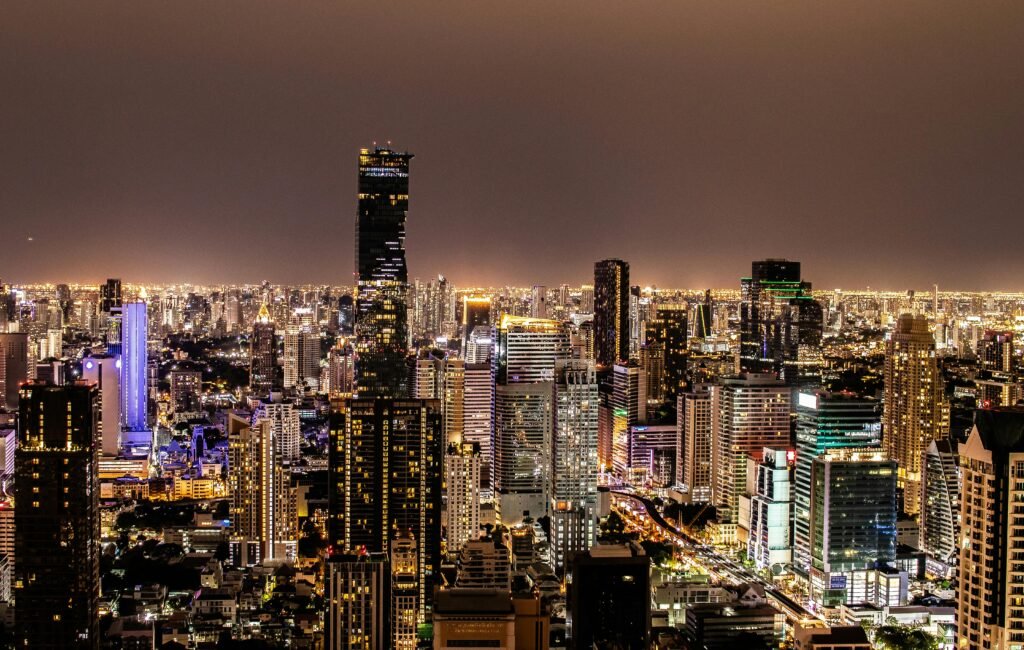
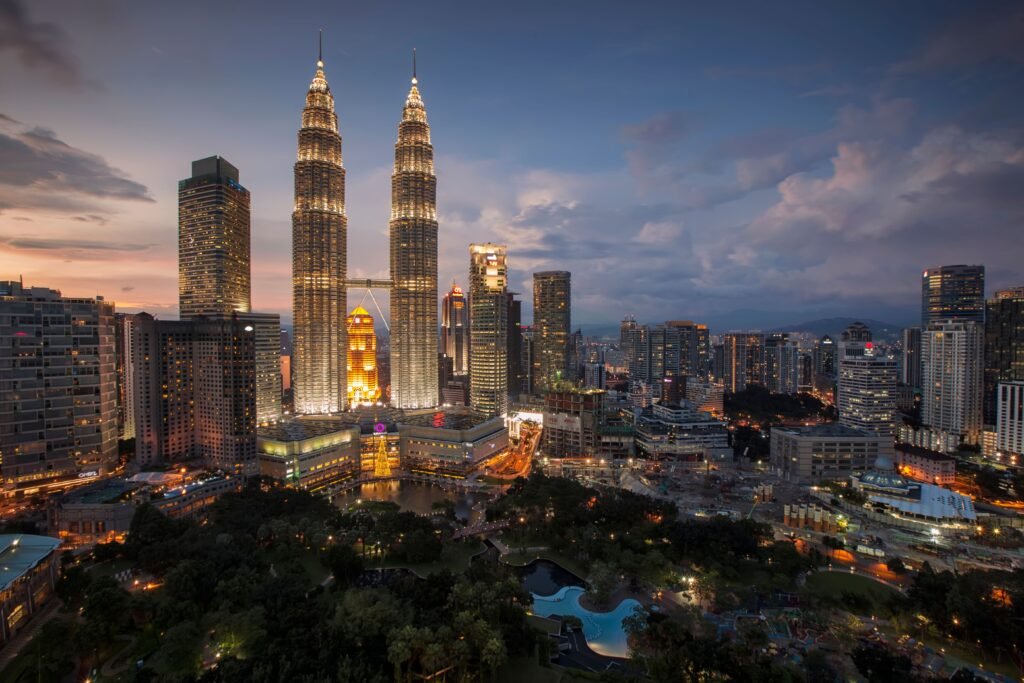
Kuala Lumpur is one of those cities that sounds easy on paper and then humbles you on day one. The sights are spread out. The heat hits by 10 a.m. And around 3 p.m., the sky often opens up like someone flipped a switch.
So most “KL in 3 days” plans, the ones that send you to six places in one afternoon, fall apart fast.
This itinerary is built differently. I grouped the sights by area, put the hot outdoor stuff in the morning, kept the air-conditioned stops for the afternoon, and added a rain backup for every day. I also included real ringgit costs, how to get in from the airport, where to stay, and the mistakes that cost people time and money.
Is 3 days enough for Kuala Lumpur? Yes. Three days is enough to see the Petronas Twin Towers, Batu Caves, the old colonial centre, Chinatown, Little India, and eat very well, without rushing. If you want a day trip to Melaka or Putrajaya, I explain how to swap it in on Day 3.
Table of Contents
ToggleKuala Lumpur at a Glance
| Currency | Malaysian ringgit (MYR, written RM) |
| Languages | Malay is official. English is widely spoken. You will also hear Mandarin, Cantonese, and Tamil. |
| Plugs | Type G (the UK-style three-pin), 230V |
| Time zone | UTC+8, no daylight saving |
| Best way to get around | Trains (LRT, MRT, Monorail) plus Grab for the gaps |
| Day 1 theme | Heritage core, Chinatown, and street food |
| Day 2 theme | Batu Caves and the Petronas Twin Towers |
| Day 3 theme | Museums, gardens, Little India, and your flex choice |
If you want the bigger picture of what makes Malaysia worth visiting beyond the capital, my guide on what attracts tourists to Malaysia covers it.
Before You Go: Entry, Money, and Connectivity
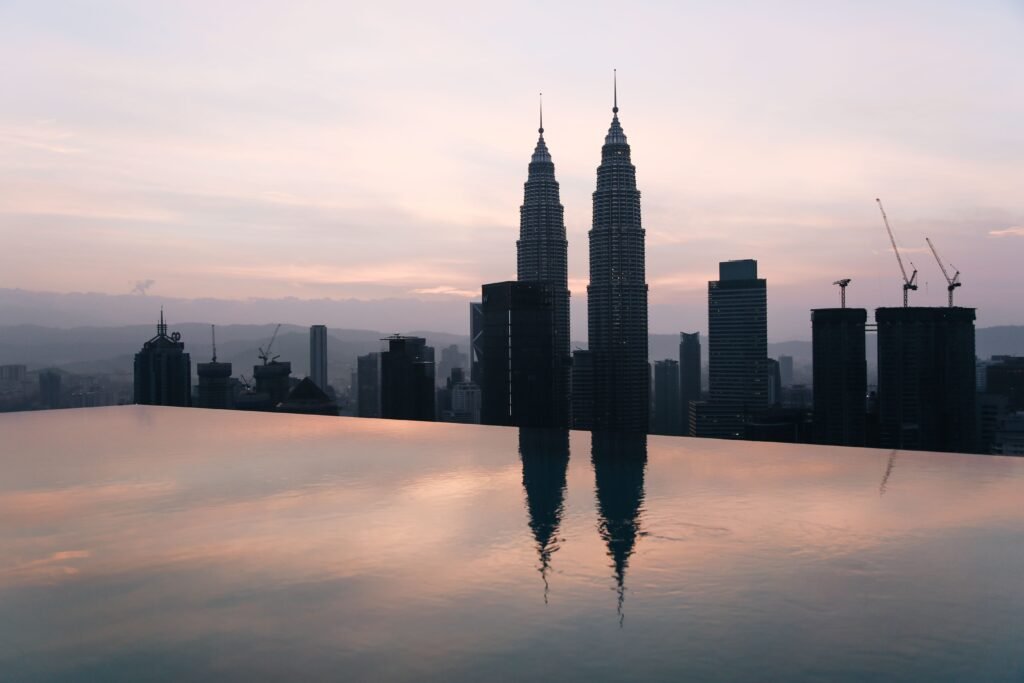
Entry rules and the Malaysia Digital Arrival Card (MDAC)
Almost every foreign visitor has to fill in the Malaysia Digital Arrival Card online before arriving. It is free, it is separate from any visa, and it has to be submitted within the three days before you arrive. The only place to do it is the official immigration portal at imigresen-online.imi.gov.my/mdac/main. Several copycat websites charge a fee for it, so ignore those.
Your passport should also be valid for more than six months from your entry date.
Visa rules depend on your passport. As of this writing, Indian passport holders can enter visa-free for up to 30 days, and that facility is currently set to run until 31 December 2026. If you are reading this later, check the official Malaysian immigration or foreign ministry site before you book anything, because these policies get extended or changed. Citizens of many other countries also enter visa-free for periods of 14 to 90 days. For a side-by-side look at what different Asian countries charge US travellers, see my visa costs compared guide.
Money
Malaysia runs on ringgit. Cards work fine in malls, hotels, and most restaurants, and Grab can be paid by card. But the best food in KL is at street stalls and old coffee shops, and many of those are cash only (or e-wallet only). Carry small notes. ATMs are everywhere, but check your bank’s foreign fee first.
For exchange, the airport rate is usually a little worse than money changers in the city, particularly around KL Sentral and Bukit Bintang. Change just enough at the airport for the first day.
SIM and eSIM
A local SIM or eSIM is worth it. You will rely on Grab, maps, and ticket QR codes every day. Kiosks at the airport sell tourist SIMs, but an eSIM you install before landing saves queuing after a long flight.
What you used (SIM/eSIM provider), what you paid, and whether the signal held up on the trains and at Batu Caves.
For the gear side of things, my travel packing list covers the adapter, power bank, and anti-theft pouch I would bring to KL.
Where to Stay in Kuala Lumpur for 3 Days
Where you sleep changes the whole trip, because KL traffic is slow and the heat makes long walks tiring. For a first visit, I would choose one of these four areas.
Bukit Bintang: best for food, shopping, and nightlife
This is the busiest part of the city. You are surrounded by malls, restaurants, and street food, and the Monorail and MRT are close. The downside is noise and crowds at night. If you are a light sleeper, ask for a higher floor or a room facing away from the main road.
KLCC: best for first-timers who want polish
Walking distance to the Petronas Twin Towers, the park, and a huge mall. It feels clean, safe, and easy. Hotels cost more here, and the food you walk past tends to be pricier than elsewhere.
Chinatown and Pasar Seni: best for budget and transit
Hostels and small hotels are cheap, and you can walk to Central Market, Petaling Street, and the heritage area. Pasar Seni station connects to both the LRT and MRT. Expect older buildings and a bit of grit.
Brickfields and KL Sentral: best for airport access and quiet
KL Sentral is where the airport train arrives, and Brickfields (Little India) is right next to it. It is calmer than Bukit Bintang and the food is excellent. The trade-off is that you are a little further from the Petronas Towers.
| Area | Vibe | Best for | Walkability |
|---|---|---|---|
| Bukit Bintang | Loud, fun, food-heavy | Foodies, nightlife | Good, but crowded |
| KLCC | Polished, calm | First-timers, families | Very good |
| Chinatown | Gritty, historic | Budget travellers | Good |
| Brickfields / KL Sentral | Quiet, local | Airport access, Indian food | Fair |
Getting Around Kuala Lumpur
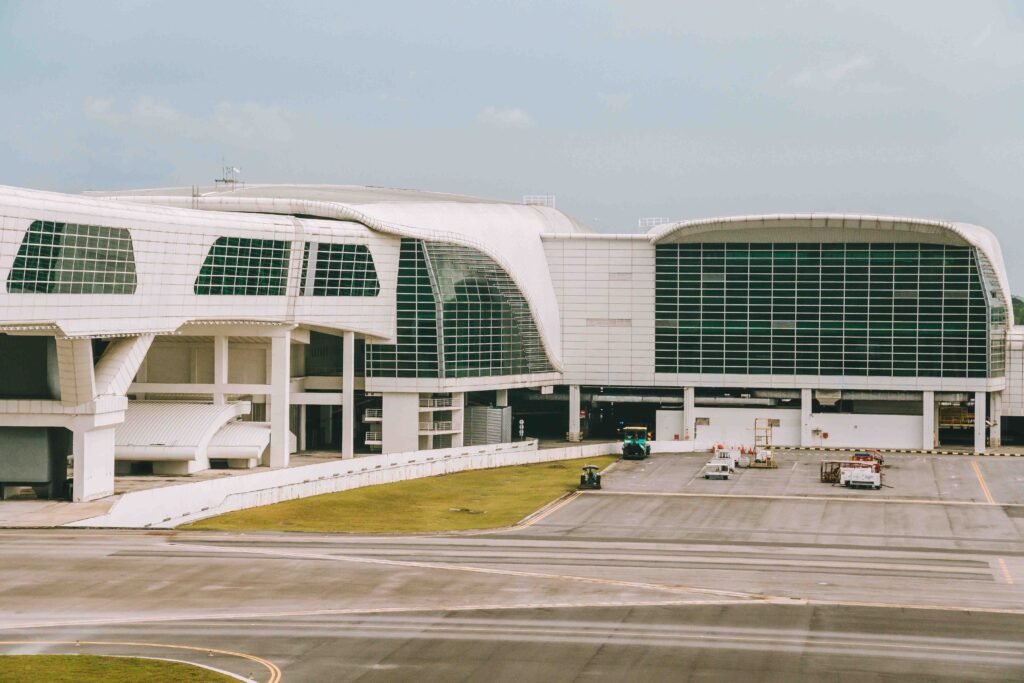
From the airport to the city
KLIA Ekspres (fastest). A non-stop train from the airport to KL Sentral in about 28 minutes. The adult one-way fare is RM55 right now. Operator Express Rail Link has announced it will rise to RM65 from 1 January 2027, with the return fare going to RM118, so budget for the higher number if you travel after that date.
Airport coach (cheapest). Coaches to KL Sentral cost about RM13 one way but take around 75 minutes, depending on traffic.
Grab or coupon taxi. Convenient with heavy bags or late arrivals. Taxis at the airport use a fixed-fare coupon system rather than a meter. Rush hour traffic can turn this into an hour-plus ride.
My usual move is the train to KL Sentral, then a short Grab to the hotel.
Trains, Touch 'n Go, and Grab
KL has three main rail systems that look confusing on a map: the LRT, the MRT, and the Monorail. You do not need to master them. Just know that KL Sentral, Pasar Seni, Masjid Jamek, and Bukit Bintang are the key hubs, and Google Maps handles the transfers well.
Get a Touch ‘n Go card (or use a contactless payment option where it is accepted), top it up with a little cash, and tap in and out. Most single rides cost only a few ringgit.
Use Grab for anywhere trains do not reach, for late nights, and for the hottest part of the afternoon. Always book through the app so the price is fixed up front, and meet your driver at the pickup point, which at many malls is a designated bay rather than the street.
Is Kuala Lumpur walkable?
In pockets, yes. The heritage core, Chinatown, and KLCC are easy on foot. But pavements can be broken or blocked, crossings can be slow, and the humidity does the rest. Plan short walking legs and use covered walkways where you can. Many malls and stations are linked by air-conditioned bridges, and they are a lifesaver.
3-Day Kuala Lumpur Itinerary

Each day below runs roughly 9 a.m. to 9 p.m. and is grouped by area, so you spend your time seeing things instead of sitting in traffic. Every day has a rain plan.
Day 1: Heritage Core, Chinatown, and Street Food
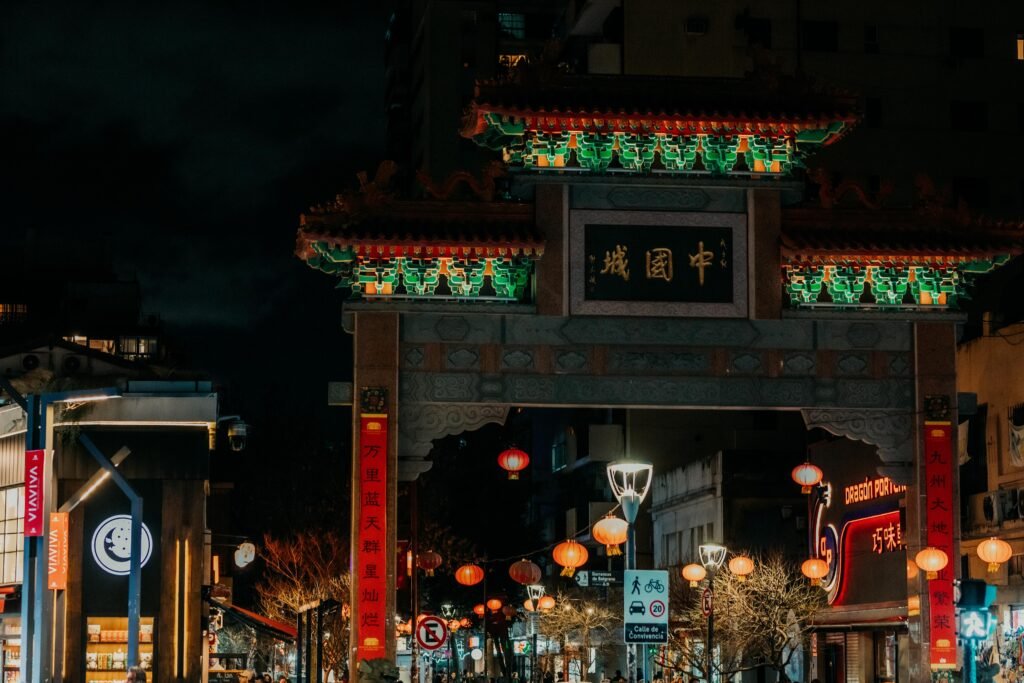
Day 1 is the easy day. It is mostly flat, mostly walkable, and cheap, which suits jet lag.
Morning: Merdeka Square and the Sultan Abdul Samad Building (9:00 a.m.)
Start at Merdeka Square (Independence Square), where Malaysia’s independence was declared in 1957. The Sultan Abdul Samad Building across the field, with its copper domes and red-and-white arches, is the picture everyone takes. Go early, before the heat and the tour groups. The light is soft and the lawn is quiet.
Look around the surrounding colonial buildings too, including the old Selangor Club and the Royal Selangor Club area. This part of KL gives you a good feel for how the city began as a tin-mining settlement at a river junction. The name itself, Kuala Lumpur, is often translated as “muddy confluence,” which refers to where the Klang and Gombak rivers meet.
Late morning: Masjid Jamek and Central Market (10:30 a.m.)
Walk to Masjid Jamek, one of the oldest mosques in the city, sitting right at that river meeting point. If you want to go inside, check visiting hours and dress rules at the entrance. Shoulders and legs should be covered, and robes are usually provided.
From there, head to Central Market and Kasturi Walk. Central Market is an air-conditioned art deco building full of crafts, batik, and souvenirs. Prices are not rock-bottom, and haggling is limited, but it is a good place to cool off and pick up gifts. Kasturi Walk, the covered street beside it, has snacks and small stalls.
My honest take: buy things here you will actually use, like batik fabric, local spices, or handmade items, and skip the mass-produced fridge magnets.
Afternoon: Chinatown and Petaling Street (1:00 p.m.)
Time for lunch in Chinatown. Petaling Street itself is very touristy and heavy on knock-off bags and watches. The better eating is on the side streets and in the old kopitiams (traditional coffee shops). Look for hawker-style stalls selling things like Hokkien mee (thick noodles in dark soy), claypot chicken rice, and char kway teow (stir-fried flat noodles).
Then visit two temples that sit very close together. Sri Mahamariamman Temple is the oldest Hindu temple in KL, with an ornate gopuram (tower) covered in sculpted figures. Guan Di Temple is a small, atmospheric Chinese temple that feels worlds away from the street outside. Remove your shoes where signs ask, keep your voice low, and ask before photographing people.
ADD: Exactly what you ate for lunch in Chinatown, which stall or kopitiam, and the price in RM. Real names and numbers are what make this section convincing.
Evening: Dinner on Jalan Alor or somewhere quieter (6:30 p.m.)
Jalan Alor in Bukit Bintang is KL’s most famous food street, and it comes alive after dark with grilled seafood, satay, and noodles. It is fun, but it is also built for tourists. Some stalls push menus aggressively, and prices can run higher than the food deserves.
If you go, check the price before you order, ask whether the seafood is priced by weight, and keep an eye on the final bill. If you want something calmer and more local, try the food courts in the area or a restaurant a few streets back.
What to eat on your first night: satay with peanut sauce, grilled stingray with sambal, char kway teow, and a cold sugarcane juice.
Rain plan for Day 1: Swap the outdoor walking for Central Market and the Islamic Arts Museum (see Day 3), then eat early at a covered food court.
Day 2: Batu Caves and the Petronas Twin Towers

Day 2 is your “icons” day. The trick is order: Batu Caves first thing, when it is cooler, then the towers in the afternoon or at dusk.
Early morning: Batu Caves (8:00 a.m.)
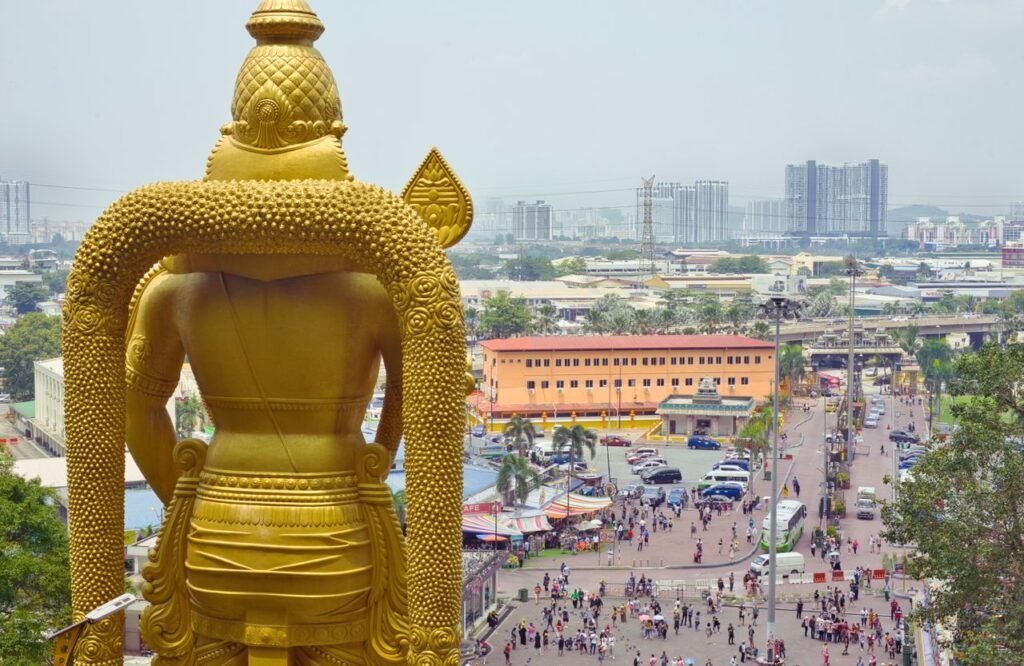
Batu Caves is a limestone hill on the northern edge of the city that holds a series of cave temples. It is one of the most famous Hindu sites outside India. It is guarded by a giant golden statue of Lord Murugan, and the entrance to the main Temple Cave is up a staircase of 272 rainbow-painted steps.
Getting there: Take the KTM Komuter train from KL Sentral. It takes about 30 minutes and costs only a couple of ringgit. The station is a short walk from the entrance, not directly attached to it. Grab also works if you prefer door-to-door.
Cost and hours: Entry to the main Temple Cave is free, and the site is generally open from about 6 a.m. to 9 p.m., though hours can change on festival days. Some smaller attractions have their own charges. The Ramayana Cave is around RM5, for example. Access to the Dark Cave, which has guided conservation tours, has changed over the years, so check whether tours are running before you plan around it.
Dress code: This is an active place of worship, so cover your shoulders and knees. Bring a light scarf or sarong if you are worried. Some people get turned away or asked to rent a wrap at the base.
The climb: The 272 steps are steep and can be slippery when wet. Go slowly, take water breaks, and use the landings. Most people take 10 to 20 minutes to reach the top. At the top, the cave opens into a huge natural chamber with sunlight pouring in through the ceiling. It is genuinely impressive, and it is quieter than you might expect early in the morning.
The monkeys: Long-tailed macaques live around the steps, and they are bold. Do not carry loose food, do not wave plastic bags, and keep sunglasses and phones secure. Do not feed them.
Festival warning: During Thaipusam, usually in January or February, Batu Caves draws enormous crowds of devotees. It is a remarkable event, but it is not a normal sightseeing day. Check the dates before you plan your trip.
ADD: How long the climb took you, what time you arrived, how crowded it was, and one moment that stuck with you (the monkeys, the light in the cave, the statue).
Midday: Reset (12:00 p.m.)
Head back to the city and take a proper break. This is the hottest part of the day, so do not push through it. Have lunch somewhere air-conditioned, such as a food court at Suria KLCC or a cafe near your hotel, and rest for an hour. Honestly, this one habit does more for your energy than any other tip in this post.
Afternoon: Petronas Twin Towers (3:00 p.m. or later)
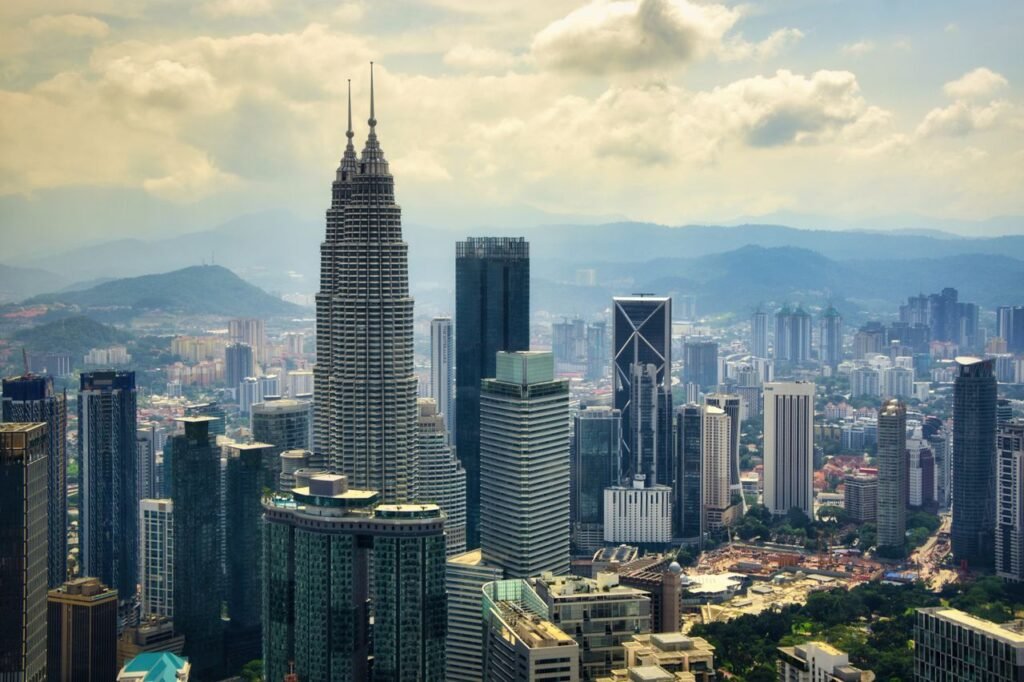
The Petronas Twin Towers rise 452 metres over KLCC. They were designed by architect Cesar Pelli, and they were the tallest buildings in the world when completed. They are still the tallest twin towers anywhere.
Your ticket covers the Skybridge, the double-storey bridge linking the two towers at around 170 metres, and the observation deck on the 86th floor.
Tickets and pricing: Tickets are timed and non-transferable. The official ticketing page lists non-MyKad (foreign visitor) adult tickets at around RM98, with child and senior tickets around RM50. Prices and time-slot pricing may differ for peak and off-peak, so check the official ticket site before you buy.
Book ahead: Tickets sell out, especially for sunset. Buy online at the official site and arrive at least 15 minutes before your slot, or you can be refused entry without a refund.
Opening days: The towers are generally closed on Mondays, with some exceptions, so do not leave this for a Monday. Normal opening runs from 9 a.m. to 9 p.m., with last admission at 8:30 p.m.
Is it worth it? I think so, but with a caveat. The views are great, but the visit is short and the price is high compared to most of KL. If budget is tight, you can get the same iconic view for free from KLCC Park or from a rooftop bar nearby. If you only do one paid attraction in KL, though, this is the one I would choose.
Which time slot you booked, what you paid, and whether you thought it was worth it. Your honest opinion here builds more trust than praise.
Evening: KLCC Park and the fountain show (7:30 p.m.)
After the towers, walk into KLCC Park, a landscaped green space with a jogging track and a lake. The fountain show, with lights and music, runs in the evening. It is free and surprisingly pleasant, and the towers lit up at night are the best photo of the day. Then have dinner inside Suria KLCC, or take a Grab to Bukit Bintang for something more casual.
Rain plan for Day 2: Go to Batu Caves anyway if it is a light drizzle, but take extra care on the steps. If the rain is heavy, swap in the Petronas Towers early and spend the afternoon at the Suria KLCC mall, Aquaria KLCC, or the Petrosains science museum.
Day 3: Culture, Green Escapes, Little India, and Your Flex Choice
Day 3 is slower. You can pack in a bit more culture, then end with a choice: shopping and a temple, or a half-day trip.
Morning: Islamic Arts Museum and Perdana Botanical Gardens (9:30 a.m.)
Start at the Islamic Arts Museum Malaysia. It is air-conditioned, beautifully designed, and holds one of the largest collections of Islamic art in Southeast Asia, including architectural models, textiles, and manuscripts. Allow about 1.5 to 2 hours. It is also an excellent rainy-day backup.
Next door is the Perdana Botanical Gardens (also called Lake Gardens), a huge green area close to the city centre. Walk a short loop, sit by the lake, and enjoy the shade. If you have kids or enjoy birds, the KL Bird Park and butterfly garden are in the same area. Check opening hours and ticket prices on the official websites before you go.
Lunch: Brickfields (Little India) (12:30 p.m.)
Brickfields is KL’s Little India, a colourful strip of sari shops, flower garlands, spice stalls, and temples. It is also the best place in the city for a banana-leaf meal: rice served on a banana leaf with several curries, vegetables, and papadums. Vegetarian options are easy to find here, and many places refill your rice and curries on request.
Try a masala dosa, thosai, or a fish head curry if you are feeling adventurous. Finish with a cup of teh tarik, the frothy pulled milk tea that is Malaysia’s unofficial national drink.
Which restaurant you ate at in Brickfields, what you ordered, and what it cost in RM.
Afternoon: choose your finish
Option A: Thean Hou Temple and Bukit Bintang (stay in KL). Thean Hou is a six-tiered Chinese temple on a hill with sweeping city views. It is especially beautiful in the late afternoon. Afterward, head to Bukit Bintang for shopping at Pavilion or Lot 10, or for a foot massage, which is cheap and welcome after three days of walking.
Option B: Putrajaya (half-day trip). Putrajaya is Malaysia’s planned administrative capital, about 30 to 40 minutes south. The wide boulevards, the Putra Mosque with its pink dome, and the lakeside views are striking and calm. You can reach it by the KLIA Transit train from KL Sentral.
Option C: Melaka (full-day swap). Melaka is a UNESCO-listed historic port city about two hours away. It is worth visiting, but I would not squeeze it into a day that is already full. If you want it, replace Day 3 entirely, leave early, and accept that you will see the main sights quickly. Honestly, Melaka deserves a night.
Option D: Genting Highlands. A cooler hill resort with a cable car. It works if you want a break from the heat, but it is more of a casino and theme park destination than a cultural one.
Evening: Last night food crawl
For your final night, try something different. Kampung Baru, a traditional Malay village surrounded by skyscrapers, is great for nasi lemak, grilled fish, and Malay kuih (sweet snacks). The contrast of wooden houses against the Petronas Towers in the background is one of my favourite views in the city.
Rain plan for Day 3: Stay inside. Do the Islamic Arts Museum, the National Museum, or Petrosains, then spend the afternoon in a mall and get a massage.
How Much Does 3 Days in Kuala Lumpur Cost?
KL is one of the best-value capitals in Asia. Here are rough daily budgets per person in ringgit, based on typical prices. Treat them as planning ranges and not exact quotes, since prices shift with exchange rates, season, and hotel demand.
| Category | Budget (per day) | Mid-range (per day) | Comfortable (per day) |
|---|---|---|---|
| Accommodation | RM50-100 (hostel or basic room) | RM200-350 (3-4 star hotel) | RM500+ (5 star) |
| Food | RM40-70 | RM100-180 | RM250+ |
| Local transport | RM10-25 | RM30-60 | RM80+ |
| Attractions | RM0-30 | RM50-120 | RM150+ |
| Rough daily total | RM100-225 | RM380-710 | RM980+ |
Over three days, that works out to roughly RM300-700 on a tight budget, RM1,100-2,100 mid-range, and RM3,000 and up for a comfortable trip, not counting flights.
The big-ticket items
- Petronas Twin Towers: around RM98 for a foreign adult (check the official site)
- KLIA Ekspres: RM55 each way now, RM65 from 1 January 2027
- Batu Caves: free for the main cave, a few ringgit for extras and the train
- Street food meals: often RM8-20 per dish
Hidden costs to watch
- Taxes and fees at hotels: Hotels may add service charge, government tax, and a per-night tourism tax for foreign guests. Check whether the price you see includes them.
- Grab surge pricing in heavy rain and rush hour.
- Airport exchange rates and ATM fees.
- Tourist-area menus that charge more than local prices.
Best Time to Visit Kuala Lumpur

Kuala Lumpur is hot and humid all year, with daytime highs usually around 31 to 33 degrees Celsius. There is no true dry season, and short, heavy afternoon thunderstorms are common in every month.
Generally drier: June to August tends to see less rain, though occasional haze from regional fires can affect air quality in some years.
Generally wetter: The transitional months of March to April and the late-year stretch from October to November are often the rainiest.
Festivals that change crowds and prices:
- Chinese New Year (January or February): Many shops close for a few days, but the city is festive.
- Thaipusam (January or February): Batu Caves is packed.
- Ramadan and Hari Raya: Some daytime food options are limited, but evening bazaars are fantastic. Some attractions close on Hari Raya days.
- School holidays: Expect more local crowds at malls and attractions.
My honest advice is to stop trying to find a “perfect” month. Pick the dates that suit your calendar, plan outdoor activities for the morning, and keep the afternoons flexible. For exact monthly rainfall and temperature data, check the Malaysian Meteorological Department (MET Malaysia).
Kuala Lumpur Pros and Cons
| Pros | Cons |
|---|---|
| Excellent value for money | Hot and humid year-round |
| Some of Asia’s best food, at every price | Traffic can be heavy, especially at rush hour |
| Malay, Chinese, and Indian cultures side by side | Pavements can be uneven or blocked |
| Good rail network and cheap Grab rides | Sights are spread out, so planning matters |
| English is widely understood | Tourist-area scams and overpricing exist |
| Easy base for day trips and onward travel | Occasional haze affects air quality |
Is Kuala Lumpur worth visiting? Yes, especially if you love food, culture, and good value. It is less ideal if you want quiet, nature, or beaches. For those, pair it with Penang, Langkawi, or the Malaysian islands.
Common Mistakes to Avoid in Kuala Lumpur

- Buying Petronas Towers tickets on the day. Slots sell out, and you can be turned away. Book online ahead, and remember the towers are generally closed on Mondays.
- Doing outdoor sights at midday. The heat is brutal between roughly 11 a.m. and 3 p.m. Put museums and malls there.
- Dressing wrong for temples and mosques. Cover shoulders and knees at Batu Caves and other religious sites. Carry a light scarf.
- Taking street taxis without agreeing a price. Use Grab, or insist on the meter.
- Relying only on cards. Many of the best food stalls are cash or e-wallet only.
- Forgetting the MDAC. Fill it in within three days before arrival, and only on the official site.
- Underestimating the rain. Carry a small umbrella or rain jacket, and always have an indoor backup.
- Cramming too much in. Three sights a day is plenty. Distances and heat add up.
Pro Travel Tips for Kuala Lumpur

- Schedule by temperature, not by map. Outdoors in the morning, indoors at midday, outdoors again at dusk.
- Use mall pickup points for Grab. Drivers find you easier and you stay in the air conditioning.
- Carry a foldable umbrella. It doubles as sun protection.
- Download offline maps for the trains and for Batu Caves, where signal can be patchy.
- Bring a refillable bottle and drink more water than you think you need.
- Eat where the locals queue. Short menus and long lines are usually a good sign.
- Keep small notes and coins for stalls and public toilets.
- Dress in light, breathable layers, and keep a cover-up in your bag. Malls blast the air conditioning.
- Watch your phone and bag in crowded markets and on trains, as you would in any big city.
Who Should Do What?
- First-timers: Follow the plan exactly as written. It covers the icons without exhausting you.
- Food lovers: Spend extra time on Days 1 and 3, and add a second evening in Kampung Baru or Brickfields.
- Budget travellers: Stay in Chinatown, take trains, eat at hawker stalls, and view the towers from KLCC Park instead of paying for the Skybridge.
- Families: Skip late nights, and add the KL Bird Park, Aquaria KLCC, or Petrosains.
- Short layover travellers: Do the Day 1 route plus the Petronas Towers exterior at dusk.
- History fans: Replace Day 3 with Melaka, and stay a night if you can.
Kuala Lumpur rewards people who plan around the heat, eat widely, and leave a little room for surprises. Three days is a solid first look, and it will probably leave you wanting a fourth.
Frequently Asked Questions
Is 3 days enough for Kuala Lumpur?
Yes. Three days lets you see the Petronas Twin Towers, Batu Caves, the colonial centre, Chinatown, and Little India at a relaxed pace, with room for one flexible half-day.
How much does 3 days in Kuala Lumpur cost?
Roughly RM300-700 on a tight budget, RM1,100-2,100 mid-range, and RM3,000+ for a comfortable trip, excluding flights. Hotels and food drive most of the difference.
What is the best area to stay in Kuala Lumpur?
KLCC or Bukit Bintang suit most first-timers. KLCC is calmer and walkable to the Petronas Towers, while Bukit Bintang has more food and nightlife.
Is Kuala Lumpur safe for tourists?
Generally yes. Most problems are petty theft, such as phone snatching in crowded areas, and overcharging. Use Grab, keep valuables secure, and stay alert at night.
How do I get around Kuala Lumpur?
Use the LRT, MRT, and Monorail for main routes, with a Touch 'n Go card, and Grab for everything else. Walk in compact areas like Chinatown and KLCC.
How do I get from the airport to the city?
The KLIA Ekspres reaches KL Sentral in about 28 minutes for RM55 (rising to RM65 from 1 January 2027). Coaches are cheaper at about RM13 but take around 75 minutes.
Do I need a visa or arrival card for Kuala Lumpur?
Many nationalities enter visa-free, including Indian passport holders for up to 30 days currently, but rules vary. Nearly all visitors must complete the free MDAC online within three days before arrival.
What is the best day trip from Kuala Lumpur?
Putrajaya is the easiest half-day trip. Melaka is the most rewarding but works better with an overnight stay than as a rushed day trip.