Vietnam has some of the best food in Asia, so why would anyone go looking for Thai food here? Because plenty of locals do. Walk through Hanoi or Saigon and you will pass Thai restaurants on busy streets, in malls and in food courts, and many of them are full of Vietnamese families, not tourists.
This guide covers the Thai dishes that show up most often on menus in Vietnam, what each one actually tastes like here, and where to try them. I also explain something most lists skip. Thai food in Vietnam is often adjusted for Vietnamese tastes. Some of it is great. Some of it is not what you would get in Bangkok. Once you know the difference, you order better.
Short on time? Jump to the quick answer table below.
Table of Contents
ToggleWhich Thai Dishes Does Vietnam Order Most?
The Thai dishes you will see most often in Vietnam are Thai hotpot (lẩu Thái), tom yum, pad Thai, green curry, som tam, tom kha gai, grilled chicken, Thai fried rice, mango sticky rice, and sweet Thai-style desserts called chè Thái.
| Dish | What it is | In Vietnam |
|---|---|---|
| Lẩu Thái (Thai hotpot) | Sour, spicy broth you cook meat, seafood and vegetables in at the table | The headline dish. Built for groups |
| Tom yum | Hot and sour soup with lemongrass, galangal and lime leaf | Everywhere. Heat is often adjusted |
| Pad Thai | Stir-fried rice noodles with tamarind, egg and peanuts | Often a simpler version |
| Green curry | Coconut curry with Thai basil and eggplant | Common at sit-down restaurants |
| Som tam | Green papaya salad with lime and chili | Best at Thai specialists |
| Tom kha gai | Creamy coconut and galangal chicken soup | A gentler soup option |
| Gai yang | Marinated grilled chicken | Usually served with sticky rice |
| Khao pad | Thai fried rice | Easy, safe order |
| Mango sticky rice | Sweet rice, coconut milk, ripe mango | Best in mango season |
| Chè Thái | Cold dessert with fruit, jelly, coconut milk and ice | Very popular with young Vietnamese |
Why Thai Food Took Off in Vietnam
It makes sense once you look at the plate. Thai and Vietnamese cooking share a lot of DNA: lemongrass, fresh chili, lime, fish sauce and a big handful of herbs. A Vietnamese diner looking at a bowl of tom yum is not being asked to try something strange. It feels like a cousin of food they already love.
Hotpot culture helps too. Vietnam already has its own lẩu tradition, built around sharing one pot with friends and family. Thai hotpot slots right into that habit. Vietnamese media regularly ties lẩu Thái to cold days, year-end parties and group celebrations. A VnExpress piece describes Hanoi residents turning to it when winter arrives, and local outlets pushed it as a go-to meal for watching the national football team play Thailand in the 2024 ASEAN Cup final.
Chains made it easy to get. ThaiExpress is the best-known name, with branches in Hanoi and Saigon. One Vietnam News feature quotes a ThaiExpress staff member saying the restaurant welcomes locals, foreigners and Thais living in the city. Another local press profile describes a Vietnamese entrepreneur who built a chain of 16 Thai restaurants.
How "Thai" Is Thai Food in Vietnam?
This is the question I get asked most, and the honest answer is: it depends on the restaurant.
Where Vietnamese tastes change the dish
Two things come up again and again in Vietnamese coverage of Thai restaurants.
- Heat gets turned down. The same ThaiExpress staff member described the dishes as colourful and not too hot or spicy, on purpose, to suit local tastes.
- Some dishes get simplified. A Toplist roundup of Thai food in Saigon says Pad Thai is made much more simply than the original.
Then there is chè Thái. Local lists present it as a Thai dessert, and it is a huge hit with young Vietnamese. But the version you get at a Vietnamese dessert shop has its own style, with toppings like jelly, fruit and coconut milk piled over ice. Think of it as Thai-inspired, not a direct copy of something you would eat in Bangkok. [VERIFY the Thai origin of chè Thái and lẩu Thái with a Thai food source before publishing a firm claim either way.]
Lẩu Thái deserves its own warning. If you have eaten Thai hotpot or suki in Thailand, do not expect the same thing. In Vietnam it is usually a tom yum-style sour and spicy broth with a Vietnamese hotpot spread of meats, seafood and greens. It is delicious. It is just its own thing.
How to spot a more authentic Thai kitchen
- Thai staff or a Thai owner, which is often mentioned in reviews.
- A menu with Thai names, not only Vietnamese translations.
- Dishes beyond the usual five, such as larb or several versions of som tam.
- A Thai SELECT sign. This is a Thai government certification for overseas Thai restaurants.
Is Thai food in Vietnam authentic? Some of it is. Many restaurants adjust heat and sweetness for Vietnamese diners, so ask for the Thai spice level if you want it.
The 10 Most Popular Thai Dishes in Vietnam
1. Lẩu Thái (Thai Hotpot)
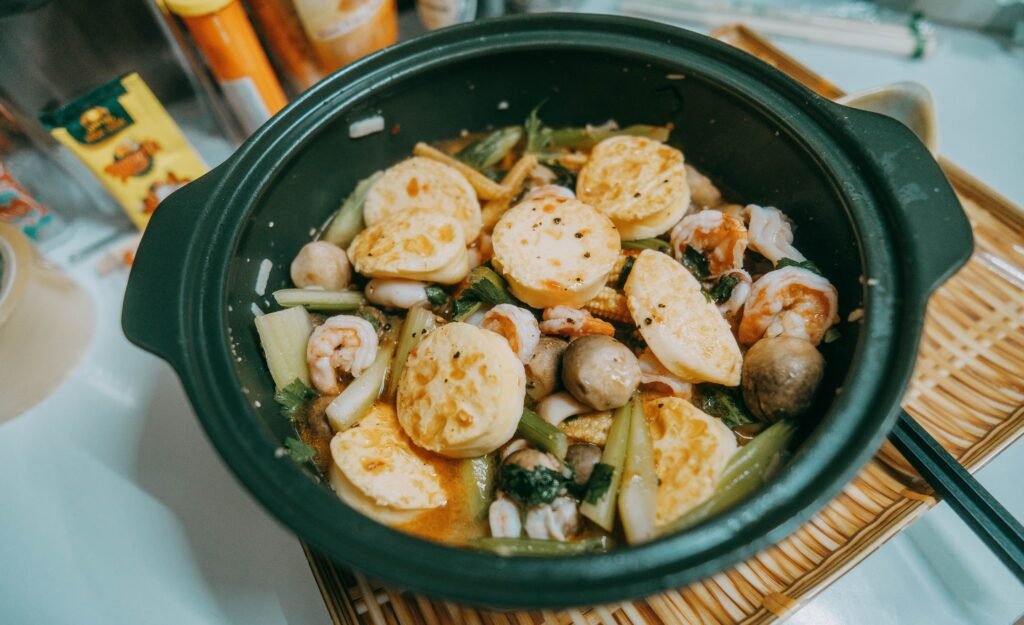
If one dish defines Thai food in Vietnam, it is this one. A pot of sour, spicy broth sits in the middle of the table. You drop in beef, chicken, seafood, mushrooms and greens, and cook everything as you eat.
The broth gets its flavour from lemongrass, galangal, kaffir lime leaves, fresh chili and straw mushrooms (nấm rơm). Vietnamese food writers say that sour and spicy punch is exactly why people get hooked, and why it is hard to confuse with any other hotpot.
What it costs: A VnExpress article on ThaiExpress in Hanoi mentioned hotpot from around 169,000 VND. That article is not dated, so treat the number as a clue, not a price.
How to order well:
- Go with at least two people. It is built for sharing.
- Ask how spicy the broth is before it arrives.
- Add noodles at the end, when the broth has soaked up everything.
- Try the Thai-style drinks. ThaiExpress serves apricot drink, Thai iced tea and a kumquat-watermelon juice.
2. Tom Yum
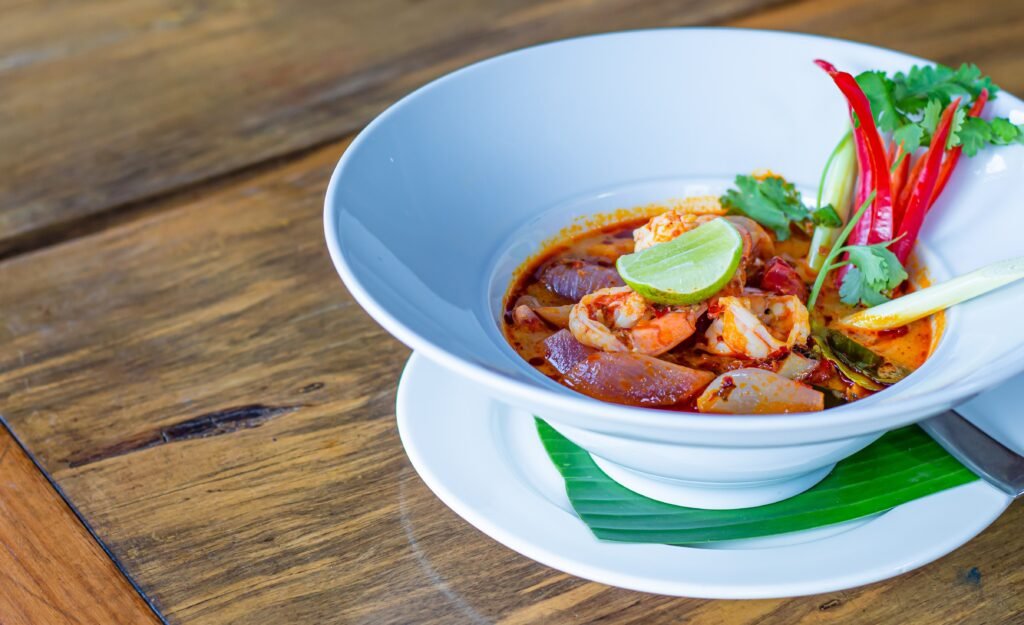
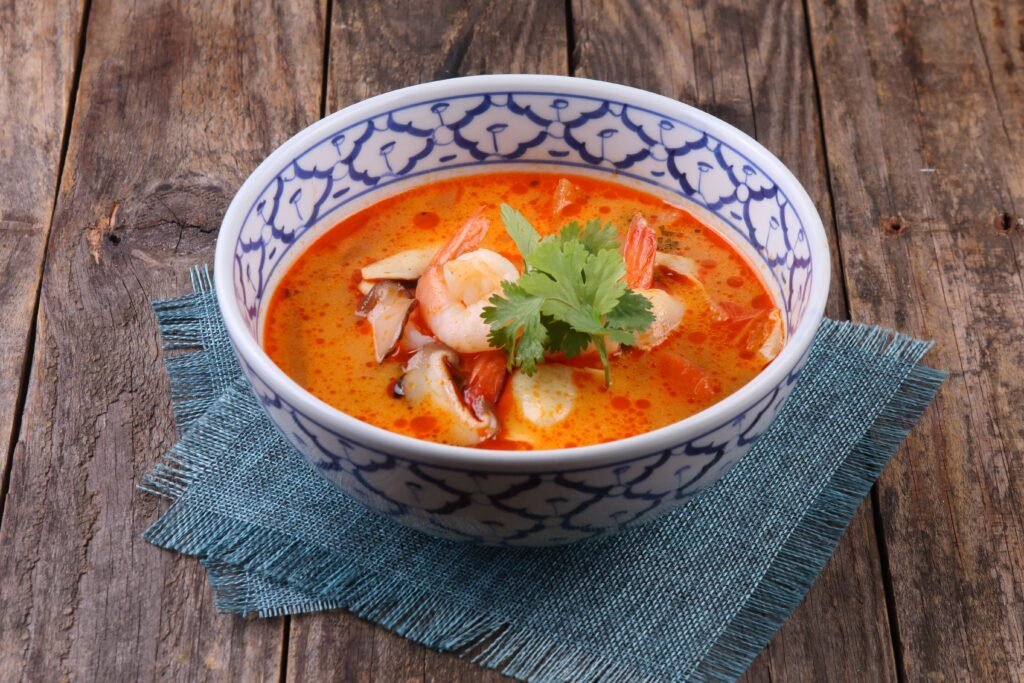
Tom yum is the hot and sour soup that most visitors have heard of. The usual version is tom yum goong, made with shrimp, lemongrass, galangal, kaffir lime leaves, chili and lime. You will see two styles: a clear broth, and a richer creamy one.
In Vietnam the heat is often adjusted, and the sweet-sour balance can lean softer than in Thailand. If you want the real kick, say so when you order. Tom yum is also the flavour base for many lẩu Thái broths, so if you like one you will probably like the other.
3. Pad Thai
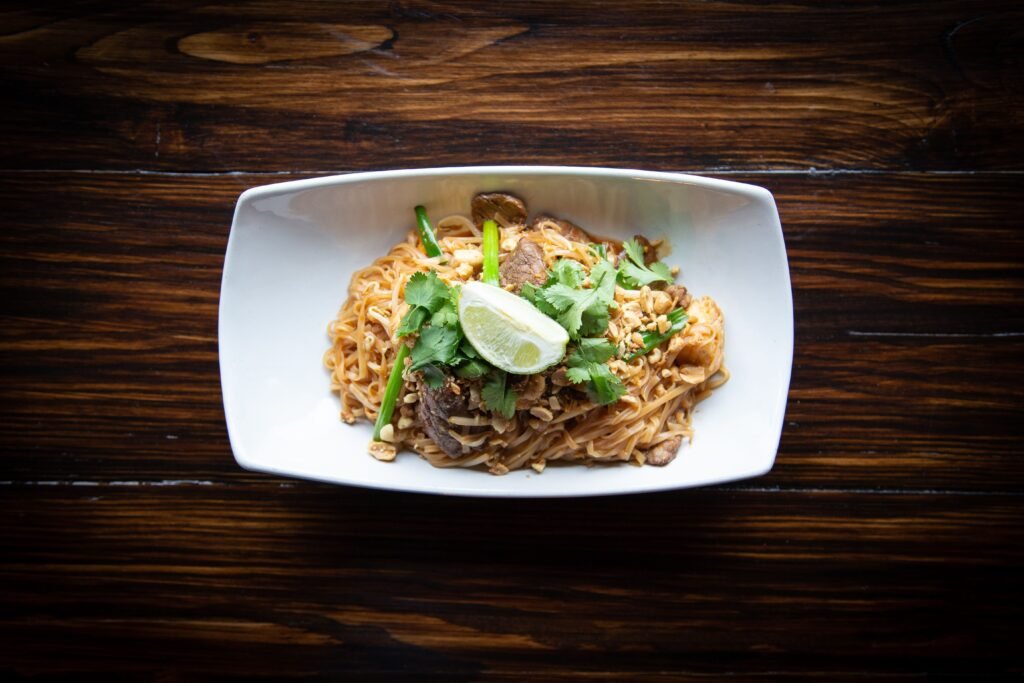
Stir-fried rice noodles with tamarind, egg, bean sprouts, peanuts and a wedge of lime. It is the dish everyone knows, and the one that changes the most between kitchens. Local roundups say the Vietnamese version is made much more simply than the original.
That makes it a safe choice, not a showpiece. It is a good pick for kids, for people who do not like spicy food, or when you just want something familiar. Ask for chili flakes and lime on the side so you can adjust it yourself.
4. Green Curry (Gaeng Keow Wan)
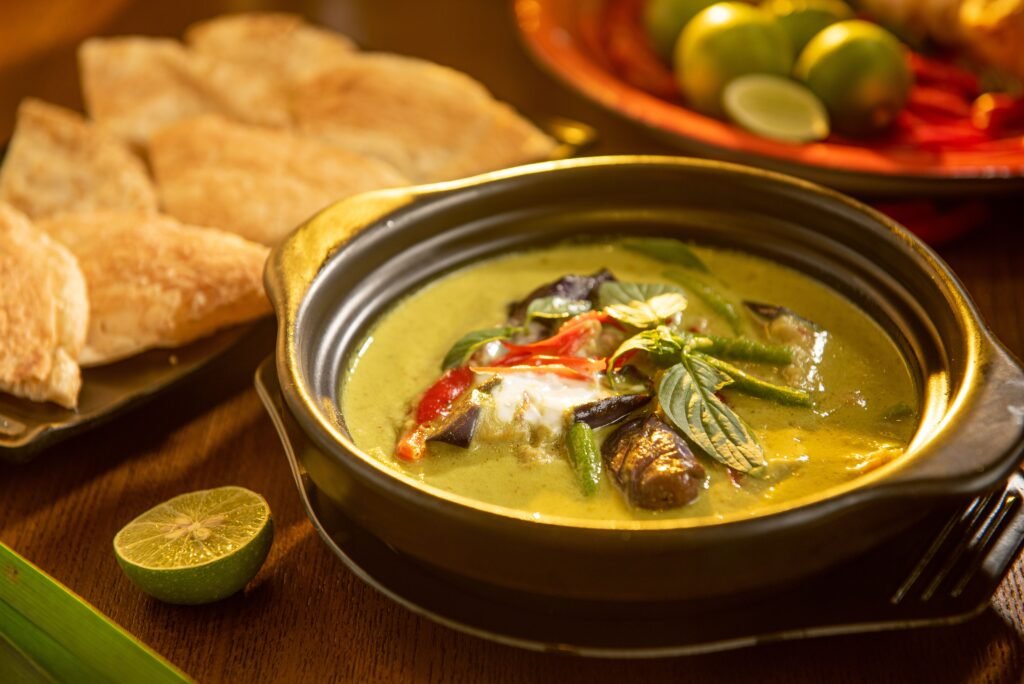
Coconut milk, green chili paste, Thai basil and small round eggplants, served with jasmine rice. In Thailand it can be properly fiery. In Vietnam, heat varies a lot by restaurant, so check before you assume.
Order it with rice and a second dish, such as grilled chicken or a salad. Curry on its own can feel heavy in the heat.
5. Som Tam (Green Papaya Salad)
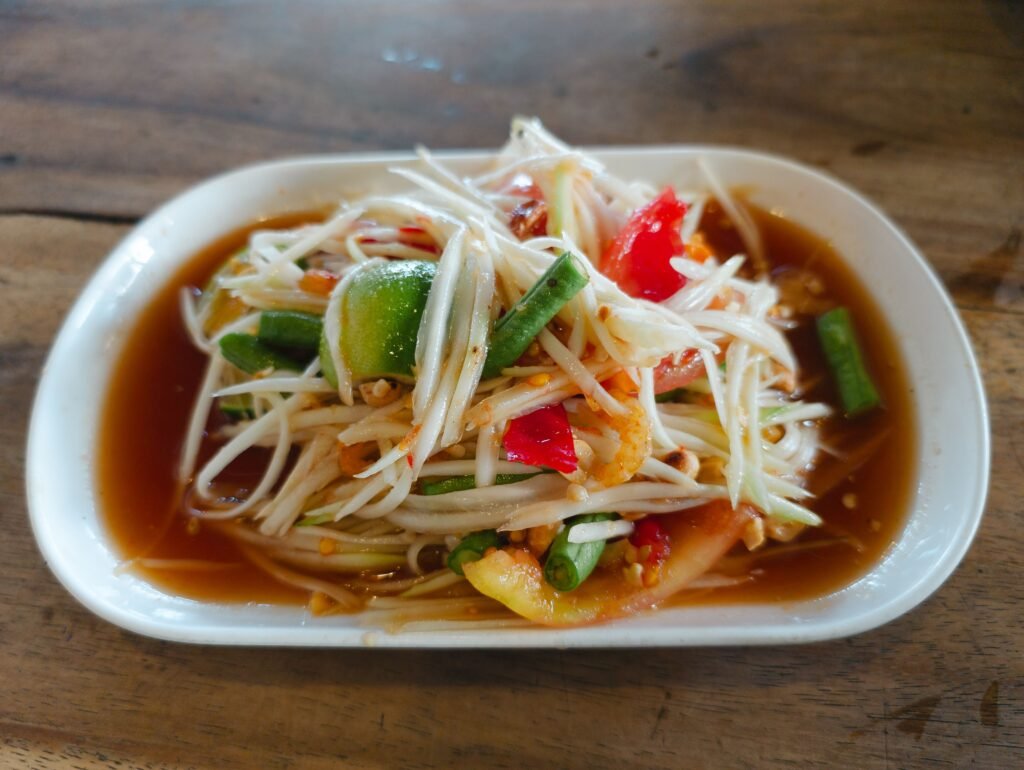
Shredded green papaya pounded with lime juice, chili, fish sauce, peanuts and tomato. It is crunchy, sour, salty and sharp all at once. This is the dish where a real Thai specialist shows its skill. Som Tum Thai in District 1, Saigon, is one name that points straight at it.
Heat is easy to control here. Ask for less chili if you are unsure. Heads up for vegetarians: som tam usually comes with fish sauce and sometimes dried shrimp, so ask before you order.
6. Tom Kha Gai
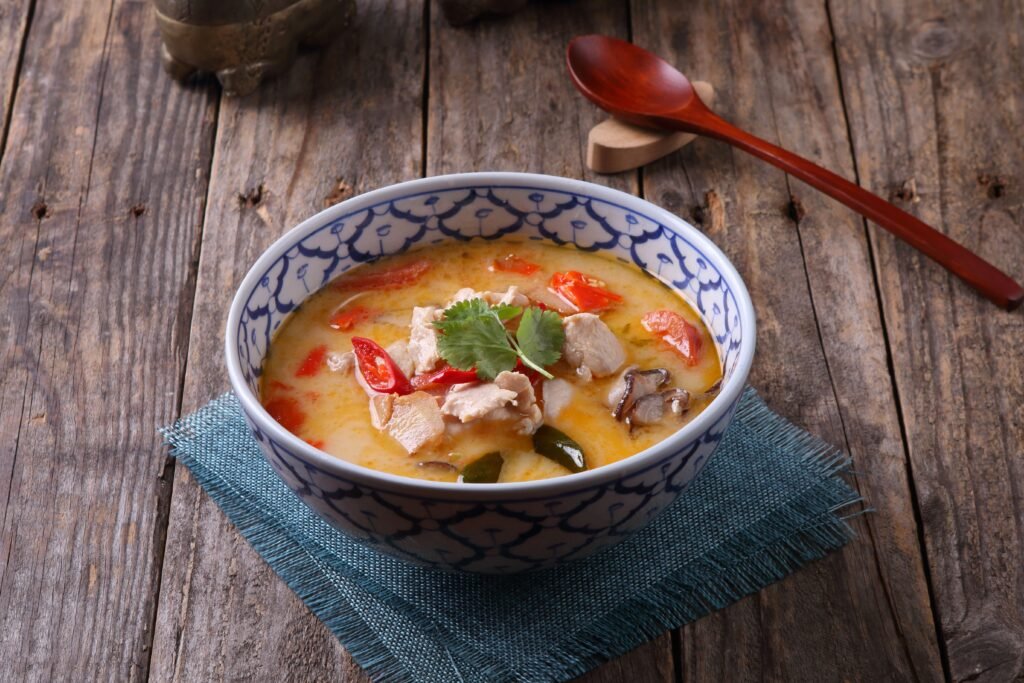
Think of this as tom yum’s softer sibling. Chicken simmered in coconut milk with galangal, lemongrass and lime. It is creamy and fragrant, with a mild tang rather than a hard kick.
If someone at the table cannot handle spice, this is the soup to order. It also works well as a starter before a hotpot or curry.
7. Gai Yang (Thai Grilled Chicken)
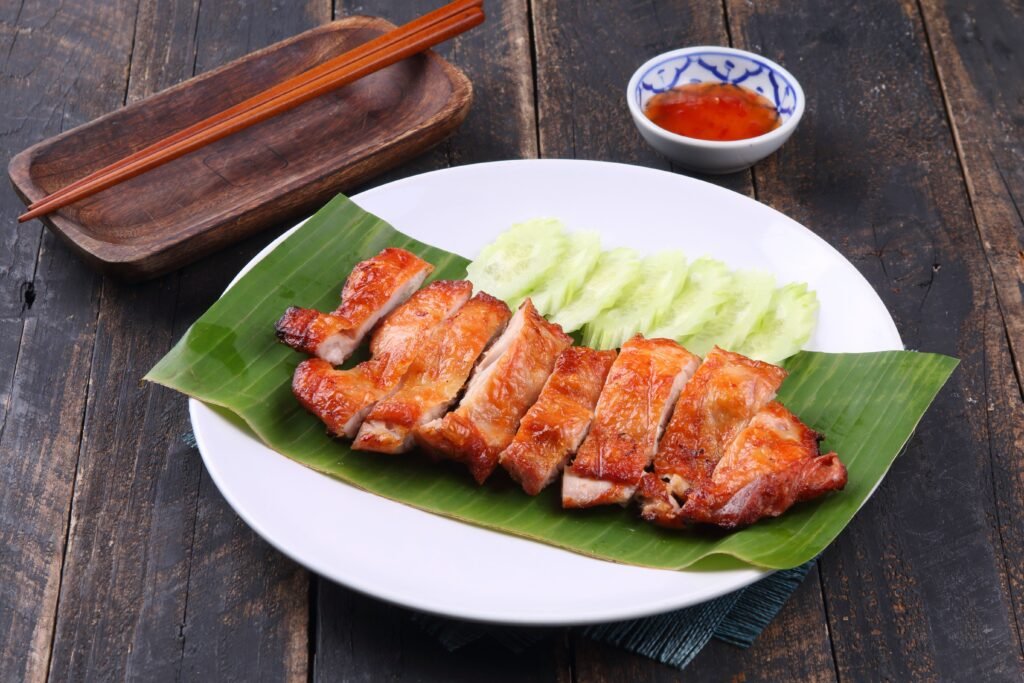
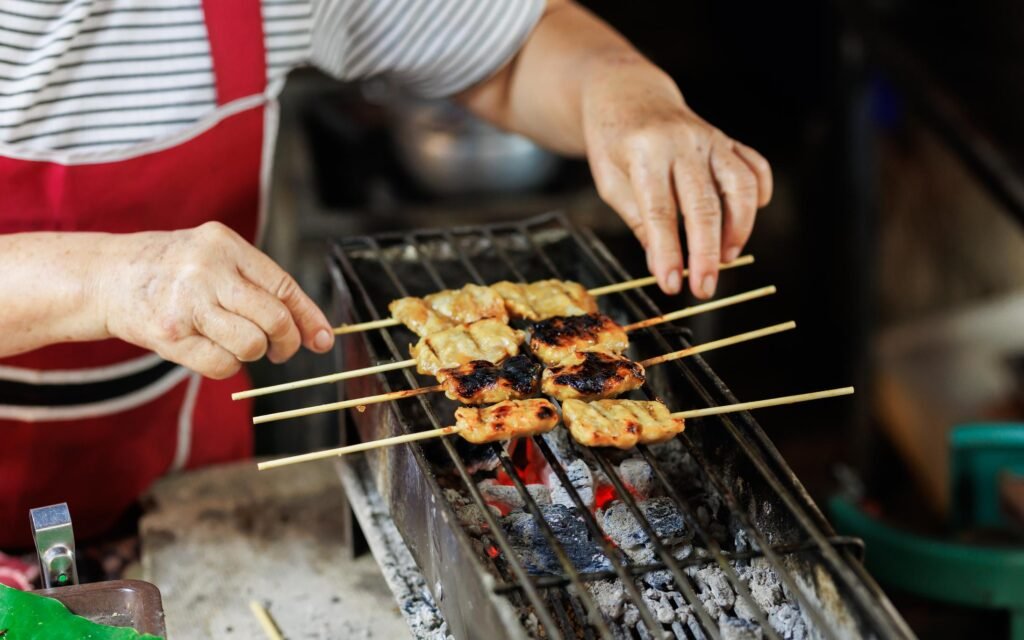
Marinated chicken grilled until the skin is browned and juicy, usually served with sticky rice and a spicy dipping sauce. It often arrives alongside som tam, and the two together make a classic combination.
Vietnam has plenty of its own grilled chicken, so this one is a fun comparison. Look at the marinade: Thai versions lean on garlic, coriander root and pepper.
8. Khao Pad (Thai Fried Rice)
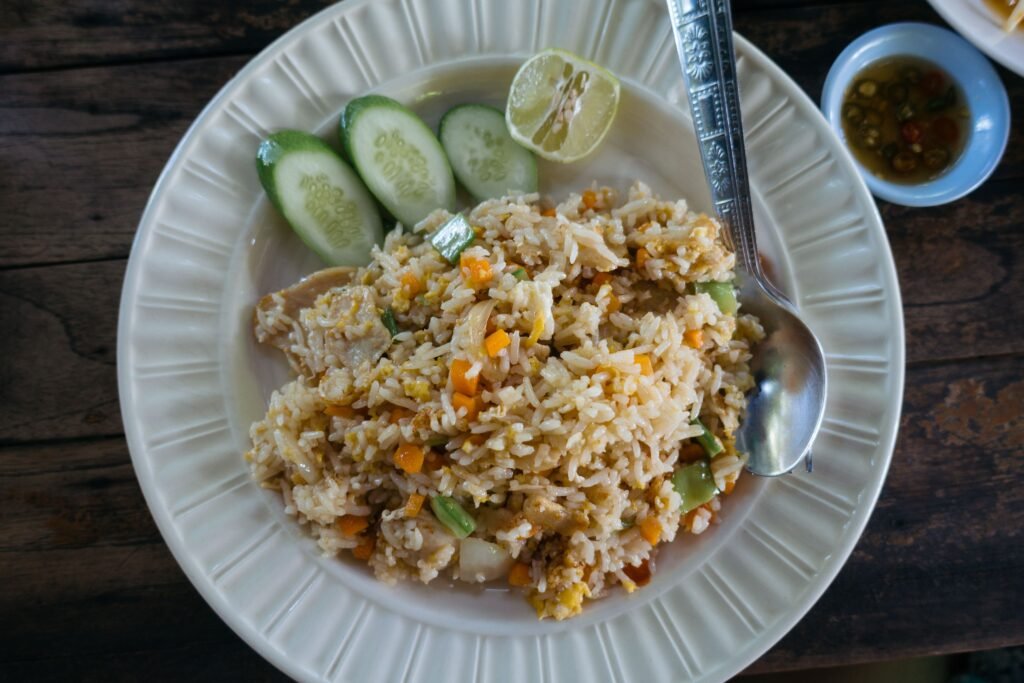
Simple, quick and forgiving. Rice fried with egg, onion and your choice of chicken, shrimp or crab, usually served with cucumber and a lime wedge. A little fish sauce with chili on the side lets you add heat.
It sits close to Vietnamese cơm chiên, so it is a low-risk way to try a Thai restaurant if you are nervous about spice.
9. Mango Sticky Rice (Khao Niao Mamuang)
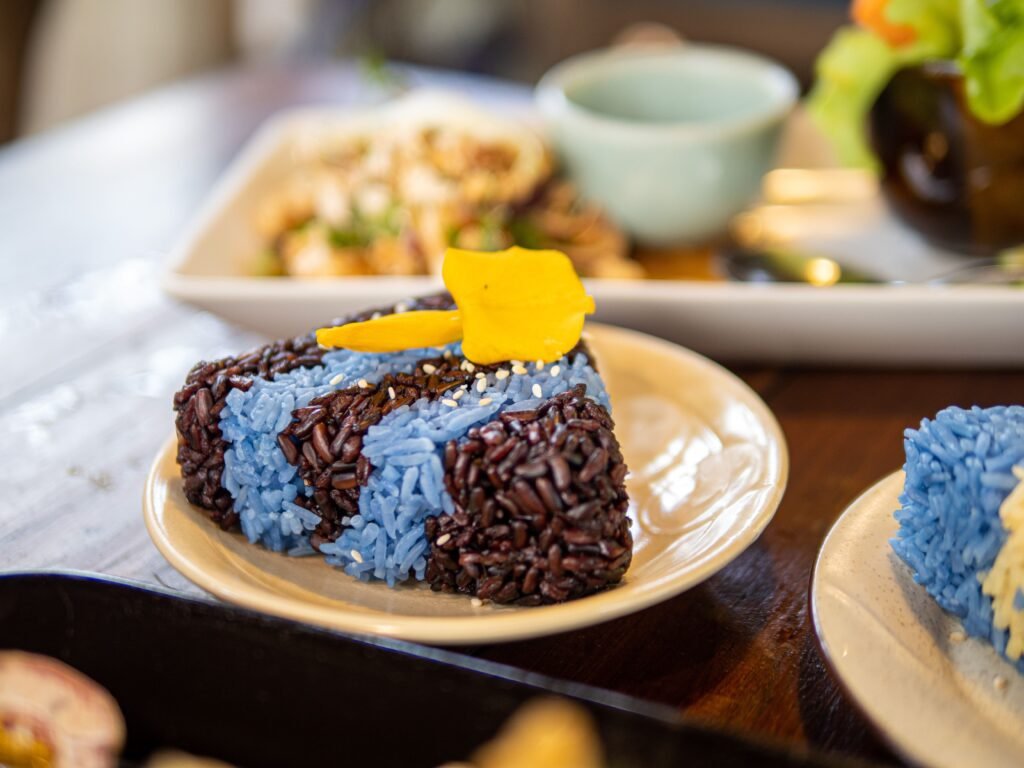
Warm sticky rice soaked in sweet coconut milk, topped with slices of ripe mango. It is simple, but it lives or dies on the mango. Order it in mango season, which falls in the warmer months.
If the mango is hard or pale, skip it. A good one is soft, fragrant and almost dripping.
10. Chè Thái (Thai-Style Dessert)
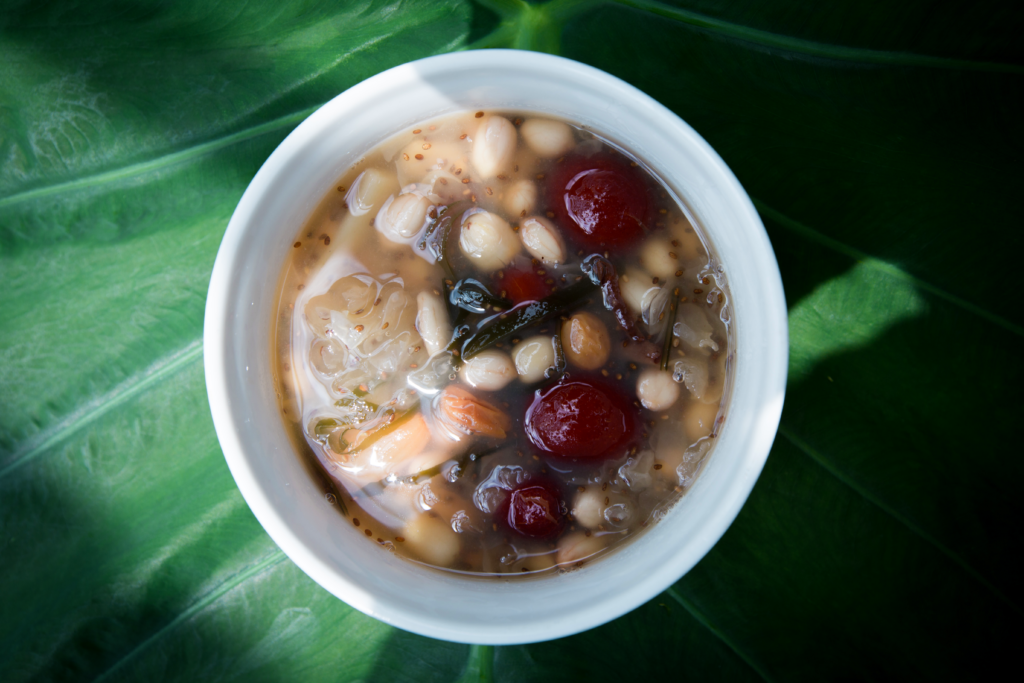
This is the dish that surprises people. Chè Thái is a cold, sweet dessert, typically with fruit such as jackfruit and lychee, jelly pieces, coconut milk and a pile of ice. Local roundups say it is especially loved by young Vietnamese, and some Thai-style dessert shops add extras like tofu pudding and grass jelly.
It is sweet, so ask for less sugar if you do not have a big sweet tooth. On a hot afternoon it beats any ice cream.
Worth Looking For: Thai Dishes That Are Less Common in Vietnam
Once you have tried the big ten, a few other dishes are worth hunting for if the menu has them. Availability varies a lot, so do not expect them everywhere.
- Pad kra pao: Stir-fried minced meat with holy basil and chili, usually topped with a fried egg. A classic Thai everyday dish.
- Larb: A tangy minced meat salad with lime, herbs and toasted rice powder. A good sign of a more serious Thai kitchen.
- Massaman curry: A milder, richer curry with potato and peanuts. Good for people who find green curry too sharp.
- Tom saap: A hot and sour soup with pork ribs, strong on herbs and chili.
If a restaurant has several of these on the menu, that is usually a good sign.
Thai vs Vietnamese Flavours: A Quick Decoder
Once you can taste the difference, ordering gets easier. Here is how the two cuisines overlap and where they split.
| Flavour or ingredient | In Thai food | In Vietnamese food |
|---|---|---|
| Lemongrass | Core of tom yum and many curries | Common in marinades, soups and grilled meats |
| Galangal | A key ingredient in tom yum and tom kha | Used less often. Ginger is more common |
| Fish sauce | The salty backbone of most dishes | Also essential, usually as a dipping sauce or dressing |
| Coconut milk | Used heavily in curries, soups and desserts | Used mostly in southern dishes and desserts |
| Fresh herbs | Thai basil, coriander, kaffir lime leaf | Big plates of fresh herbs on the side |
| Heat | Fresh chili, often strong | Chili is usually added at the table |
The big difference to remember: in Vietnamese food you usually add heat and sauces yourself at the table. In Thai food the heat is cooked in. That is why asking for the spice level before the dish is made matters so much.
How to Order a Thai Meal in Vietnam, Step by Step
If you have never ordered at a Thai restaurant here, this simple plan works almost every time.
- Start with a soup or salad. Tom yum, tom kha gai or som tam. They wake up your appetite and show you how the kitchen handles heat.
- Add one main. Green curry, pad Thai or grilled chicken. Order the sauce-heavy dish with plain rice.
- Add one easy side. Thai fried rice is the reliable choice.
- Say your spice level out loud. Do not just trust the menu icons.
- End with a cold dessert. Chè Thái or mango sticky rice, depending on the season.
For two people: one soup, one curry or stir-fry, one rice, one dessert. For a group of four or more: skip the individual plates and order one hotpot plus two or three side dishes. It costs less and feels more like how locals eat.
Eating Thai Food in Vietnam with Kids, Allergies or Dietary Needs
Thai food is friendly to many diets, but it hides a few common allergens. Here is what to watch for.
- Peanuts: Pad Thai and som tam both usually come with crushed peanuts. Ask for none if you have an allergy.
- Shellfish and fish: Tom yum goong has shrimp, and fish sauce is in most dishes. It is not always listed on menus.
- Gluten: Soy sauce and some oyster sauces contain wheat. Ask how the dish is made.
- Pork: Many dishes can include pork. If you avoid it for religious or personal reasons, ask clearly, and do not assume.
- Vegetarian and vegan: Say tôi ăn chay and ask for no fish sauce, no shrimp paste and no oyster sauce. Do not assume a vegetable curry is vegetarian.
With kids: Thai fried rice, pad Thai (with no chili), mild tom kha gai and mango sticky rice are the easiest orders. Skip the hotpot broth unless you ask for a mild one.
Severe allergy? Show the staff a written note in Vietnamese.
What to Drink with Thai Food in Vietnam
Sweet and cold drinks are your friend with spicy food, and Thai restaurants in Vietnam lean into that.
- Thai iced tea: Sweet, creamy and bright orange. Great with spicy dishes.
- Apricot drink (nước mơ): A sweet and tangy cold drink served at ThaiExpress.
- Kumquat-watermelon juice: Another ThaiExpress drink. Refreshing and not too sweet.
- Iced tea (trà đá) or fresh coconut water: Cheap, easy to find and good for resetting your mouth.
- Local beer: Pairs well with grilled chicken and som tam.
How I'd Fit Thai Food into a Vietnam Trip
You do not need a Thai meal every day. Here is how I would use it.
- After a few days of noodle soups and rice dishes: A Thai dinner is a good reset.
- In cold, wet weather in northern Vietnam: Hotpot makes the evening.
- With a group or on a family trip: Shared dishes keep everyone happy.
- On a hot afternoon: A chè Thái stop beats a coffee.
The rest of the time, eat Vietnamese. That is the reason you came. Thai food is a complement, not a replacement.
Where to Eat Thai Food in Vietnam
A fair warning first. Restaurants open and close fast, and several of the sources I found are a few years old. Check Google Maps for recent reviews before you go. Every venue below is marked for you to verify.
Hanoi
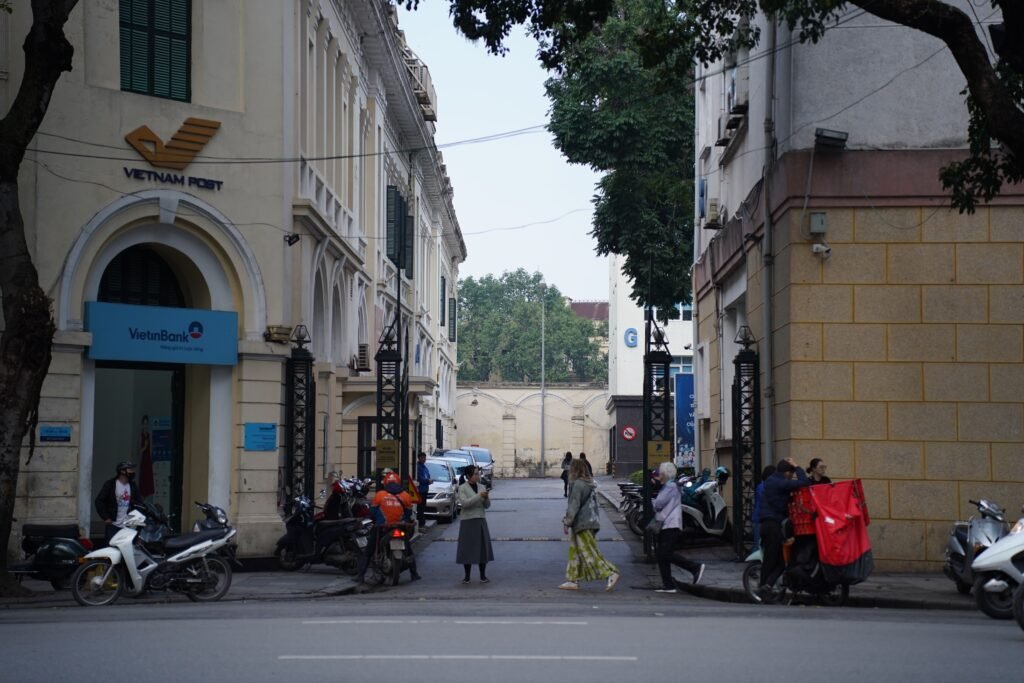
- ThaiExpress. The chain with the highest profile. A VnExpress article listed a branch on the second floor at 7 Đinh Tiên Hoàng, Hoàn Kiếm. That article is older, so confirm the address is still current. Known for its hotpot and Thai-style drinks.
- Khrua Baan Thai. Listed by an expat directory as a popular Thai restaurant in Hanoi with a cosy feel.
- Lẩu Phan. A Thai hotpot restaurant that describes itself as serving authentic Thai flavour. That claim comes from the restaurant itself, so treat it as marketing until you have tried it.
Ho Chi Minh City (Saigon)

- Som Tum Thai. Listed in District 1, with one location inside a mall at 65 Lê Lợi (5th floor) and another at 29 Lê Thánh Tôn. Good for som tam and other Thai specialties.
- ThaiExpress. A branch was listed at 6 Trần Cao Vân. That listing dates to around 2018, so confirm before you go.
- Thai Street. A casual Thai restaurant that shows up in Saigon listings.
Best Time to Eat Thai Food in Vietnam
You can eat Thai food any day of the year, but some dishes just make more sense in certain seasons.
- Cool weather (especially Hanoi winters): This is hotpot season. Vietnamese press regularly describes Hanoi residents reaching for lẩu Thái when the cold arrives, and it is a popular choice for year-end gatherings. A hot, sour broth is perfect when the air is damp and chilly.
- Hot months: Go for chè Thái, mango sticky rice and som tam. Cold, sweet and sour is what you want when it is humid.
- Time of day: Lunch is usually easier for walk-ins. Dinner and weekends get busy, especially for hotpot, so book if you can.
Saigon does not have a real winter, but people there still eat hotpot all year.
Pros and Cons of Eating Thai Food in Vietnam
Pros
- A welcome break from rice and noodle soups if you have been eating Vietnamese food for days.
- Lots of choice in Hanoi and Saigon, including chains and specialists.
- Good for groups. Hotpot is a shared meal.
- Milder heat, if you do not like intense spice.
- Sweet desserts and drinks are easy to find.
Cons
- Not always authentic. Heat and sweetness are often adjusted, and some dishes are simplified.
- Costs more than street food.
- Quality varies widely between restaurants.
- Fish sauce, shrimp paste and dried shrimp turn up in unexpected places, which is tough for vegetarians.
- You are in Vietnam. Often the local dish nearby will be better and cheaper.
If you want the real Thai experience, eat in Thailand. If you want a good meal, a break from the usual or a group hotpot night, Thai food in Vietnam is a solid choice.
Not sure what to skip while you are here? Read our guide to common Vietnam travel mistakes and our Vietnam do’s and don’ts.
Common Mistakes to Avoid
- Expecting Bangkok flavours. Treat it as Thai food, Vietnamese style, and you will enjoy it more.
- Not asking about heat. Both too mild and too hot are possible. Ask, and ask again for the hotpot.
- Ordering Thai when a local dish is the better pick. A bowl of pho or bún chả nearby may be cheaper and better. Save Thai for when you are craving it.
- Forgetting about fish sauce and shrimp paste. If you have allergies or dietary rules, say so clearly. Some dishes will not mention it on the menu.
- Choosing by street, not by reviews. A busy tourist street does not equal a good kitchen. Look at recent reviews and photos.
[ADD: one mistake you actually made, in two or th
Pro Tips from My Experience
- Learn five phrases. Ít cay (less spicy), cay hơn (spicier), ít ngọt (less sweet), không nước mắm (no fish sauce) and tôi ăn chay (I am vegetarian).
- Share a hotpot. It is more fun, and cheaper per person.
- Check recent reviews on Google Maps. Some of the listings I found were years old.
- Go off-peak. Late lunch is quieter, with faster service.
- Finish with chè Thái. A cold dessert after a spicy meal is a small reward.
- Bring cash and a card. Smaller places may only take cash.
Who Should Order What?
| If you are… | Order this |
|---|---|
| A first-timer | Lẩu Thái with a group |
| A spice lover | Som tam and green curry, with the heat turned up |
| Not into spice | Tom kha gai, pad Thai or Thai fried rice |
| On a budget | A single dish at a casual place, plus chè Thái |
| Vegetarian | Curry or fried rice with no fish sauce, and ask clearly |
| Craving something sweet | Mango sticky rice or chè Thái |
My overall take: Thai food in Vietnam is worth trying for what it is, a popular, adapted version of a cuisine Vietnamese diners clearly love. Go in curious, not expecting a copy of Bangkok, and you will probably enjoy it.
Frequently Asked Questions
Is Thai food popular in Vietnam?
Yes. Thai restaurants, especially hotpot places, are common in Hanoi and Saigon, and chains like ThaiExpress serve locals, foreigners and Thais living in the city.
What is lẩu Thái?
Lẩu Thái is Thai-style hotpot, a sour and spicy broth made with lemongrass, galangal, kaffir lime leaves and chili. You cook meat, seafood and vegetables in it at the table.
Is Thai food in Vietnam authentic?
It depends on the restaurant. Many places lower the heat and simplify dishes for Vietnamese tastes. Look for Thai staff, a Thai menu and ask for the Thai spice level.
What Thai dish should I try first in Vietnam?
Start with lẩu Thái if you are with a group, or tom yum if you are on your own. Both show off the sour and spicy style Vietnamese diners love.
Is Thai food spicier than Vietnamese food?
Usually, yes. Thai cooking often uses more fresh chili and a stronger sour-sweet-salty balance. In Vietnam, many Thai restaurants tone the heat down, so ask for what you prefer.
Can vegetarians eat Thai food in Vietnam?
Yes, but be specific. Many curries, soups and salads use fish sauce or shrimp paste. Say tôi ăn chay (I am vegetarian) and ask for no fish sauce.